


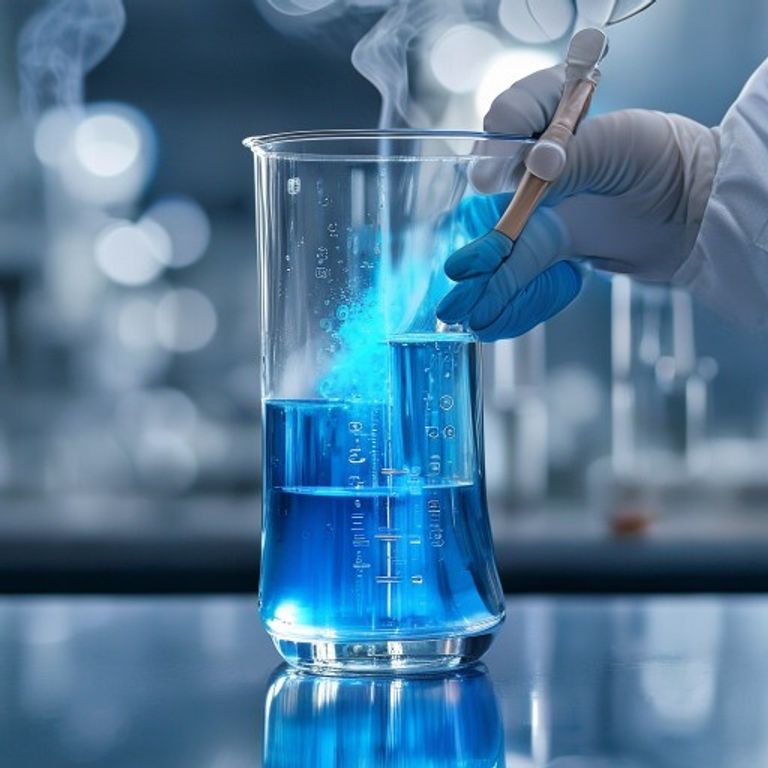
Decoding Beaker Uses: Your Ultimate Guide to This Lab Workhorse

Ever walked into a science lab and wondered about all the fancy laboratory glassware? Among the flasks, test tubes, and cylinders, there’s one humble piece that stands out: the beaker. Often overlooked, this everyday item is, in fact, an absolute MVP in any scientific setting. But have you ever truly thought about all the specific beaker uses?
If you’re curious what are beakers used for in chemistry labs, or perhaps you’re a student trying to understand how to use a beaker in science class, you’ve come to the right place. We’re not just going to list its functions; we’re diving deep into why this simple glass container is so crucial. Think of it like the Swiss Army knife of the lab – versatile, reliable, and always ready for action!
The Primary Functions of a Lab Beaker: More Than Just a Cup
When we talk about the primary functions of a lab beaker, we’re really discussing its foundational roles that make countless experiments possible. It’s not just a fancy cup; it’s a carefully designed piece of equipment that supports a wide range of tasks. Here are its core strengths:
Holding and Storing Liquids
This might seem obvious, but a beaker’s open top and wide mouth make it ideal for temporarily holding liquids, solutions, or even solids before or after an experiment. Imagine trying to manage multiple small containers – a beaker simplifies everything. It’s like having a dedicated parking spot for your chemicals.
Stirring Liquids with Ease
Its cylindrical shape and flat bottom are perfect for stirring liquids. Whether you’re using a glass stirring rod or a magnetic stirrer, the beaker provides ample space for effective mixing without splashing. It allows for consistent homogenization of your mixtures, which is vital for accurate results.
Heating Solutions Safely
Made from borosilicate glass, most beakers are designed to withstand high temperatures. This makes them excellent for heating solutions over a Bunsen burner, hot plate, or in a water bath. The wide mouth also helps in faster evaporation if needed. Just remember to always use appropriate safety gear!
Mixing Chemicals and Reactions
From simple dilutions to complex chemical reactions, beakers are fantastic for mixing chemicals. Their stability and thermal resistance allow chemists to combine various substances, observe reactions, and even facilitate precipitates, all within one convenient vessel. It’s truly a stage for chemical drama!
Understanding Approximate Volume Measurement: A Crucial Distinction
One of the most common misconceptions about beakers is their role in measuring volume. While they do have graduation marks on their sides, it’s vital to understand that these are for approximate volume measurement only. Unlike a graduated cylinder or a volumetric flask, a beaker is not designed for precise measurements.
Why is this important? Well, imagine trying to measure out exactly 50.00 mL of a liquid with a beaker. You’d be guessing! The wide mouth and less precise markings mean there’s a higher margin of error. So, what is the purpose of beakers in a laboratory when it comes to volume? They’re perfect for preparing solutions where exact quantities aren’t critical, or for holding a known volume that was accurately measured with another piece of laboratory glassware first.
Common Uses of Beakers in Experiments: Everyday Applications
Beyond their primary functions, beakers pop up in countless scenarios across scientific disciplines. Let’s look at some common uses of beakers in experiments:
- Preparing Reagents: Often, you need to dissolve a solid in a liquid to create a reagent. A beaker is perfect for this, allowing you to stir and even gently heat to speed up dissolution.
- Collecting Filtrates: After filtering a solution, the clean liquid (filtrate) can be collected efficiently in a beaker due to its wide opening.
- Performing Titrations: While not the primary vessel for the reaction, beakers are frequently used to hold the analyte solution during a titration, especially when using a stirring plate.
- Temporary Storage: Need to temporarily hold a sample or a waste product during an experiment? A beaker is your go-to.
- Making Dilutions: For non-critical dilutions, a beaker allows you to add a solvent to a concentrated solution and mix easily.
From chemistry to biology, and even in environmental science labs, the beaker truly is a universal tool, performing its duties reliably in almost every experiment you can imagine.
Conclusion: The Unsung Hero of the Lab
So, the next time you spot a beaker in a lab, remember it’s far more than just a simple container. It’s a versatile tool essential for stirring liquids, heating solutions, mixing chemicals, and a host of other critical tasks. Understanding its strengths and limitations, especially regarding approximate volume measurement, will help you conduct experiments more effectively and safely.
By appreciating the different beaker uses, we can all become better, more informed scientists, making the most of this truly indispensable piece of laboratory glassware. It really is the unsung hero that facilitates so much of the groundbreaking work happening in labs worldwide!
FAQ: All Your Beaker Questions Answered
Q1: Can I use a beaker for precise volume measurements?
A: No, beakers are designed for approximate volume measurements. For precise measurements, you should always use a graduated cylinder or a volumetric flask.
Q2: What material are beakers usually made from?
A: Most laboratory beakers are made from borosilicate glass (like Pyrex or Kimax), which is known for its excellent thermal resistance and chemical durability.
Q3: Why do beakers have a spout?
A: The small spout on a beaker allows for easy pouring of liquids, helping to prevent drips and spills. It’s a simple design feature that makes a big difference!
Q4: Can beakers be heated directly over a flame?
A: Yes, borosilicate glass beakers are designed to be heated directly over a Bunsen burner or on a hot plate. However, always ensure the beaker is dry on the outside and apply heat gradually to avoid thermal shock.
Q5: Is it safe to store strong acids in a beaker long-term?
A: While beakers are chemically resistant, they are not ideal for long-term storage of strong acids or bases, especially if the container needs to be sealed. For long-term storage, specific reagent bottles with ground glass stoppers or screw caps are more appropriate to prevent evaporation or contamination.







