Unveiling the Mighty Beaker: Exploring Its Essential Uses in the Lab

Ah, the humble beaker! If you’ve ever stepped foot in a science lab, whether in school or a professional setting, you’ve definitely seen this cylindrical marvel. It’s one of those laboratory glassware pieces that just *belongs* there. But have you ever stopped to think about the true breadth of its utility? Many of us might take it for granted, but a beaker is far more than just a fancy cup; it’s a true workhorse. Today, we’re going to dive deep into the world of beaker uses, exploring what are beakers used for in a lab, their primary functions of a laboratory beaker, and even why they aren’t always the right tool for every job.
The Everyday Hero: What Exactly Is a Beaker?
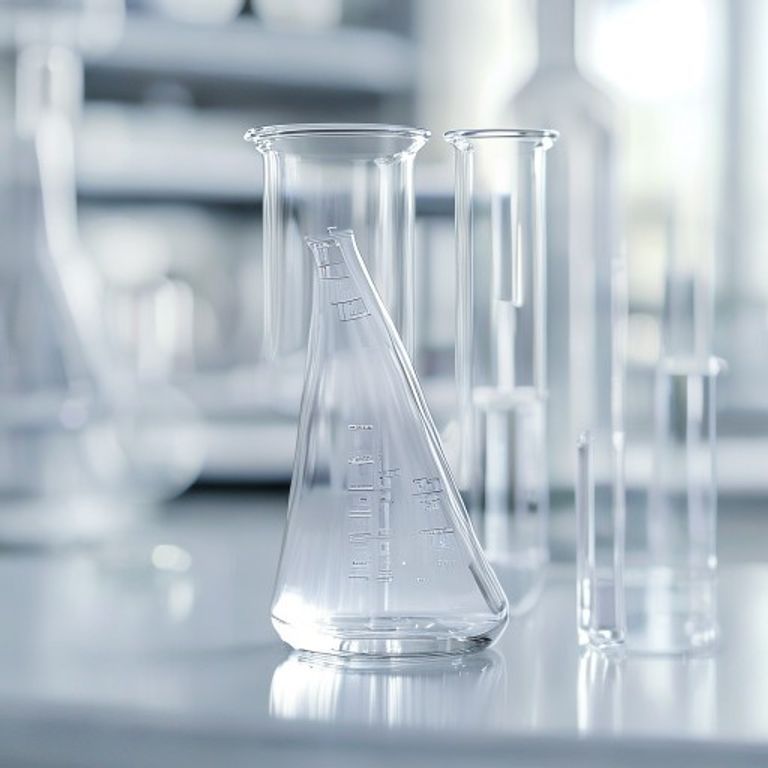
Before we explore its numerous applications, let’s quickly define our star. A beaker is typically a cylindrical container with a flat bottom and a lip or spout for pouring. Most commonly, you’ll find them made of borosilicate glass, known for its resistance to thermal shock and chemical corrosion, but plastic versions also exist for less demanding tasks. They usually feature volume markings on the side, but here’s a crucial point we’ll revisit: these markings are approximate, not precise!
Unpacking the Common Uses for Beakers in Science Experiments
So, why do we see beakers everywhere? Their design lends itself to incredible versatility. Here are some of the most common uses for beakers in science experiments:
- Holding and Storing Liquids: This is probably the most straightforward use. Beakers are perfect for temporarily holding various liquids, solutions, or even solid samples. Think of them as the go-to container for anything that needs to be kept in a specific place during an experiment.
- Mixing and Stirring Solutions: With their wide mouths, beakers are ideal for mixing different chemicals. We can easily add reagents and then use a glass stirring rod or a magnetic stirrer to achieve homogeneity. This is where their basic, open design truly shines.
- Heating Liquids: Need to warm up a solution? Beakers made of borosilicate glass are fantastic for this. They can be placed directly on a hot plate or heated using a Bunsen burner (usually with a wire gauze to evenly distribute heat). Their heat resistance makes them invaluable for reactions requiring elevated temperatures.
- Measuring Approximate Volumes: While not precise, the graduation marks on a beaker are useful for rough measurements. If you just need “about 100 mL” of water, a beaker is perfectly adequate. It’s like using a kitchen measuring cup when baking – good enough for many tasks, but not for ultra-precision.
- Performing Simple Reactions: From dissolving solids to simple precipitation reactions, beakers provide a convenient vessel for many chemical processes. Their open top allows for easy observation and addition of reagents.
- Collecting Filtrates: After filtering a solution, a beaker is often used to collect the filtered liquid (filtrate). Its open top and stable base make it easy to position under a funnel.
The Specific Purposes of Glass Beakers: Why Material Matters
While plastic beakers exist, glass beakers, particularly those made from borosilicate glass, serve more specific purposes of glass beakers. Their superior thermal resistance allows them to handle heating and cooling cycles without shattering, making them essential for reactions involving temperature changes. Furthermore, their chemical inertness means they won’t react with most laboratory chemicals, preserving the integrity of our experiments. This makes them indispensable when working with corrosive acids or strong bases.
Why Are Beakers Not for Precise Measurements?
This is a critical point that often trips up beginners: why are beakers not for precise measurements? Despite having volume markings, beakers are designed for *approximate* volume measurements, not exact ones. Think of it this way: their wide mouth and non-calibrated manufacturing process mean that the accuracy of their markings is usually ±5% or more. If you need to measure 100.0 mL of a liquid, a beaker simply won’t cut it. For precise volume measurements, we turn to other laboratory glassware like a graduated cylinder (for accuracy), or even more precisely, a volumetric flask (for exact known volumes). Using a beaker for precision is like trying to measure a sprint finish with a yardstick – it might give you an idea, but it won’t give you the exact time!
FAQ About Beaker Uses
Q: Can I use a beaker for storing chemicals long-term?
A: Generally, no. While good for temporary holding, beakers are typically not designed for long-term storage, especially for volatile chemicals, as their wide mouth allows for evaporation or contamination. Use reagent bottles or stoppered flasks for long-term storage.
Q: What’s the difference between a beaker and an Erlenmeyer flask?
A: The main difference is their shape! Beakers have a straight, cylindrical body with a wide mouth. Erlenmeyer flasks have a conical body, a narrower neck, and a flat bottom. This narrow neck makes flasks better for swirling without splashing and for stoppered applications, whereas beakers are better for general mixing and pouring.
Q: Are all beakers heat resistant?
A: Most laboratory beakers made of borosilicate glass (like Pyrex or Kimax) are heat resistant. However, plastic beakers are generally not heat resistant and should not be used on hot plates or with Bunsen burners.
Conclusion: The Beaker – A Pillar of Practicality
From simple mixing to complex reactions, the beaker truly earns its title as a fundamental piece of laboratory equipment. Its robust design, versatility, and ease of use make it indispensable for countless tasks, even with its limitation on precision. So, the next time you see this cylindrical glass container, remember that it’s more than just a container; it’s a testament to practical design and the unsung hero enabling countless scientific discoveries. Mastering its proper use is a key step for anyone working in a lab, ensuring our experiments run smoothly and safely.