

What is a Pipette? Your Essential Guide to This Laboratory Workhorse

Ever walked into a science lab, whether it’s in a school, a university, or a professional research facility, and seen those sleek, often colorful, instruments used to handle tiny amounts of liquid? Chances are, you’ve encountered a pipette! These aren’t just fancy droppers; they are the unsung heroes of precision, absolutely vital for countless scientific endeavors.
For anyone new to the lab environment or just curious about the tools scientists use, understanding what a pipette is and how it works is a fantastic starting point. Today, we’re going to dive deep into the world of pipettes, from their basic definition to their diverse uses and the different types you’ll commonly find in any chemistry or biology lab. So, let’s get started!
What Exactly is a Pipette? The Core Pipette Definition
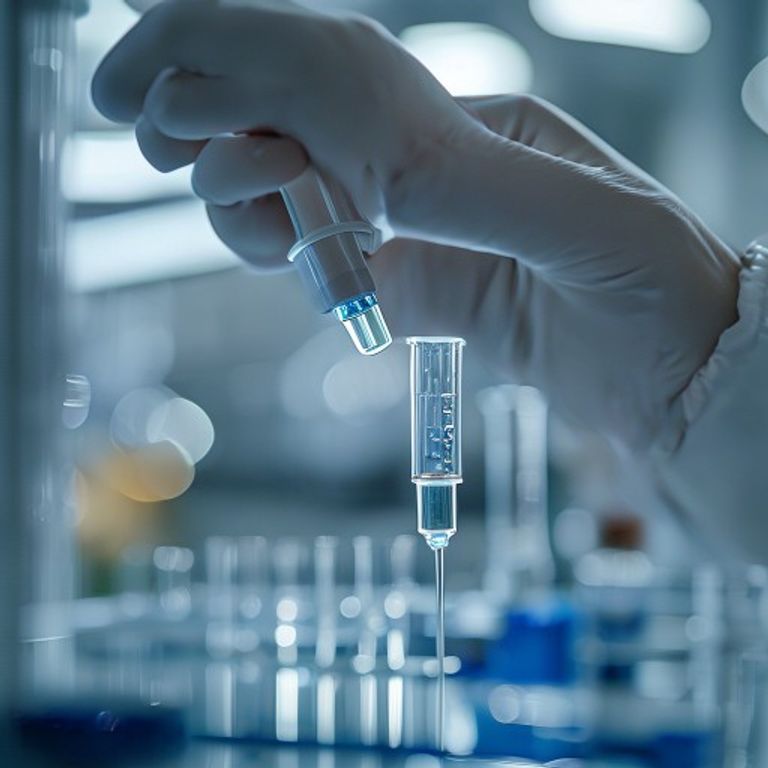
At its heart, a pipette is a laboratory tool used to accurately and precisely transfer small volumes of liquid. Think of it like a very sophisticated, highly accurate straw designed specifically for measuring and moving liquids. Unlike a simple dropper that gives an approximate amount, a pipette is engineered for volumetric measurement, meaning it dispenses a known, precise volume of liquid.
In a chemistry lab, where even tiny variations can significantly alter experimental results, the accuracy offered by a pipette is indispensable. It allows scientists to create solutions with exact concentrations, perform reactions with precise reactant ratios, and ensure reliable and reproducible data.
Why Are Pipettes So Important? What Is a Pipette Used For?
The applications for pipettes are incredibly vast, cutting across almost all scientific disciplines. If you’re working with liquids and need to be accurate, a pipette is your go-to tool. Here are some common scenarios where you’d use them:
- Preparing Solutions: When creating reagents or media, scientists need to add exact volumes of solvents or solutes.
- Running Assays: In biological and medical labs, pipettes are crucial for dispensing samples and reagents into microplates for diagnostic tests or drug screening.
- DNA/RNA Work: Handling tiny amounts of precious nucleic acids in molecular biology requires extreme precision, which only pipettes can provide.
- Titration: In analytical chemistry, pipettes are used to transfer precise volumes of titrant or analyte.
- Cell Culture: Transferring cell suspensions or culture media accurately ensures optimal growth conditions.
Without pipettes, achieving the precision required for reliable scientific results would be practically impossible. They truly are essential pieces of laboratory equipment.
How Does a Pipette Work? An Explanation
While there are several types of pipettes, many operate on a fundamental principle of creating a vacuum or suction to draw liquid into a calibrated tube or tip, and then releasing that vacuum to dispense it. Let’s look at the general mechanism for common adjustable-volume micropipettes:
- Setting the Volume: First, you adjust a dial or knob to select the desired volume (e.g., 100 microliters).
- Attaching a Tip: A disposable plastic tip is securely attached to the end of the pipette. This prevents cross-contamination and ensures accuracy.
- Aspirating (Drawing Up) Liquid: You press a plunger down to the first stop, then immerse the tip into the liquid. Slowly releasing the plunger creates a vacuum, drawing the precise volume of liquid into the tip.
- Dispensing Liquid: To dispense, you place the tip against the wall of the receiving vessel and slowly press the plunger down to the first stop, then continue to the second stop (the “blow-out”) to ensure all liquid is expelled.
- Ejecting the Tip: A separate button allows for the safe and sterile ejection of the used tip.
This systematic process ensures that the exact volume is transferred every time, reducing human error significantly.
Types of Pipettes and Their Definitions
Not all pipettes are created equal! Different tasks require different levels of precision and volume capacities. Here are some of the most common types you’ll encounter:
Volumetric (or Transfer) Pipettes
- Definition: These pipettes are designed to transfer a single, highly accurate fixed volume of liquid (e.g., 10 mL, 25 mL). They have a bulbous center and a single graduation mark.
- Use: Ideal for applications requiring the highest level of accuracy, such as preparing standard solutions or for precise analytical chemistry work.
Graduated (or Measuring) Pipettes
- Definition: These are long, slender glass tubes with etched graduation marks along their length, allowing for the measurement of various volumes up to their maximum capacity.
- Use: Used when less precision is required than with volumetric pipettes, such as transferring reagents or making dilutions where the exact volume isn’t critically important to several decimal places.
Micropipettes (Air Displacement & Positive Displacement)
- Definition: These are adjustable pipettes designed for transferring very small volumes of liquid, typically in the microliter range (µL).
- Air Displacement Micropipettes: The most common type. An air cushion between the plunger and the liquid pushes the liquid.
- Positive Displacement Micropipettes: Used for viscous, volatile, or hot liquids. The piston directly contacts the liquid, eliminating the air cushion.
- Use: Ubiquitous in molecular biology, biochemistry, and clinical diagnostics for handling minuscule samples.
Serological Pipettes
- Definition: A type of graduated pipette, often made of plastic and disposable, with clear volume markings and usually an overfill capacity. They are commonly available in larger volumes (e.g., 1 mL, 5 mL, 10 mL, 25 mL, 50 mL).
- Use: Widely used in cell culture for transferring media, reagents, and cell suspensions, as well as in general laboratory work where sterility and ease of use are priorities. The “definition of serological pipette” often emphasizes its utility in sterile environments.
Choosing the Right Pipette for Your Task
Selecting the correct pipette is crucial for experimental success. Here’s a simple rule of thumb:
- For the highest accuracy with a fixed volume, choose a volumetric pipette.
- For variable volumes requiring good, but not extreme, accuracy, a graduated pipette or a micropipette (if volumes are small) is appropriate.
- For sterile work with larger volumes and good flexibility, especially in cell culture, reach for a serological pipette.
- For very small, precise, and variable volumes, micropipettes are your best friends.
Conclusion
From defining what a pipette is to exploring its crucial role in liquid transfer and the myriad types available, we’ve seen just how fundamental this scientific instrument is. Whether you’re a budding scientist or a seasoned researcher, understanding and correctly using pipettes is a foundational skill. They allow us to achieve the precision and accuracy that underpin reliable scientific discovery and innovation, truly making them the workhorses of the modern laboratory.
Frequently Asked Questions (FAQ)
Q: What is the primary function of a pipette?
A: The primary function of a pipette is to accurately and precisely measure and transfer small, specific volumes of liquid.
Q: What is the difference between a pipette and a dropper?
A: A pipette is designed for accurate and precise volumetric measurement, delivering a known volume. A dropper, on the other hand, provides approximate, uncalibrated volumes.
Q: Can pipettes be reused?
A: Glass pipettes (like volumetric or some graduated ones) can be cleaned, sterilized, and reused. Plastic serological pipettes and micropipette tips are typically single-use and disposable to prevent contamination and ensure accuracy.
Q: What does “calibration” mean for a pipette?
A: Calibration is the process of checking and adjusting a pipette to ensure that it dispenses the volume it is set to, with the required accuracy and precision. Regular calibration is vital for maintaining reliable experimental results.
Q: Are all pipettes suitable for all liquids?
A: While most pipettes handle aqueous solutions well, specific types like positive displacement micropipettes are better suited for viscous, volatile, or high-density liquids. Always check the manufacturer’s recommendations for compatibility.