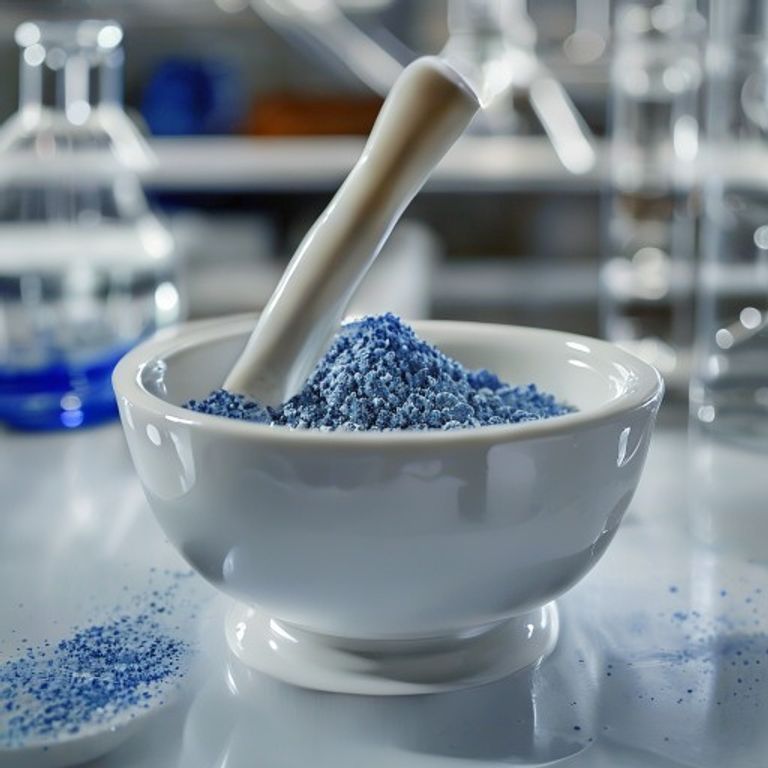
The Unsung Hero: Mastering Pestle and Mortar Chemistry for Precision Grinding

In the vast world of chemistry, where complex machinery often takes center stage, it’s easy to overlook the simple yet indispensable tools that form the bedrock of laboratory practice. Among these, the pestle and mortar stands out – a timeless piece of laboratory equipment that has been facilitating chemical transformations for centuries. Perhaps you’ve seen it in a historical movie or a biology class, but have you truly understood its profound role in chemistry?
Today, we’re diving deep into the fascinating world of pestle and mortar chemistry. We’ll explore not just how to use it, but why it’s so crucial, its benefits, and even the nitty-gritty of keeping it clean. Think of it as the ultimate guide to harnessing the power of manual trituration for your chemical endeavors.
The Core Function: Why Particle Size Matters in Chemistry
At its heart, the primary job of a pestle and mortar is particle size reduction. Imagine trying to dissolve a large rock in water versus fine sand. The sand will dissolve much faster, right? This simple analogy perfectly illustrates why grinding solid chemicals is so important in the lab.
- Increased Surface Area: By breaking down larger particles into smaller ones, we dramatically increase their total surface area. More surface area means more points of contact for reactions to occur, leading to faster and more efficient chemical processes.
- Enhanced Dissolution: For reactions that require dissolving a solid into a liquid, a finer powder will dissolve much more quickly and completely. This is crucial for preparing solutions with precise concentrations.
- Improved Homogenization: When mixing two or more solid substances, grinding them together ensures a more uniform mixture. This process, known as trituration, is vital for achieving consistent results, especially in areas like pharmaceutical formulation or creating composite materials.
- Better Sample Preparation: Before many analytical tests (like spectroscopy or chromatography), samples often need to be in a very fine, consistent powder form. The pestle and mortar is an excellent tool for this initial sample preparation.
Proper Technique: How to Use a Pestle and Mortar in the Chemistry Lab
Using a pestle and mortar might seem straightforward, but there’s an art to doing it correctly to maximize efficiency and minimize contamination or material loss. Let’s walk through the steps for grinding solid chemicals with a pestle and mortar:
- Choose the Right Tool: Pestle and mortars come in various materials (porcelain, agate, ceramic) and sizes. Porcelain is common for general lab use, while agate is excellent for very fine grinding due to its hardness and non-porous nature.
- Prepare Your Sample: Start with small amounts of material. If you have large chunks, break them down gently with the pestle first before attempting to grind. Use a clean laboratory spatulas to transfer the chemical into the mortar, ensuring no cross-contamination.
- The Grinding Motion: This isn’t just about smashing! The most effective technique combines pressing and circular motion.
- Apply firm, even pressure with the pestle.
- Use a circular, sweeping motion, moving from the center outwards and then back in.
- Rotate the mortar occasionally to ensure even grinding.
- Avoid excessive force that might damage the mortar or cause material to jump out.
- Scraping and Collecting: Periodically, scrape down any material sticking to the sides of the mortar or pestle using a spatula. This ensures all material is subjected to grinding. Once you achieve the desired particle size, carefully transfer the powdered chemical to its next container.
- Safety First: Always wear appropriate personal protective equipment (PPE), including safety goggles, to protect your eyes from fine particles. If grinding hazardous substances, work in a fume hood.
Benefits Beyond Basics: When a Pestle and Mortar Shines
Even with advanced lab equipment, the pestle and mortar retains its crucial role, especially when considering the benefits of pestle and mortar in chemical synthesis and analytical preparation.
- Cost-Effectiveness & Durability: It’s a relatively inexpensive piece of equipment that, with proper care, can last for decades. Unlike electronic grinders, there are no moving parts to break down.
- Control: Manual grinding gives you precise control over the particle size. You can visually inspect and feel the texture to achieve the exact fineness required for your specific application.
- Gentle Grinding: For heat-sensitive compounds, manual grinding generates less heat than high-speed electronic grinders, preserving the integrity of the chemical.
- Small Scale Precision: For small quantities of precious or potent chemicals, a pestle and mortar allows for maximum recovery and minimal loss compared to larger, automated systems. Once ground, it’s often crucial to measure the substance accurately, highlighting the importance of analytical balance validation for precise quantitative work.
Keeping It Pristine: Cleaning Laboratory Pestle and Mortar
Cross-contamination is a chemist’s nightmare. A dirty pestle and mortar can ruin an experiment, so proper cleaning is paramount.
Here’s how we keep our pestle and mortar spotless:
- Immediate Cleaning: Clean immediately after use. Don’t let residues dry and harden.
- Scrape Off Residue: Use a spatula or stiff brush to remove as much solid residue as possible.
- Wash with Solvent: Wash with an appropriate solvent. For water-soluble compounds, use distilled water. For organic compounds, a suitable organic solvent (like acetone or ethanol) followed by water is usually effective.
- Scrub if Needed: For stubborn residues, a gentle scrub brush can be used. Avoid abrasive scrubbers on delicate materials like agate.
- Rinse Thoroughly: Rinse several times with distilled water to ensure all cleaning agents are removed.
- Dry Completely: Air dry or dry with a lint-free cloth. Ensure it’s completely dry before storing to prevent moisture contamination or microbial growth.
- Dedicated Use (Optional but Recommended): In some labs, specific pestle and mortars are designated for particular types of chemicals (e.g., one for acids, one for bases, one for highly pure compounds) to further minimize cross-contamination risks.
Conclusion
The pestle and mortar may be ancient, but its role in modern chemistry is anything but obsolete. From preparing samples for sophisticated analysis to enabling precise chemical synthesis, this humble duo remains an invaluable tool in our laboratory arsenal. By understanding the principles behind its use and mastering the proper techniques, we can unlock its full potential, ensuring accuracy, efficiency, and safety in our chemical explorations.
FAQ about Pestle and Mortar Chemistry
Q: What’s the difference between a porcelain and an agate pestle and mortar?
A: Porcelain is more common and affordable, good for general grinding. Agate is harder, non-porous, and ideal for very fine grinding of hard materials or when contamination from porous surfaces is a concern. However, agate is more fragile and expensive.
Q: Can I grind wet samples with a pestle and mortar?
A: Yes, you can. This process is often called “wet trituration.” It’s useful for creating pastes or emulsions, or for dissolving solids in a small amount of liquid while grinding.
Q: How do I prevent static electricity when grinding dry powders?
A: Static can be a nuisance. You can try grounding the mortar, lightly humidifying the environment (if compatible with the chemical), or using an antistatic mat. Sometimes, a very small amount of a non-reactive liquid can help, but this changes the nature of the powder.
Q: Is there an alternative to a pestle and mortar for grinding in the lab?
A: Yes, depending on the scale and required fineness, alternatives include ball mills, mechanical grinders (like coffee grinders modified for lab use), or cryo-grinders (for very brittle or heat-sensitive materials). However, for small-scale, precise, and controlled grinding, the pestle and mortar often remains the preferred choice.
Q: How often should I clean my pestle and mortar?
A: Ideally, after every single use, especially if you’re switching between different chemicals. This prevents cross-contamination and ensures the integrity of your experiments.