

Beyond the Scoop: Your Ultimate Guide to Laboratory Spatulas

When we think about essential lab equipment, our minds often jump to complex machines or delicate glassware like beakers and test tubes. But what about the humble, often overlooked tool that plays a crucial role in almost every experiment? I’m talking about laboratory spatulas. For me, these simple scientific instruments are the unsung heroes of the lab bench, making precise material transfer and handling possible day in and day out.
You might be surprised by the sheer variety and versatility of these tools. From scooping powders to scraping residues, a good laboratory spatula is indispensable. Let’s dive deeper into why these tools are so vital and how we can get the most out of them.
The Many Faces of Laboratory Spatulas: Types and Materials
Just like wrenches come in different sizes, types of laboratory spatulas are designed for specific tasks. It’s not a one-size-fits-all world!
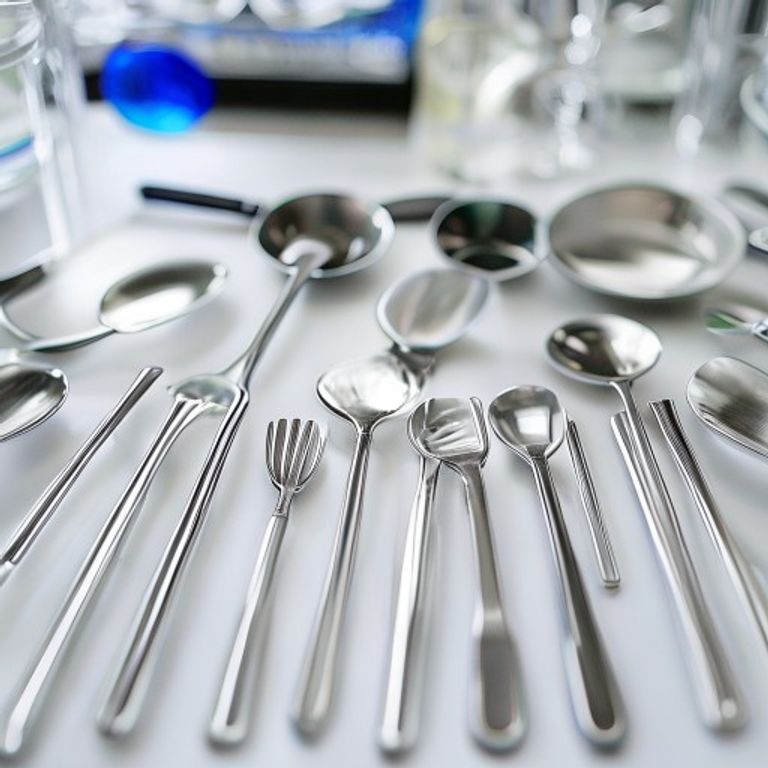
- Flat Spatulas: These are probably what first comes to mind. They have a flat, often thin blade at one or both ends. Perfect for scraping solids from containers, mixing small amounts of material, or spreading substances thinly.
- Spoon-Shaped Spatulas (Scoopulas): If you need to transfer granular solids or powders, the scoopulas are your best friend. They often feature a spoon-like end on one side and a flat blade on the other, making them incredibly versatile. Their curved shape helps prevent spills when moving materials.
- Micro Spatulas: When precision is paramount, especially with very small quantities of expensive reagents, micro spatulas for powder handling are essential. These are typically very slender and delicate, allowing for minute adjustments and transfers. Imagine trying to weigh out milligrams of a compound – a micro spatula makes that task achievable.
- Flexible Spatulas: Some spatulas are made from more flexible materials like polypropylene, excellent for scraping viscous liquids or semi-solids from the sides of containers without scratching them.
Beyond shape, the material is also critical. Most high-quality spatulas are made from stainless steel, which is durable, corrosion-resistant, and easy to clean. For specific applications, especially when dealing with highly corrosive chemicals or needing to prevent metal contamination, we might opt for spatulas made from plastics like polypropylene, PTFE (Teflon), or even ceramic.
Uses for Lab Spatulas in Chemistry and Beyond
The applications of laboratory spatulas stretch across virtually every scientific discipline. Their primary function revolves around material handling, but let’s break down some specific uses for lab spatulas in chemistry and other fields:
- Transferring Solids: This is probably the most common use. Whether it’s moving a chemical from a stock bottle to a beaker for weighing, or adding reagents to a reaction vessel, spatulas make material transfer tools both precise and clean.
- Mixing and Stirring: For small-scale mixing in test tubes or small beakers, a spatula can effectively blend components without the need for a stirring rod.
- Scraping and Cleaning: Spatulas are excellent for scraping residues from glassware, removing precipitates, or even cleaning the inside surfaces of various labware.
- Breaking Up Aggregates: Sometimes, powders clump together. A sturdy spatula can be used to gently break these aggregates apart, ensuring homogeneous samples.
- Applying Substances: In some experiments, a thin layer of a chemical needs to be applied to a surface. A flat spatula blade can do this with surprising precision.
I find that spatulas truly shine when we need to be meticulous. They allow us to work with small amounts of precious samples, minimizing waste and maximizing accuracy.
Choosing the Right Spatula: Practical Considerations
With so many options, how do we choose the right spatula? It boils down to a few key factors:
- Material Compatibility: If you’re working with strong acids or bases, you’ll need chemical resistant labware. Stainless steel is generally good, but for highly aggressive chemicals, a PTFE-coated or all-plastic spatula might be better. Always check compatibility!
- Sterilization Needs: For biological work or sterile environments, you’ll definitely need autoclavable spatulas for sterile environments. Stainless steel spatulas are usually autoclavable and can withstand high temperatures, while many plastic varieties are not.
- Quantity and Precision: For microgram quantities, a micro spatula is essential. For larger bulk transfers, a scoopula or a wider flat spatula will be more efficient.
- Cost and Convenience: For high-volume, potentially messy, or cross-contamination-sensitive work, disposable lab spatulas bulk might be a cost-effective and safe option. They eliminate cleaning time and the risk of carryover contamination.
Think about the task at hand before grabbing just any spatula. A little thought can prevent headaches later!
Conclusion
From their humble appearance, laboratory spatulas are far more than just simple scooping tools. They are fundamental to precise measurements, clean transfers, and safe handling of chemicals across all scientific disciplines. Understanding the various types of laboratory spatulas, their specific uses for lab spatulas in chemistry, and how to choose and care for them can significantly improve our lab efficiency and accuracy. So, next time you’re in the lab, take a moment to appreciate these small but mighty tools!
Frequently Asked Questions About Laboratory Spatulas
Q1: Can I use a regular kitchen spatula in the lab?
A: While a kitchen spatula might look similar, it’s generally not recommended for lab use. Lab spatulas are made from specific materials (like high-grade stainless steel or chemical-resistant plastics) designed to withstand corrosive chemicals, extreme temperatures, and rigorous cleaning processes like autoclaving. Kitchen spatulas might corrode, react with chemicals, or leach contaminants, compromising your experimental results.
Q2: How do I clean my lab spatulas properly?
A: The cleaning process depends on what the spatula was used for. For most non-hazardous chemicals, a thorough wash with detergent and water, followed by rinsing with deionized water and drying, is sufficient. If the spatula was used with hazardous materials, follow specific lab protocols for decontamination. Autoclavable spatulas should be sterilized as per standard procedures for sterile equipment.
Q3: What’s the difference between a spatula and a scoopula?
A: A “spatula” is a broad term for a tool with a flat, blade-like end. A “scoopula” is a specific type of spatula that typically has a U-shaped or spoon-like trough on one end and often a flat blade on the other. Scoopulas are particularly good for scooping and transferring powders and granular solids with minimal spillage, thanks to their curved design.