Mastering the Mortar and Pestle: An Essential Guide to Laboratory Use

In the vast world of scientific research and experimentation, some tools are flashy and complex, while others are humble yet indispensable. Among the latter, the mortar and pestle stands out as a true workhorse. It might seem like a simple tool, something you’d find in a kitchen, but in the laboratory, its role is critical for precise sample preparation. We often overlook the basic steps, but getting them right can make or break an experiment. So, let’s dive deep into the world of mortar and pestle laboratory use and uncover its secrets to achieving optimal results.
Think of it this way: just like an artist needs to prepare their pigments before painting, a scientist needs to prepare their samples before analysis. This is where our trusty duo comes into play. From grinding solid chemicals into fine powders to mixing substances thoroughly, the mortar and pestle performs a vital function, ensuring that our samples are homogeneous and ready for the next stage of investigation. It’s a tool that bridges the gap between raw material and analytical readiness.
What Exactly is a Mortar and Pestle, and Why is it So Essential?
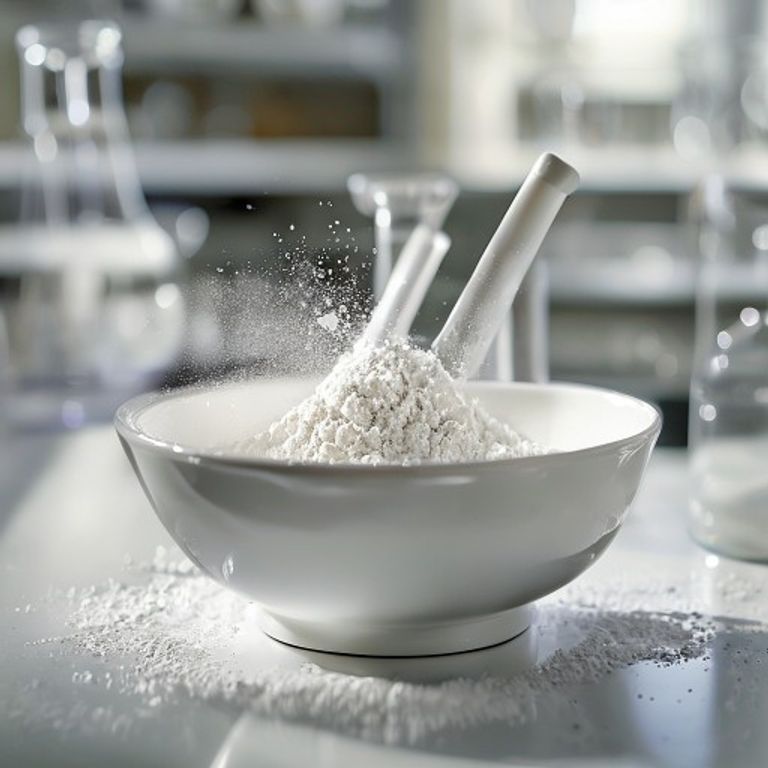
At its core, a mortar and pestle is a pair of tools used to crush, grind, and mix substances. The mortar is the bowl-shaped vessel, while the pestle is the heavy, club-shaped object used to press and grind against the inner surface of the mortar. This simple mechanical action allows us to perform particle size reduction, which is often a prerequisite for many laboratory procedures. Without proper grinding, certain reactions might not occur efficiently, or analytical instruments might not be able to process the sample correctly. It’s an indispensable grinding equipment that has stood the test of time.
Choosing the Right Tools: Types of Mortar and Pestle Materials for Scientific Research
Not all mortars and pestles are created equal, especially when it comes to laboratory applications. The material choice is crucial, as it can impact everything from sample contamination to the efficiency of grinding. Here are the most common types we encounter:
- Porcelain: This is perhaps the most common type. Porcelain is non-porous, relatively hard, and resistant to many chemicals. It’s excellent for general sample preparation, especially for grinding plant materials, minerals, or general chemicals. Just be careful, it can chip if dropped or used too aggressively with very hard samples.
- Agate: For high-purity applications, agate mortars and pestles are king. Agate is extremely hard and smooth, minimizing sample loss and contamination from the grinding surface. It’s perfect for sensitive analytical work where even trace contaminants are unacceptable, though they tend to be more expensive.
- Glass: Ideal for mixing soft solids or liquids, especially when transparency is needed to observe the mixing process. Glass is chemically inert but can be brittle and is not suitable for grinding hard samples.
- Stainless Steel: Used for specific applications where metallic contamination is not an issue, or when working with very tough, fibrous materials that might damage other materials. They are durable and easy to clean.
Mastering the Art: How to Use Mortar and Pestle in a Chemistry Lab
Using a mortar and pestle isn’t just about smashing things; there’s an art to it, especially when aiming for precise trituration and homogenization. Here’s a step-by-step guide to get you started:
- Cleanliness First: Always ensure both the mortar and pestle are meticulously clean and dry before use. Residual chemicals or moisture can contaminate your sample.
- Small Portions: Don’t overload the mortar. Work with small quantities of your sample at a time. This allows for more effective grinding and better control over particle size.
- Grinding Technique: Place the sample in the mortar. Hold the pestle firmly and apply downward pressure while rotating it in a circular or figure-eight motion against the inner surface of the mortar. The goal is to crush the material against the sides and bottom, not just push it around.
- Scraping Down: Periodically scrape down the sides of the mortar with a spatula to bring any unground material back to the center for further grinding.
- Achieving Fineness: Continue grinding until the desired particle size reduction is achieved. For very fine powders, you might need to grind for several minutes.
Best Practices for Grinding Samples with Mortar and Pestle
To get the most out of your mortar and pestle laboratory use, we have a few best practices:
- Safety First: Wear appropriate personal protective equipment (PPE) like safety glasses, especially when grinding brittle or volatile substances.
- Prevent Cross-Contamination: Always use separate mortars and pestles for different types of samples, or ensure thorough cleaning between uses. This is critical for accurate results.
- Temperature Control: For heat-sensitive samples, consider cooling the mortar and pestle in liquid nitrogen or a freezer before grinding to prevent degradation.
- Controlled Environment: For very fine powders, use a fume hood to prevent inhalation and to contain any airborne particles.
- Appropriate Force: Don’t apply excessive force. Let the grinding motion and the hardness of the material do the work. Too much force can damage the equipment or even fling samples out.
Keeping it Pristine: Cleaning and Maintenance of Laboratory Mortar and Pestle
Proper cleaning and maintenance of laboratory mortar and pestle are crucial for longevity and preventing contamination. We always clean them immediately after use. For most general lab use, warm water and a brush are sufficient. For stubborn residues, a mild detergent or a solvent specific to the material being removed can be used. After washing, rinse thoroughly with distilled water and let them air dry completely, or dry them with a lint-free cloth. Store them in a clean, dust-free environment, perhaps even inverted to prevent dust accumulation.
Beyond Grinding: Applications of Mortar and Pestle in Pharmaceutical and Other Labs
The utility of the mortar and pestle extends far beyond basic chemistry. We find its critical role in various specialized fields:
- Pharmaceutical Labs: In applications of mortar and pestle in pharmaceutical labs, it’s used for compounding medications, blending active pharmaceutical ingredients (APIs) with excipients, and preparing uniform mixtures for tablet pressing or capsule filling. Precision in trituration is paramount here for consistent drug dosage.
- Forensic Science: Grinding evidence like paint chips, fibers, or small drug samples for analysis.
- Biology and Biochemistry: Disrupting plant or animal tissues to extract cellular components or DNA/RNA. This is a crucial step in many extraction protocols.
- Material Science: Preparing fine powders of ceramics or metals for advanced material synthesis and characterization.
Kesimpulan
The mortar and pestle, despite its ancient origins, remains an indispensable tool in the modern laboratory. From preparing samples for sophisticated analytical instruments to compounding life-saving medications, its fundamental role in particle size reduction and homogenization cannot be overstated. By understanding the different types, mastering proper techniques, and adhering to best practices for cleaning and maintenance, we can ensure that this humble piece of grinding equipment continues to deliver precise and reliable results, empowering us to uncover new scientific insights. It’s truly a testament to the idea that sometimes, the simplest tools yield the most profound outcomes.
FAQ
Q1: Can I use my kitchen mortar and pestle for lab work?
A1: It’s generally not recommended. Kitchen mortars and pestles might be made of porous materials, making them harder to sterilize and prone to cross-contamination. Lab-grade equipment is designed for precision, chemical resistance, and ease of cleaning, ensuring scientific integrity.
Q2: How do I prevent static electricity when grinding dry powders?
A2: Static can be a nuisance! You can try grounding the mortar and pestle if possible, or very slightly humidifying the atmosphere (if your sample allows). Sometimes, using an anti-static mat can help, or for very sensitive materials, specialized anti-static mortars are available.
Q3: What’s the difference between trituration and grinding?
A3: Grinding is the general process of reducing particle size. Trituration is a specific type of grinding where a solid is ground into a fine powder or a solid is mixed with a liquid to form a paste, often in a mortar and pestle. It emphasizes achieving a uniform, fine mix, especially relevant in pharmacy.
Q4: How do I know when my sample is ground finely enough?
A4: This depends on your experiment’s requirements. For many applications, a visual inspection for a uniform, fine powder is sufficient. For more precise needs, you might use sieves to check particle size distribution or even microscopic analysis. Always refer to your experimental protocol.