The Silent Supporter: Mastering Your Chemistry Tripod Stand for Safe & Effective Experiments

In the bustling world of a chemistry laboratory, with its array of complex instruments, intricate glassware, and bubbling solutions, some tools are often overlooked. They sit quietly, performing their duties without much fanfare. One such “unsung hero” is the humble chemistry tripod stand. It might seem like a simple piece of equipment, but trust me, we couldn’t conduct many of our fundamental experiments safely and effectively without it.
What Exactly Is a Chemistry Tripod Stand?
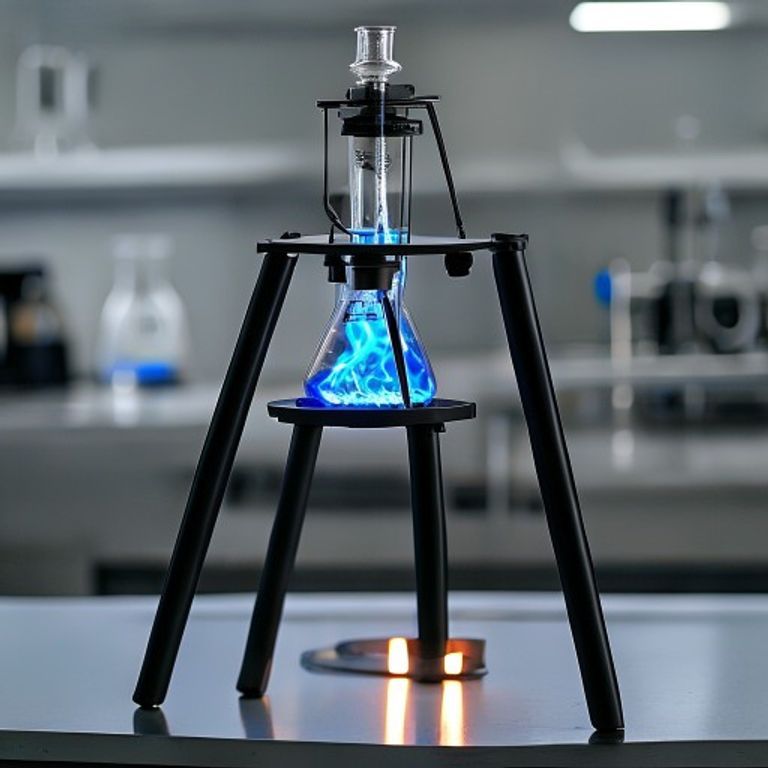
Imagine a tiny, sturdy table with three legs – that’s essentially what a chemistry tripod stand is! Made typically from cast iron or steel, it’s designed to be robust and stable. Its main purpose is to provide a firm, elevated platform for heating substances with a Bunsen burner or to support various pieces of apparatus during an experiment. Think of it as the strong, silent foundation for many of our benchtop setups.
Why We Can’t Live Without It: Key Uses in the Lab
While its design is straightforward, the uses of a tripod stand in a chemistry lab are incredibly diverse and crucial. Primarily, it’s our go-to for heating. Ever wonder how we safely heat a beaker full of liquid over a flame without holding it? This is where our tripod stand steps in.
- Heating Apparatus Support: Paired with a wire gauze (which has a ceramic center to distribute heat evenly), the tripod stand creates a stable platform for placing a beaker, flask, or evaporating dish directly above a Bunsen burner flame. It ensures that the glassware is at the optimal height for heating and doesn’t tip over.
- General Equipment Support: Beyond heating, it provides a stable base for other laboratory equipment. Perhaps you need to elevate a piece of apparatus for a specific reaction, or simply keep something steady and off the workbench.
- Safety and Stability: In a lab, stability is paramount. A wobbly setup can lead to spills, broken glassware, or even injuries. The three-legged design offers inherent stability, much like a camera tripod ensures a steady shot. It minimizes the risk of accidents, letting us focus on the science. Indeed, to truly appreciate the essential laboratory tripod uses for every experiment, we need to recognize its role in maintaining a safe and controlled environment.
Setting Up for Success: A Quick Guide to Heating
Knowing how to set up a tripod stand for heating is a fundamental skill for any budding chemist. It’s simple, but doing it correctly makes all the difference:
- Position the Tripod Stand: Place the tripod stand securely on a flat, stable surface, typically your lab bench, ensuring all three legs are firmly on the ground.
- Add the Wire Gauze: Carefully place a wire gauze on top of the tripod stand’s ring. This gauze acts as a platform and helps to spread the heat evenly across the base of your glassware. Without it, the direct flame could cause the glass to crack.
- Place Your Glassware: Now, position your beaker or flask (containing your substance) on top of the wire gauze. Make sure it’s centered and stable.
- Introduce the Bunsen Burner: Finally, slide your Bunsen burner underneath the tripod stand, directly below the wire gauze and your glassware. Adjust the flame to the desired intensity and height for heating. Remember to always light the Bunsen burner after everything else is in place and ensure it’s on a heat-resistant mat.
See? It’s not rocket science, but each step is vital for a smooth and safe experiment!
Choosing Your Lab Partner: Materials and Durability
When it comes to the material of a chemistry tripod stand, durability is key. Most are made from:
- Cast Iron: This is perhaps the most common material. Cast iron is heavy, extremely sturdy, and resistant to high temperatures, making it ideal for supporting hot apparatus. Its weight also contributes to its stability.
- Steel: Some tripod stands might be made from steel, often coated for corrosion resistance. Steel stands also offer excellent strength and durability.
Regardless of the exact material, what’s important is that your tripod stand is robust enough to handle the stresses of heating and supporting various weights without deforming or failing. A good tripod stand will last for many years in the lab, becoming a reliable companion for countless experiments.
Where to Find Your Perfect Tripod Stand
If you’re looking to buy a laboratory tripod stand online or from a physical supplier, you’ll find them readily available from various laboratory equipment vendors. Websites specializing in scientific supplies, educational equipment, or general e-commerce platforms often carry them. When purchasing, consider:
- Size: Tripod stands come in different heights and ring diameters. Choose one appropriate for the typical size of your glassware (beakers, flasks) and the height needed for your Bunsen burner.
- Material: As discussed, cast iron or robust steel are good choices for longevity.
- Stability: Look for sturdy construction and well-welded joints.
It’s a relatively inexpensive but indispensable investment for any lab, be it a professional setup or a home science project.
Safety First! Important Reminders
While the tripod stand itself is quite safe, it’s often used in conjunction with heat. Always remember:
- Use appropriate protective equipment, like safety goggles.
- Never leave a lit Bunsen burner unattended.
- Ensure the area around your heating apparatus is clear and free of flammable materials.
- Allow hot glassware and equipment to cool before handling.
Conclusion
So, there you have it! The chemistry tripod stand, though unassuming, is a cornerstone of safe and effective laboratory practice. From supporting our beakers over a Bunsen burner to providing a stable base for various setups, its role is invaluable. Next time you’re in the lab, take a moment to appreciate this silent supporter – it’s working hard to make your experiments a success!
FAQ: Your Tripod Stand Questions Answered
What is a tripod stand used for in chemistry?
A tripod stand in chemistry is primarily used to provide a stable, elevated platform for heating glassware (like beakers and flasks) over a Bunsen burner. It also serves as general support for other laboratory equipment, ensuring stability and safety during experiments.
Why do we use wire gauze on a tripod stand?
We use a wire gauze on a tripod stand for two main reasons: firstly, it acts as a flat surface to support the glassware securely. Secondly, the ceramic center of the wire gauze helps to distribute the heat from the Bunsen burner flame evenly across the bottom of the beaker or flask, preventing localized overheating which could cause the glass to crack.
Can I use any metal stand as a chemistry tripod stand?
While many metal stands might look similar, a proper chemistry tripod stand is specifically designed with materials like cast iron or robust steel to withstand high temperatures and provide maximum stability. Using just “any” metal stand might result in instability, warping, or even melting under the heat, compromising safety and the experiment’s integrity. Always opt for laboratory-grade equipment.
What is the typical height of a laboratory tripod stand?
Tripod stands come in various sizes, but a common height for general laboratory use might be around 15-20 cm (6-8 inches). This height allows sufficient space underneath for a standard Bunsen burner flame to heat the apparatus effectively while maintaining a reasonable working level on the bench.