Mastering the Bunsen Burner: Conseils pratiques, Hacks de sécurité et Choix du meilleur modèle pour votre laboratoire

Présentation
Quand je suis entré dans un laboratoire de chimie du lycée, le brûleur Bunsen ressemblait à un simple tube métallique avec une flamme qui pouvait fondre le chocolat. Avancez rapidement quelques années, et j'ai appris que cette humble pièce de matériel de laboratoire est en fait un outil de précision qui peut atteindre des températures allant jusqu'à 1 500 °C lorsqu'il est alimenté par du méthane. Que vous soyez un étudiant, un amateur ou un chercheur chevronné, sachant comment contrôler cette flamme, le garder en sécurité et choisir le bon modèle peut faire une énorme différence dans vos expériences.
Comment ajuster la flamme sur un brûleur Bunsen
Régler la flamme est comme régler une guitare – un petit virage ici, un léger rebondissement là, et vous obtenez le terrain parfait (ou dans notre cas, la flamme parfaite). Suivez ces étapes :
- Ouvrez la soupape lentement. Commencez par le bouton à la position "off", puis tournez dans le sens des aiguilles d'une montre jusqu'à ce que vous entendiez un sifflement stable.
- Réglez la vis de mélange d'air. Ce petit bouton contrôle la quantité d'air mélangé avec le méthane. Tournez à gauche pour une flamme jaune et lumineuse (plus de carburant, moins d'air) ou à droite pour une flamme bleue et non lumineuse (plus d'air, plus chaud).
- Finissez la hauteur de la flamme. Utilisez la commande de gaz principale pour lever ou abaisser la flamme. Une bonne règle du pouce : l'extrémité du cône bleu intérieur doit être juste au-dessus de la jante du brûleur pour la plupart des tâches de chauffage.
Pensez à la vis de mélange d'air comme le «vent» sur un poêle de camp – ouvrez-le trop et les éclats de flamme; fermez-le trop et vous obtenez une brûlure fumée et inefficace.
Bunsen Burner Lignes directrices pour la sécurité des laboratoires
La sécurité n'est pas facultative ; elle est la base de chaque expérience réussie. Voici mes habitudes de sécurité :
- Vérifiez les fuites. Avant l'éclairage, appliquer une solution d'eau savonneuse sur le tuyau et les raccords. Bubbles signifie une fuite – serrer ou remplacer le tuyau.
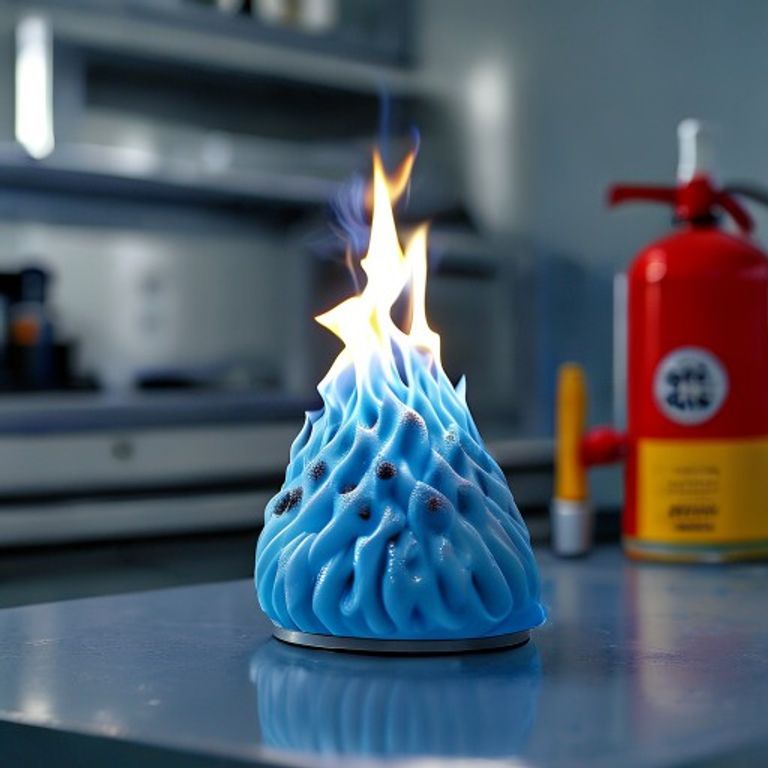
- Dégagez la zone de travail. Enlever les matières inflammables, garder un extincteur à proximité et ne jamais laisser un brûleur allumé sans surveillance.
- Utilisez un EPI approprié. Le manteau, les lunettes et les gants résistants à la chaleur vous protègent des éclaboussures et des brûlures accidentelles.
- Éteignez complètement le gaz. Après chaque utilisation, fermez la soupape de gaz à la source, pas seulement le bouton du brûleur.
Suivre ces étapes est comme porter une ceinture de sécurité – vous espérez que vous n'en avez jamais besoin, mais vous êtes content qu'il soit là.
Choisir le meilleur brûleur Bunsen pour la chimie du lycée
Tous les brûleurs ne sont pas égaux. Pour un cadre d'études secondaires, recherchez ces caractéristiques :
- Une base solide. Une base large et lourde empêche le basculement lorsque les élèves règlent la flamme.
- Commande de mélange d'air réglable. Permet aux enseignants de manifester des flammes lumineuses et non lumineuses.
- Vanne d'arrêt de sécurité. Certains modèles ont un verrou intégré qui arrête le débit de gaz si la flamme s'éteint.
Un choix populaire parmi les éducateurs est le MSA Série de brûleurs Bunsen, loué pour sa durabilité et ses marquages faciles à lire.
Dépannage d'un brûleur à flamme basse
Si votre brûleur refuse de produire une forte flamme, essayez ces diagnostics :
- Problème d'approvisionnement en gaz. Vérifiez que le régulateur est complètement ouvert et que la bouteille de gaz n'est pas vide.
- Une buse enrobée. Les résidus peuvent bloquer le débit de gaz. Nettoyer l'embout avec un fil fin ou remplacer la buse.
- Vis de mélange d'air collée. Appuyez doucement sur le bouton avec un maillet en caoutchouc pour libérer les débris.
Think of a low flame like a car that won’t accelerate – you check the fuel, the air intake, and the spark. Fix one, and the performance returns.
Bunsen Burner vs. Lampe à alcool: lequel utiliser?
Both tools produce heat, but they serve different purposes:
- Temperature control. A Bunsen burner can reach much higher temperatures (up to 1,500 °C) compared to an alcohol lamp (≈ 800 °C).
- Fuel source. Bunsen burners typically use methane or natural gas, while alcohol lamps rely on ethanol or methanol, which are safer for small‑scale, low‑heat tasks.
- Flame visibility. The blue flame of a Bunsen burner indicates efficient combustion, whereas an alcohol lamp’s flame is orange‑yellow, signaling incomplete combustion.
If you need a clean, hot flame for glasswork or metal heating, reach for the Bunsen. For gentle warming or when gas lines aren’t available, the alcohol lamp is your friend.
Applications pratiques : du chauffage simple à la synthèse complexe
Beyond the basic heat source, a Bunsen burner can be a catalyst for creativity. For ideas on how to integrate it into experiments, check out essential uses of a Bunsen burner in scientific experiments.
Conclusion
Mastering the Bunsen burner is less about memorizing numbers and more about developing a feel for the flame, just like learning to ride a bike. By adjusting the flame correctly, following safety protocols, choosing the right model, and knowing when to swap it for an alcohol lamp, you’ll boost both the safety and success of your lab work. Keep these tips in mind, and the Bunsen burner will become a reliable partner in every experiment you tackle.
FAQ
Q: Can I use a Bunsen burner outdoors?
A: Yes, but ensure it’s placed on a stable, non‑flammable surface and keep a wind shield nearby to protect the flame.
Q: What’s the difference between a luminous and a non‑luminous flame?
A: A luminous (yellow) flame has incomplete combustion with more soot, while a non‑luminous (blue) flame indicates complete combustion and higher temperature.
Q: How often should I replace the burner’s nozzle?
A: If you notice frequent clogging or a consistently weak flame, replace the nozzle. Otherwise, a yearly inspection is sufficient.
Q: Is it safe to use a Bunsen burner with a glass lid on the container?
A: Only if the lid is made of heat‑resistant glass and there’s enough clearance for steam to escape; otherwise, pressure can build up and cause breakage.
Q: Can I connect a Bunsen burner to a propane tank?
A: Yes, but you’ll need a regulator designed for propane, as the pressure and fuel‑air mix differ from methane.