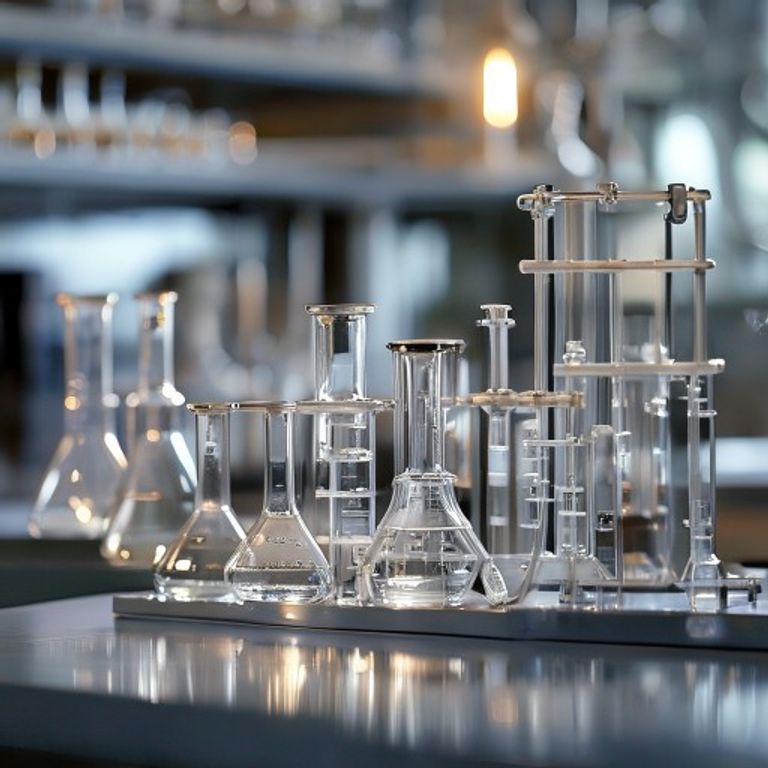
Refroidissement en laboratoire : votre guide ultime pour maîtriser les condenseurs en chimie

Jamais demandé comment les chimistes parviennent à récupérer des solvants précieux, garder les réactions bouillantes sans tout perdre dans l'atmosphère, ou purifier les composés avec une précision remarquable? Il y a des chances qu'il y ait en arrière-plan un morceau de verre digne de confiance qui fait un gros lifting (ou plutôt un refroidissement lourd) : le condenseur ! Souvent négligé mais incroyablement vital, les condenseurs sont les héros méconnus de nombreux laboratoires de chimie. Si vous avez déjà senti un peu perplexe par toutes ces bobines de verre et les tubes d'eau, ne vous inquiétez pas – vous êtes au bon endroit. Laissez-vous plonger profondément dans le monde cool des condenseurs et découvrez pourquoi ils sont absolument essentiels pour la navigation en douceur dans vos aventures de chimie !
Qu'est-ce qu'un condenseur ? Votre unité de réfrigération
À son cœur, un condenseur est un morceau de verre de laboratoire conçu pour refroidir les vapeurs chaudes, les faisant condenser dans la forme liquide. Pensez-y comme un mini-réfrigérateur ou un système de refroidissement très efficace spécialement conçu pour vos réactions chimiques. Lorsqu'un liquide est chauffé, il se transforme en vapeur. Si cette vapeur est autorisée à s'échapper, vous perdez vos précieux produits chimiques. Un condenseur empêche cela en fournissant une surface froide que la vapeur chaude rencontre. Alors que la vapeur touche cette surface froide, elle perd de l'énergie, se refroidit et revient à son état liquide. Ce liquide peut ensuite être recueilli, retourné dans la fiole de réaction ou tout simplement empêché de s'échapper dans l'environnement de laboratoire.
La plupart des condenseurs sont faits de verre borosilicaté (penser Pyrex ou Kimax), qui est durable et résistant aux chocs thermiques, ce qui le rend parfait pour la manipulation des changements de température. Ils comportent généralement un tube intérieur où la vapeur se déplace et une veste extérieure à travers laquelle un fluide de refroidissement (le plus souvent de l'eau) circule.
Pourquoi avons - nous besoin de condensateurs? Les fonctions de base en chimie
Alors, pourquoi aller à tous ces ennuis pour condenser les vapeurs ? Les condenseurs permettent plusieurs processus critiques dans le laboratoire de chimie :
1. Réactions de reflux : garder les choses dans le pot
Imaginez-vous cuisiner un ragoût qui a besoin de mijoter pendant des heures pour développer sa saveur. En chimie, de nombreuses réactions doivent être chauffées pendant de longues périodes. Cependant, si vous faites simplement chauffer un liquide dans une fiole ouverte, le solvant s'évaporera, et vous finirez par faire bouillir votre réaction sèche! C'est là qu'intervient le reflux. Un condenseur est placé verticalement au-dessus de la fiole de réaction. Au fur et à mesure que le solvant bouillit et se transforme en vapeur, il s'élève dans le condenseur, se refroidit et retombe dans la fiole de réaction. Cela crée un système de boucle fermée où le solvant bouillit, se condense et retourne en permanence, permettant à la réaction de se produire à une température constante sans perte de solvant. C'est comme un sauna chimique perpétuel !
2. Distillation: l'art de la séparation
La distillation est une technique fondamentale de purification utilisée pour séparer les composants d'un mélange liquide en fonction de leurs différents points d'ébullition. Ici, le condenseur joue un rôle central dans la collecte du liquide purifié. Le mélange est chauffé, et le composant avec le point d'ébullition inférieur vaporise d'abord. Cette vapeur se déplace ensuite dans le condenseur, refroidit, se condense dans le liquide et est recueillie dans un flacon récepteur séparé. Qu'il s'agisse de distillation simple, de distillation fractionnelle ou de distillation sous vide, un condenseur est indispensable pour capturer votre produit purifié.
3. Récupération de solvants: chimie verte en action
Dans de nombreuses expériences, beaucoup de solvant est utilisé. Plutôt que de simplement le jeter (ce qui peut être coûteux et non respectueux de l'environnement), les chimistes récupèrent et recyclent souvent les solvants. Cela se fait généralement par distillation, où le solvant est vaporisé puis condensé dans une forme liquide propre, prêt à être réutilisé. Les condenseurs rendent ce processus efficace et durable.
4. Scrubing et piégeage du gaz: Attraper les fumées nastiques
Parfois, les réactions produisent des sous-produits gazeux indésirables, voire dangereux. Un condenseur peut faire partie d'un système de refroidissement et de condensation de ces gaz, les empêchant de s'échapper dans l'atmosphère du laboratoire. Bien que ce ne soit pas leur rôle principal, un piège à froid (souvent avec un mécanisme semblable à un condenseur) est crucial pour capturer des composés volatils ou protéger les pompes à vide des vapeurs corrosives.
Types de condenseurs : une visite à travers la verrerie
Tout comme il existe différents outils pour différents emplois, il existe différents types de condenseurs, chacun conçu pour des applications spécifiques:
1. Condenseur Liebig: Le tireur droit
C'est probablement le condenseur le plus commun et reconnaissable. Il se compose d'un tube intérieur droit entouré d'une veste extérieure plus large. L'eau de refroidissement passe par la veste, refroidissant la vapeur passant par le tube intérieur. Les condenseurs Liebig sont excellents pour la distillation simple et le reflux général où la voie de vapeur est relativement courte et la demande de refroidissement n'est pas extrême. Ils sont simples et efficaces.
2. Allihn Condenser (condenseur gonflé) : Le tour de la balle
Le condenseur Allihn dispose d'une série d'ampoules ou d'indentations dans son tube intérieur, augmentant la surface de vapeur à condenser. Cette surface améliorée la rend plus efficace au refroidissement par rapport à un condenseur Liebig, en particulier pour les réactions de reflux avec des solvants à point d'ébullition plus élevé ou lorsqu'un refroidissement plus vigoureux est nécessaire. Pensez à ces bosses comme des zones de refroidissement supplémentaires !
3. Condenseur Graham (condenseur huilé): Le chiller à spirale
Dans un condenseur Graham, le tube intérieur est enroulé dans une spirale. Cette conception offre une très grande surface dans un espace compact, ce qui la rend exceptionnellement efficace pour la condensation des vapeurs. Cependant, en raison de la trajectoire enroulée, il ya un risque plus élevé de formation de la pression de vapeur vers le haut, de sorte qu'ils ne sont généralement pas recommandés pour le reflux à moins que soigneusement géré. Ils sont souvent utilisés pour la distillation où une condensation efficace d'un grand volume de vapeur est nécessaire.
4. Vigreux Condenseur (ou colonne Vigreux) : Le chasseur fractionnaire
Alors que souvent appelé un Vigreux "condenseur", il est plus précisément une colonne fractionnante. Il comporte une série d'indentations pointant vers le bas sur sa surface interne, ce qui augmente significativement la surface pour l'échange vapeur-liquide. Cela le rend idéal pour la distillation fractionnelle, où il aide à séparer les liquides avec des points d'ébullition très similaires en fournissant plusieurs "mini-distillations" sur sa longueur. Il n'est pas principalement destiné à la condensation, mais à la purification de la vapeur *avant* il atteint le condenseur réel.
5. Condenseur d'air: le roi de la simplicité
Comme son nom l'indique, un condenseur d'air n'utilise pas l'eau. C'est simplement un long et large tube en verre. Il repose sur l'air ambiant pour refroidir les vapeurs montantes. Ceux-ci sont généralement utilisés pour les solvants à haut point d'ébullition (au-dessus de 150°C) où la vapeur est tellement volatile qu'elle s'échapperait rapidement, et un simple refroidissement de l'air est suffisant. Ils sont excellents pour réduire la consommation d'eau et simplifier les configurations lorsque les conditions le permettent.
Comment fonctionne un condenseur? La science derrière le cool
La magie d'un condenseur se résume à un principe fondamental de la physique : le transfert de chaleur. Voici une rapide descente:
- La vapeur entre : La vapeur chaude d'un liquide bouillant ou d'une fiole de réaction s'élève dans le tube intérieur du condenseur.
- Débit du liquide de refroidissement: Simultanément, un liquide de refroidissement (habituellement de l'eau du robinet, mais parfois de l'eau réfrigérée, des solutions antigel, ou même des bains de glace carbonique/acétone pour des températures très basses) circule dans la veste extérieure. Il entre généralement de l'entrée inférieure et sort de la sortie supérieure. Ce flux de contre-courant assure une efficacité de refroidissement maximale – l'eau la plus froide répond à la vapeur la plus froide et l'eau la plus chaude répond à la vapeur la plus chaude.
- Échange de chaleur: Lorsque la vapeur chaude entre en contact avec la surface intérieure froide du condenseur, elle transfère son énergie thermique (chaleur) au fluide de refroidissement.
- Condensation: Perdre cette énergie fait refroidir la vapeur rapidement. Lorsque la vapeur se refroidit sous son point d'ébullition, elle subit une transition de phase et se condense en gouttelettes liquides.
- Recouvrement/Retour : Ces gouttelettes liquides s'écoulent ensuite dans le tube intérieur, soit en retournant dans la fiole de réaction (pour le reflux) soit dans une fiole de collecte (pour la distillation).
C'est un cycle continu de chauffage, de vaporisation, de refroidissement et de condensation, tous orchestrés par ce morceau de verre intelligent !
Configuration de votre condenseur: Conseils pour une opération en douceur
Obtenir votre configuration de condenseur correctement est crucial pour la sécurité et l'efficacité. Voici quelques conseils pro:
- Serrure sécurisée : Toujours serrer votre condenseur en toute sécurité, idéalement au niveau du cou, sur un support robuste. Si elle fait partie d'un appareil de distillation, assurez-vous que tous les composants sont alignés et correctement serrés. La verrerie est fragile, et une goutte peut ruiner votre journée (et votre expérience!).
- Connexions du tuyau : Branchez le tuyau d'entrée d'eau au inférieur adaptateur du condenseur et du tuyau de sortie supérieur adaptateur. Cela garantit que la veste de condensateur se remplit complètement d'eau, maximisant l'efficacité de refroidissement. Si vous le connectez de l'autre manière, les poches d'air peuvent se former, réduisant la zone de refroidissement.
- Débit d'eau: Commencez par un flux doux d'eau de refroidissement. Vous n'avez pas besoin d'un gush puissant ; un filet stable est généralement suffisant. Trop de pression peut déloger les tuyaux, provoquant des inondations ! Vérifiez que l'eau coule librement dans le condenseur et dans le drain.
- Vérifiez les fuites : Avant de chauffer quoi que ce soit, vérifiez toutes les connexions pour détecter les fuites. Une petite goutte d'eau peut rapidement devenir un gros problème, surtout avec l'eau près de l'équipement électrique.
- Graisse si nécessaire: Si vous raccordez des joints en verre moulu, une fine couche de graisse de bouchon peut aider à assurer un bon joint et empêcher les joints de saisir, mais éviter d'utiliser trop, en particulier avec les applications sous vide.
Sécurité d'abord ! Pratiques essentielles du laboratoire Condenser
Travailler avec les condenseurs, en particulier lors du chauffage des produits chimiques, exige le respect de protocoles de sécurité stricts:
- Protection des yeux: Portez toujours des lunettes ou des lunettes de sécurité pour protéger vos yeux contre les éclaboussures chimiques ou les bris potentiels de verre.
- Ventilation: Même avec un condenseur, certains composés volatils pourraient s'échapper, ou vous pourriez travailler avec d'autres flacons ouverts. Assurez-vous que votre laboratoire a une bonne ventilation, généralement une hotte à fumée.
- Libération sous pression: Ne jamais chauffer un système fermé sans évent. Pour le reflux, le haut du condenseur est ouvert à l'atmosphère (ou parfois relié à un tube de séchage). Pour la distillation, la fiole réceptrice ne doit pas être complètement scellée, ou une accumulation de pression pourrait entraîner une explosion.
- Configuration sécurisée & #160;: Comme mentionné, le serrage approprié n'est pas négociable. Une configuration agitée est une configuration dangereuse.
- Contrôle de température: Soyez attentif à la température. La surchauffe peut entraîner des bosses (soudées, violentes ébullitions) ou la décomposition de vos composés. Utilisez des manteaux chauffants ou des plaques chaudes avec contrôle de température.
- Gestion du liquide de refroidissement : Assurez-vous que l'alimentation en eau de refroidissement est constante tout au long de votre expérience. Si l'eau cesse de couler, votre condenseur arrêtera la condensation, et les vapeurs s'échapperont.
Dépannage des maux de condenseur communs
Même les chimistes chevronnés rencontrent parfois des hoquets. Voici quelques questions communes et comment les aborder:
- Les vapeurs s'échappent: Si vous voyez des vapeurs sortir le haut de votre condenseur de reflux, cela signifie que votre refroidissement n'est pas suffisant. Augmenter le débit d'eau, s'assurer que l'eau est assez froide ou envisager d'utiliser un type de condenseur plus efficace (par exemple, Allihn au lieu de Liebig).
- Des os de fuite : Des colliers de serrage ou des tubes fissurés peuvent entraîner des fuites. Utilisez toujours des colliers de serrage appropriés (attaches zip ou pinces métalliques) et vérifiez l'usure des tuyaux avant chaque utilisation.
- Mauvaise condensation (Distillation): Si votre distillat n'est pas collecté efficacement, vérifiez le débit d'eau de refroidissement. Aussi, assurez-vous que le thermomètre est correctement placé pour mesurer la température de vapeur avec précision; si elle est trop élevée, la vapeur pourrait passer par le condenseur sans refroidissement efficace.
- Saisie conjointe : Si les joints de verre sont coincés, surtout après avoir été chauffés, cela peut être un cauchemar. Appliquez un peu de graisse de paillasson pour éviter cela, et essayez toujours de séparer les articulations pendant que l'appareil est encore chaud mais pas assez chaud pour vous brûler. Pour les cas entêtés, il pourrait être nécessaire d'utiliser des outils de mise à feu souples ou spécialisés.
Au-delà des bases : applications et innovations avancées
Alors que nous avons couvert les utilisations communes de laboratoire, les condenseurs sont aussi essentiels dans les milieux industriels. Les grandes installations chimiques utilisent des condenseurs massifs dans les colonnes de distillation pour le raffinage du pétrole, la production pharmaceutique et d'innombrables autres procédés. Il existe également des modèles spécialisés tels que des condenseurs à vestes pour un contrôle de température très précis, ou des condenseurs refroidis à l'air pour des situations où l'eau est rare. Le principe fondamental reste le même, mais l'ampleur et la complexité peuvent varier considérablement. L'innovation constante dans l'équipement de laboratoire apporte également de nouveaux matériaux et conceptions, rendant les condenseurs plus efficaces et plus sûrs que jamais.
Conclusion: Le compagnon de refroidissement indispensable
De garder vos réactions mijotant parfaitement à vous aider à purifier votre dernière synthèse, les condenseurs sont vraiment des chevaux de travail indispensables dans le laboratoire de chimie. Ils ne sont peut-être pas les équipements les plus brillants, mais leur rôle dans le contrôle des procédés chimiques, la sécurité et la capacité d'expérimentation efficace ne peut être surestimé. Donc, la prochaine fois que vous mettez en place un reflux ou une distillation, prenez un moment pour apprécier l'humble condenseur – votre compagnon cool qui garde tout couler (et condensation!) juste à droite. Maîtriser son utilisation est une étape clé pour devenir un chimiste plus confiant et capable. Bonne expérience, et que vos vapeurs reviennent toujours à leur étreinte liquide!