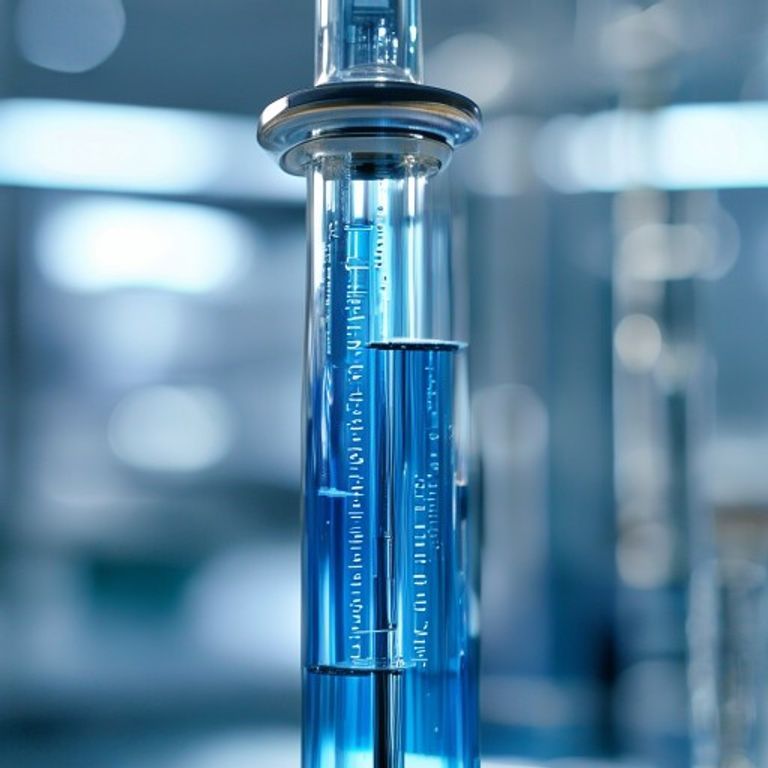
Master the Burette: Votre guide essentiel de précision dans le laboratoire

Hé, amis passionnés de science et curieux d'esprit ! Avez-vous déjà demandé comment les chimistes obtiennent une telle précision incroyable en ajoutant de petites quantités spécifiques de liquide dans une expérience? Il n'est pas magique, il est souvent l'humble mais puissant burette au travail! Pour nous au labo, surtout quand nous plongeons dans le monde de l'analyse quantitative, la burette n'est pas juste un autre morceau de matériel de laboratoire; c'est notre partenaire de confiance pour la précision.
Pensez à une burette comme un robinet super précis et réglable pour les produits chimiques. Contrairement à un cylindre de mesure qui vous donne un volume général, une burette vous permet de distribuer des gouttes de liquide, permettant des mesures extrêmement précises. Aujourd'hui, nous allons débloquer les secrets de ce fascinant verrerie volumétrique, de son anatomie de base à la maîtrise de son utilisation dans les titrations complexes, et même comment le garder en forme de pointe. Prêt à être précis ?
Comprendre les parties d'une Burette en chimie
Avant de sauter dans l'utilisation, laissez-vous familiariser avec notre outil. Une burette peut ressembler à un simple tube gradué, mais chaque partie joue un rôle crucial. Connaître cela nous aidera à mieux comprendre sa fonction :
- Le tube en verre: C'est le corps principal, généralement un long tube de verre mince, méticuleusement gradué (marqué de lignes de volume précises, généralement en incréments de 0,1 mL). La plupart des burettes sont de 25 mL ou 50 mL.
- Le Stopcock : C'est le mécanisme du robinet. Il est généralement fait de verre ou de téflon et nous permet de contrôler le flux de liquide de la burette. Un simple virage change le débit, d'un courant constant à des gouttes individuelles.
- La pointe Burette : L'étroite ouverture au fond où sort le liquide. Sa conception assure une taille de goutte constante pour une distribution précise.
- Le Meniscus : Pas une partie physique, mais vitale pour la lecture. C'est la courbe formée par la surface liquide. Pour la plupart des solutions aqueuses, nous lisons le fond du ménisque.
Comment utiliser une Burette pour le titrage : un guide étape par étape
Le titrage est là où la burette brille vraiment. C'est une technique d'analyse commune où nous déterminons précisément la concentration d'une solution inconnue en utilisant une solution de concentration connue. Voici comment nous l'abordons habituellement:
- La préparation est la clé : Tout d'abord, nous devons nettoyer soigneusement la burette (plus tard!). Ensuite, nous le rinçons avec une petite quantité de la solution qu'il contient (le titre) pour assurer qu'aucune eau résiduelle ou contaminants ne dilue notre titre.
- Remplir la Burette : À l'aide d'un entonnoir, remplissez soigneusement la burette de votre titre au-dessus de la marque zéro. Assurez-vous qu'il n'y a pas de bulles d'air, surtout dans la pointe. Tapez doucement la burette si vous en voyez.
- Réglage du point zéro (ou initial) : Égoutter un peu de liquide jusqu'à ce que le fond du ménisque soit exactement à la marque de 0,00 mL, ou à un volume initial bien lisible. Consigner cette lecture initiale avec une précision maximale (p. ex. 0,00 mL ou 1,25 mL).
- Le processus de titrage : Placez votre flacon contenant l'analyte (la solution que vous analysez) et l'indicateur directement sous la pointe de la burette. Ouvrez lentement le bouchon pour ajouter le titre. Nous commençons généralement par un débit constant, puis nous ralentissons vers le bas pour les ajouts au sens de la goutte à mesure que nous approchons du paramètre (le point où l'indicateur change de couleur). Faites pivoter la fiole en continu pour mélanger les solutions.
- Atteindre le point final : Au moment où l'indicateur change de couleur en permanence (habituellement pendant environ 30 secondes), fermez immédiatement le bouchon. C'est notre point final.
- Enregistrement du volume final : Lisez le volume final sur la burette avec la même précision que votre lecture initiale.
- Temps de calcul: Soustraire le volume initial du volume final pour obtenir le volume exact de titre délivré. Maintenant, nous pouvons utiliser la stœchiométrie pour calculer la concentration de notre solution inconnue!
L'étape cruciale : Étalonnage d'une Burette
Comme n'importe quel instrument de précision, une burette doit être précise. C'est là qu'intervient le calibrage. Bien que beaucoup de nouvelles burettes soient accompagnées de certificats, avec le temps ou avec une utilisation fréquente, leur précision peut changer. Nous calibrons une burette pour s'assurer que le volume qu'elle distribue correspond vraiment au volume indiqué par ses marquages. Il s'agit souvent de distribuer des volumes d'eau connus dans une fiole prépoussée, puis d'utiliser la densité de l'eau pour déterminer le volume réel. Ce processus assure que nos mesures sont aussi fiables que possible, tout comme la façon dont nous avons suivi attentivement une guide pour l'étalonnage de la balance analytique pour assurer des relevés de masse précis.
Nettoyage et stockage de Burette : prolonger sa durée de vie
Une burette propre est une burette précise ! Les produits chimiques résiduels ou la saleté peuvent interférer avec nos résultats. Voici comment nous les gardons sans tache et en sécurité:
- Nettoyage immédiat : Dès que nous avons terminé, nous videons toute solution restante et rinçons soigneusement la burette à l'eau distillée. Si des résidus tenaces sont présents, nous pouvons utiliser un détergent doux et une brosse à burette, suivie d'un rinçage copieux.
- Séchage: Nous retournons habituellement la burette et la laissons sécher à l'air ou parfois utiliser un flux doux d'air filtré. Évitez le séchage thermique, car il peut affecter l'étalonnage du verre avec le temps.
- Stockage adéquat: Une fois propres et sèches, nous entreposons les burettes verticales dans un porte-burette spécialisé ou les serreons solidement. Nous pourrions également placer un petit capuchon sur la pointe et le bouchon dans l'ouverture supérieure pour empêcher l'accumulation de poussière. Assurez-vous que le bouchon est légèrement desserré pour l'empêcher de coller.
Acheter Burette de laboratoire en ligne: quoi chercher
Si vous cherchez à ajouter une burette à votre labo ou à votre salle de classe, acheter une burette de laboratoire en ligne peut être pratique. Voici quelques points à considérer :
- Matérielle La plupart sont du verre borosilicaté, connu pour sa résistance chimique et thermique.
- Volume Les tailles communes sont de 25 mL et 50 mL. Choisissez en fonction de vos besoins expérimentaux.
- Classe d'exactitude: Les burettes sont classées dans différentes classes de précision (p. ex. classe A ou classe B). La classe A est plus précise et idéale pour le travail quantitatif.
- Type d'arrêt: Les bouchons en verre nécessitent un graissage, tandis que les bouchons en PTFE (Teflon) sont autolubrifiants et plus faciles à entretenir.
- Graduations S'assurer que les marques sont claires et durables.
Conclusion
Voilà ! La burette, un équipement apparemment simple, est en fait une puissance de précision dans le monde de la chimie. De ses parties distinctes à la danse délicate d'un titrage, et l'importance d'un nettoyage et d'un calibrage méticuleux, la maîtrise de la burette est une compétence que tout chimiste aspirant (et même assaisonné!) tient cher. Il nous permet d'effectuer des analyses avec confiance, sachant que chaque goutte compte. Continuez à expérimenter, à apprendre et à toujours chercher ce point final parfait!
Foire aux questions (FAQ)
Q1: Pourquoi est-il important de lire le ménisque au niveau des yeux?
A : Lire le ménisque au niveau des yeux (éviter l'erreur de parallaxe) assure que nous obtenons une lecture précise du volume. Si nous lisons d'en haut ou en bas, le volume apparent sera incorrect, entraînant des erreurs dans nos calculs.
Q2 : Quelle est la différence entre une burette et une pipette ?
A : Les deux sont utilisés pour la mesure précise des liquides, mais ils servent à des fins différentes. Une pipette est conçue pour fournir un volume fixe et précis (p. ex. 10 mL ou 25 mL) « pour contenir » ou « pour livrer ». Une burette, en revanche, est conçue pour distribuer des volumes variables et précis, permettant des ajouts incrémentiels comme on le voit dans les titrations.
Q3: Que dois-je faire si je vois une bulle d'air dans la pointe de la burette après le remplissage?
A : It’s crucial to remove any air bubbles! They displace liquid and lead to inaccurate readings. You can try gently tapping the burette or quickly opening and closing the stopcock to dislodge the bubble. Let a small amount of liquid flow out to ensure the tip is completely filled with the solution before taking your initial reading.
Q4: Puis-je utiliser une burette pour mesurer les liquides hautement visqueux?
A : While technically possible, burettes are best suited for low-viscosity liquids. Highly viscous liquids might drain slowly, leave residues, and make it difficult to achieve accurate, drop-wise additions and precise readings due to slower meniscus formation. Other methods or specialized dispensers might be better for such liquids.