

Au-delà de la flamme bleue : 10 utilisations essentielles d'un brûleur Bunsen dans des expériences scientifiques

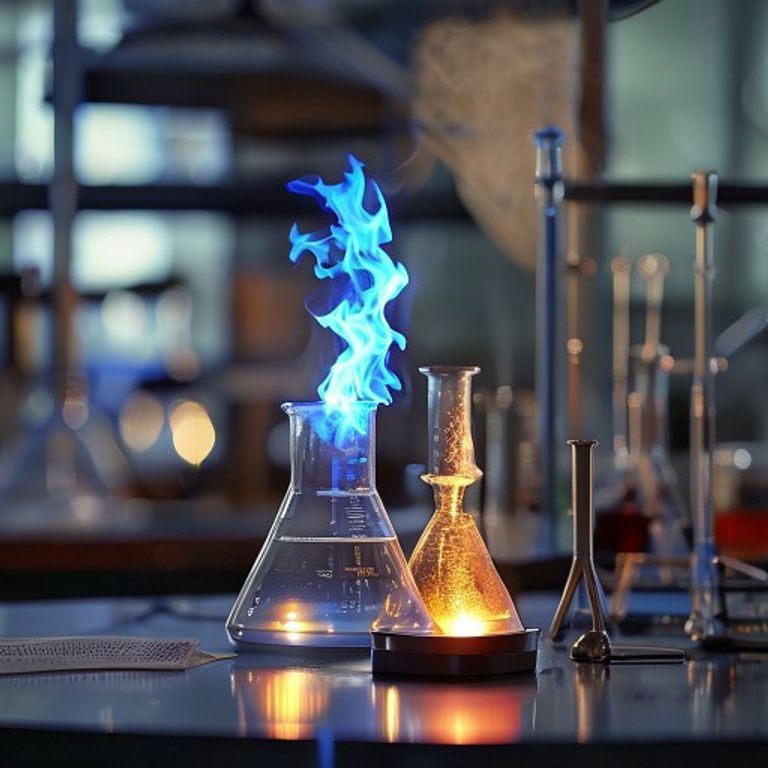
Vous êtes déjà entré dans un laboratoire scientifique et avez vu ce matériel familier et robuste avec une flamme bleue brillante ? Oui, on parle du brûleur Bunsen ! Nommé d'après le chimiste allemand Robert Bunsen, ce petit appareil sans prétention a été un élément de base dans les laboratoires scientifiques depuis plus d'un siècle. Bien qu'il puisse sembler être un outil simple, sa polyvalence le rend absolument indispensable pour une grande variété d'expériences et de procédures à travers la chimie, la biologie et la physique.
La plupart des gens pensent probablement que c'est une façon fantaisiste de chauffer les choses, et vous n'auriez pas tort – c'est son premier concert. Mais un brûleur Bunsen peut faire beaucoup plus que juste faire chaud. De nous aider à identifier des produits chimiques mystérieux à garder nos expériences propres (littéralement!), ce cheval de travail de laboratoire joue de nombreux rôles cruciaux. Donc, laissez-le s'allumer et plonger dans dix façons fascinantes un brûleur Bunsen est utilisé dans des expériences scientifiques!
1. Chauffage général des substances
C'est probablement l'utilisation la plus courante et simple, mais c'est fondamental. Que vous essayiez de dissoudre un solide tenace dans un solvant, d'accélérer une réaction chimique, ou simplement de réchauffer une solution à une température spécifique, le brûleur Bunsen est votre objectif. Sa flamme réglable permet un contrôle précis de l'intensité thermique, ce qui la rend adaptée à une large gamme de besoins en chauffage. Vous pouvez l'utiliser avec des béchers, des tubes d'essai, des creusets et des flacons, souvent placés sur un trépied avec un tapis de gaze pour une répartition égale de la chaleur.
- Dissolution des solides: Le chauffage doux d'un solvant peut augmenter significativement la solubilité de nombreux composés solides, les aidant à se dissoudre plus rapidement.
- Accélérer les réactions : De nombreuses réactions chimiques nécessitent un apport d'énergie (chaleur) pour procéder à une vitesse raisonnable. Le brûleur Bunsen fournit cette énergie d'activation.
- Liquides d'ébullition: De la distillation d'eau à la simple ébullition d'une solution, la chaleur constante d'un brûleur Bunsen est parfaite pour atteindre efficacement les points d'ébullition.
2. Stérilisation du matériel de laboratoire
En microbiologie et dans d'autres domaines sensibles, la prévention de la contamination est absolument essentielle. C'est là que le brûleur Bunsen devient un héros stérile ! Les équipements d'inflammage comme les boucles, les aiguilles et les bouches des bouteilles de culture sont un moyen rapide et efficace de tuer les microorganismes et de s'assurer que vos expériences restent pures. La chaleur intense incinère instantanément tous les microbes indésirables, créant un environnement de travail stérile.
L'art de la technique aseptique
Ce processus fait partie de ce que les scientifiques appellent la « technique aseptique », qui vise à prévenir la contamination par les microorganismes. Lorsque vous travaillez avec des bactéries ou des champignons, même une petite tache de poussière peut introduire des organismes indésirables qui peuvent ruiner vos résultats. En passant une boucle inoculante à travers la flamme jusqu'à ce qu'elle brille rouge-chaud, vous assurez qu'elle est complètement stérile avant de toucher vos cultures microbiennes.
3. Essais de flamme pour l ' identification des cations
Avez-vous déjà vu des produits chimiques brûler avec des couleurs vives et distinctes? C'est souvent un essai de flamme en action ! Différents ions métalliques émettent de la lumière à des longueurs d'onde spécifiques lorsqu'ils sont chauffés dans une flamme, produisant des couleurs caractéristiques. Cette propriété est incroyablement utile pour l'analyse qualitative, aidant les chimistes à identifier les ions métalliques inconnus présents dans un échantillon.
Pour effectuer un essai de flamme, une petite quantité de l'échantillon est généralement placée sur une boucle de fil de platine ou de nichrome propre, puis introduite dans la partie la plus chaude d'une flamme de brûleur Bunsen. L'excitation vient de voir des couleurs brillantes comme:
- Lithium: Rouge brillant
- Sodium: Intense jaune orange (très fréquent!)
- Potassium: Lilas (pourpre pâle)
- Calcium: Brique rouge/orange
- Strontium: Crimson rouge
- Baryum: Vert pomme
- Cuivre: Bleu-vert
C'est comme un feu d'artifice scientifique qui nous aide à décoder le maquillage élémentaire d'une substance !
4. Bendage et façonnage du verre de base
Bien qu'il existe des équipements spécialisés pour les conceptions complexes, un brûleur Bunsen est parfaitement capable de gérer des tâches de manipulation de verre plus simples dans un laboratoire standard. Besoin de compléter le bord aigu d'un tube de verre fraîchement coupé? Ou peut-être plier une tige de verre dans un angle spécifique pour un appareil personnalisé? Le brûleur Bunsen fournit la chaleur locale nécessaire pour adoucir le verre, lui permettant d'être façonné et travaillé.
Ceci est particulièrement pratique pour créer des connecteurs personnalisés pour les installations de distillation, fabriquer des tubes capillaires simples ou sceller les extrémités des tubes en verre. La sécurité d'abord ! Portez toujours des gants résistant à la chaleur et une protection oculaire appropriée lorsque vous travaillez avec du verre chaud, car il conserve longtemps la chaleur et peut causer de graves brûlures.
5. Évaporation et concentration des solutions
Lorsque vous devez enlever un solvant pour isoler un soluté ou augmenter la concentration d'une solution, l'évaporation est essentielle. Bien que l'évaporation puisse se produire naturellement à température ambiante, elle est souvent trop lente à des fins expérimentales. Un brûleur Bunsen accélère considérablement ce processus en fournissant une source de chaleur contrôlée.
En chauffant doucement une solution dans un plat d'évaporation, le solvant (comme l'eau) se transforme en vapeur et s'échappe, laissant derrière lui une solution plus concentrée ou un résidu solide. Cette technique est essentielle en chimie analytique pour la préparation des échantillons ou en chimie synthétique pour les produits de réaction isolante. Il faut prendre soin d'éviter le "bourrage" (ébullition et éclaboussure) ou la surchauffe, qui peut dégrader la substance désirée.
6. Effectuer des expériences de combustion et de pyrolyse
Le brûleur Bunsen est, à son cœur, une source d'incendie contrôlée, ce qui le rend idéal pour des expériences impliquant la combustion et la pyrolyse. La combustion est essentiellement une combustion, où une substance réagit rapidement avec l'oxygène, produisant généralement de la chaleur et de la lumière. La pyrolyse est la décomposition thermique des matériaux à des températures élevées dans une atmosphère inerte ou sous vide.
Par exemple, dans les démonstrations de chimie, vous pouvez utiliser un brûleur Bunsen pour montrer:
- Brûlure de matériaux différents: Observer comment différentes substances (bois, plastique, métaux) réagissent lorsqu'elles sont exposées à la flamme.
- Essais d'inflammabilité: Déterminer si un nouveau composé est inflammable ou comment il réagit au feu.
- Réactions de décomposition: Chauffage de composés pour voir s'ils se décomposent en substances plus simples, produisant souvent du gaz ou un nouveau solide.
Ces expériences sont fantastiques pour enseigner les principes de base des réactions chimiques et des changements énergétiques.
7. Séchage des échantillons et des précurseurs
Après avoir filtré un précipité ou préparé un échantillon solide, il contient souvent de l'humidité résiduelle. Pour une pesée précise ou une analyse plus approfondie, cette humidité doit être enlevée. Un brûleur Bunsen peut être utilisé pour chauffer doucement et sécher les échantillons, surtout lorsqu'il est placé dans un creuset ou sur un verre de montre.
L'astuce ici est le chauffage doux. Vous ne voulez pas carboniser ou décomposer votre échantillon, juste évaporer l'eau. Parfois, le brûleur Bunsen est utilisé pour chauffer un four ou un dessiccateur plus rapidement pour aider au séchage, ou directement appliqué avec un réglage de flamme faible. Ceci garantit que seule la substance pure est pesée, fournissant des données expérimentales plus fiables.
8. Création d'une zone stérile pour le travail aseptique
Au-delà de la stérilisation directe des outils, un brûleur Bunsen lui-même aide à maintenir un environnement de travail stérile, en particulier en microbiologie. Le courant de convection ascendant créé par la chaleur de la flamme éloigne les particules et les microorganismes de la zone de travail immédiate. Cela crée une "zone stérile" ou "champ aseptique" directement autour du brûleur.
Cette zone est où les scientifiques accomplissent des tâches sensibles comme le transfert de cultures bactériennes, le placage d'échantillons ou l'inoculation de milieux. En travaillant près de la flamme, le risque que des contaminants atmosphériques se déposent dans des plats ou des tubes stériles est considérablement réduit. C'est un bouclier invisible, grâce à cette flamme bleue constante !
9. Matériaux de fusion et d'annexion
La chaleur intense d'un brûleur Bunsen est suffisante pour fondre divers solides à faible point de fusion. Pensez à fondre des cires, certains polymères, ou même certains métaux avec des points de fusion plus bas pour des démonstrations ou des préparations simples. Par exemple, si vous devez fondre un réactif solide dans un état liquide pour une réaction, le brûleur peut être très efficace.
En outre, il peut être utilisé pour le recuit. Annealing est un procédé de traitement thermique qui modifie la microstructure d'un matériau pour changer ses propriétés mécaniques ou électriques. Par exemple, le recuit d'un fil implique de le chauffer à une température spécifique puis de le refroidir lentement pour le rendre plus ductile et moins fragile. Bien que le recuit industriel utilise des fours spécialisés, un brûleur Bunsen peut être utilisé pour des démonstrations à petite échelle ou des applications spécifiques en laboratoire.
10. Chauffage des bains d'eau et des bains de sable
Parfois, le chauffage direct à la flamme est trop dur ou inégal pour certaines réactions ou substances délicates. Dans ces cas, un bain d'eau ou un bain de sable est souvent utilisé pour fournir un chauffage plus doux, uniforme et contrôlé. Et devinez ce qui est souvent utilisé pour chauffer ces bains ? Vous l'avez – un brûleur Bunsen!
- Bain d'eau : Un bécher d'eau est chauffé par le brûleur Bunsen, et le récipient de réaction (p. ex. un tube d'essai ou un flacon) est ensuite immergé dans l'eau chaude. Cela assure un chauffage uniforme et prévient la combustion, en particulier pour les composés sensibles à la température ou les substances volatiles.
- Bain de sable: Comme un bain d'eau, un bain de sable utilise du sable dans un récipient chauffé par le brûleur. Cela peut atteindre des températures beaucoup plus élevées qu'un bain d'eau et fournit un chauffage incroyablement uniforme, ce qui le rend adapté pour le chauffage de flacons à fond rond ou de creusets où le contact direct de flamme peut causer des points chauds.
Ces méthodes de chauffage indirect sont cruciales pour de nombreuses réactions de synthèse organique et incubations biologiques où un contrôle précis de la température est primordial.
Conclusion
Voilà ! L'humble brûleur Bunsen, souvent considéré comme une pièce de base de l'équipement de laboratoire, est en fait une centrale de polyvalence. De fournir la chaleur brute nécessaire à d'innombrables réactions chimiques à des outils de stérilisation pour des travaux microbiologiques sensibles, d'identifier les éléments par des essais de flamme colorés, et même de nous aider à fabriquer des appareils de verre personnalisés, ses utilisations sont diverses et absolument essentielles à la découverte scientifique quotidienne.
C'est un témoignage de bon design qu'un outil inventé il y a plus d'un siècle et demi reste si pertinent et fondamental dans les laboratoires scientifiques modernes. La prochaine fois que vous verrez cette flamme bleue constante, vous saurez qu'il y a tout un monde d'exploration scientifique qui se passe ici, grâce à ce héros méconnu du banc de laboratoire. Continuez à explorer, restez curieux, et rappelez-vous toujours la sécurité du laboratoire!