What Exactly is a Test Tube? Your Simple Guide to This Lab Essential

If you’ve ever watched a science fiction movie, a detective show, or even just walked past a school laboratory, chances are you’ve seen a test tube. It’s one of those iconic pieces of scientific equipment that just screams “science!” But beyond its popular image, have you ever stopped to wonder, “what is the definition of a test tube?” or “what exactly does a test tube do in the lab?” Well, you’re in the right place. Today, we’re going to dive into the simple definition of test tube, explore its various uses, and truly appreciate why this humble piece of laboratory glassware is an absolute must-have for any scientific endeavor.
Understanding the Core: What is a Test Tube, Really?
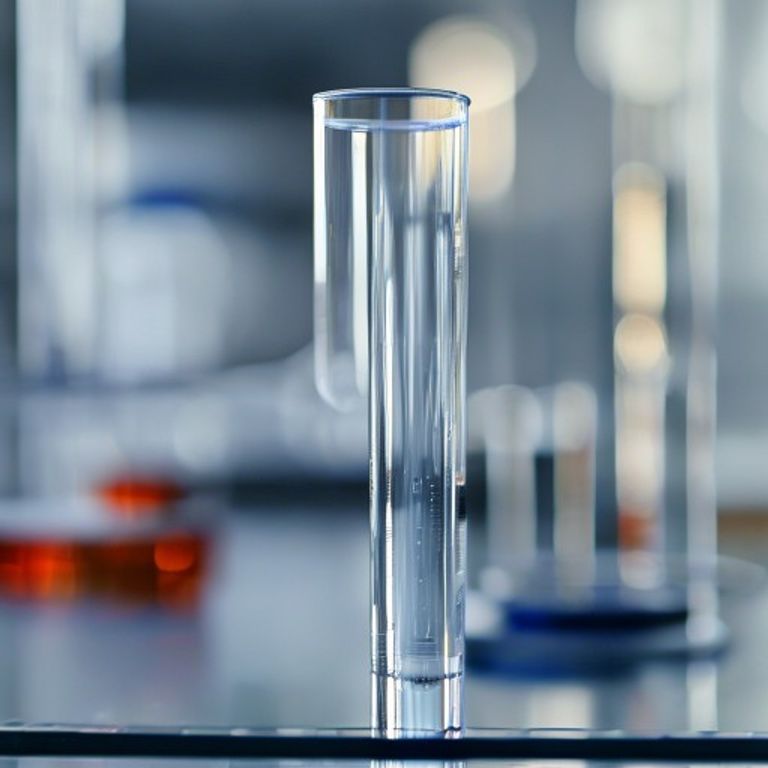
Let’s start with the basics. In its simplest form, a test tube is a cylindrical glass or plastic tube with a U-shaped (round) bottom and an open top. Think of it like a very narrow, tall shot glass, but specifically designed for scientific use. They usually range in size from tiny micro-tubes to larger ones holding several milliliters of liquid. The key here is its design: the round bottom allows for even heating and easy mixing, while the narrow opening helps minimize evaporation and contamination.
When we talk about the meaning of test tube in science, we’re referring to a fundamental reagent vessel designed for holding, mixing, and heating small quantities of liquids or solids during experiments. It’s not just a container; it’s a precision tool for observation and reaction.
More Than Just a Tube: The Essential Features of This Scientific Equipment
While the basic shape is simple, there’s more to a test tube than meets the eye. Let’s break down its crucial characteristics:
- Material: Most test tubes are made from borosilicate glass (like Pyrex or Kimax). Why borosilicate? Because it’s incredibly heat resistant! This means you can heat the contents directly over a Bunsen burner without worrying about the glass cracking or shattering, a common concern in chemical experiments. Some test tubes are made of plastic for less demanding applications or when disposability is preferred.
- Shape: The distinctive round bottom is not just for aesthetics. It ensures that any solid material collects at a single point, making it easier to wash and preventing loss of sample. It also allows for more uniform heating, as there are no corners for stress to build up. The narrow neck is perfect for holding with clamps or stoppers.
- Sizes: Test tubes come in a variety of lengths and diameters, typically holding anywhere from 5 ml to 25 ml. This range allows scientists to work with precise, small volumes of substances, making them ideal for delicate reactions and observations.
Why So Many Labs Use Them: The Versatility in Chemical Experiments
Now that we understand the test tube definition, let’s explore why this piece of laboratory glassware is so indispensable. The test tube used for what definition goes far beyond just holding liquids. Here are some of its primary applications:
- Heating Small Samples: Its heat-resistant glass and round bottom make it perfect for heating small amounts of liquids or solids quickly and evenly over a flame. This is crucial for many chemical reactions that require specific temperature conditions.
- Mixing and Observing Reactions: With its clear glass, we can easily see color changes, gas evolution, precipitation, or other visual cues of a chemical reaction. Their small size makes it easy to swirl and mix contents by hand.
- Sample Collection and Storage: Test tubes are frequently used for sample collection of biological specimens (like blood or urine) or chemical reagents. They can then be stoppered for short-term storage or centrifuged to separate components.
- Culturing Microorganisms: In microbiology, test tubes are vital for growing bacterial cultures or other microorganisms in liquid media, providing a sterile environment for their growth.
- Qualitative Analysis: When performing experiments that require checking for the presence of certain ions or compounds, a test tube is the go-to vessel for small-scale testing.
A Simple Analogy: Imagining a Test Tube in Everyday Life
Think of a test tube like a perfectly designed miniature chef’s tasting spoon for a scientist. You wouldn’t try to cook a whole meal in it, but it’s absolutely perfect for:
- Testing a small pinch of spice in a new recipe.
- Making a single, concentrated shot of espresso.
- Observing how a tiny drop of food coloring spreads in water.
It’s about precision, focused observation, and handling small, yet crucial, amounts. It’s not for bulk work, but for detailed, controlled interactions.
Conclusion
So, there you have it. The test tube definition is far more than just “a glass tube.” It’s a marvel of simple engineering, a cornerstone of scientific equipment, and a truly versatile reagent vessel that has enabled countless discoveries in chemistry, biology, and beyond. From the most basic school lab to the most advanced research facility, its presence is a testament to its efficiency and effectiveness. Next time you see one, you’ll know that this unassuming piece of laboratory glassware is quietly facilitating the advancement of knowledge, one small experiment at a time.
FAQ
What is a test tube made of?
Most test tubes are made from borosilicate glass (like Pyrex) due to its excellent heat resistance and chemical inertness. Some are also made from plastic for less rigorous applications or when disposability is important.
Can test tubes be heated directly over a flame?
Yes, test tubes made of borosilicate glass are specifically designed to withstand direct heating over a Bunsen burner or other heat sources. Plastic test tubes, however, should not be heated directly.
Are test tubes reusable?
Glass test tubes are generally reusable. After use, they are thoroughly cleaned, sterilized, and dried before being used again. Plastic test tubes are often single-use and disposable.
What’s the main difference between a test tube and a beaker?
While both are laboratory glassware, test tubes are typically smaller, cylindrical with a round bottom, and used for small-scale reactions, heating, and observations. Beakers are wider, have a flat bottom and a spout, and are generally used for mixing, holding larger volumes of liquids, and heating solutions where precise measurements aren’t critical.