


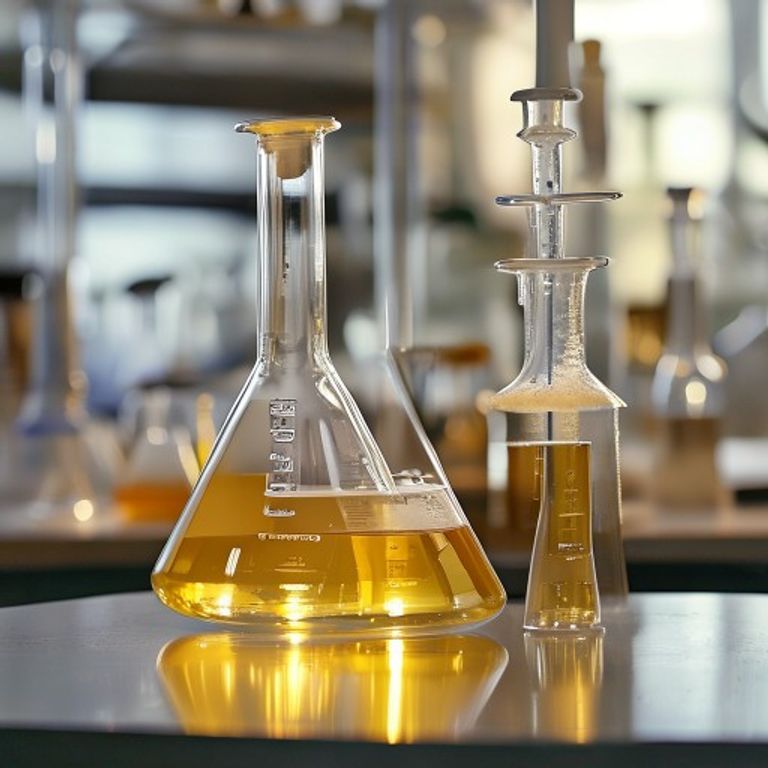
Unlocking Lab Efficiency: Your Comprehensive Guide to Funnel Chemistry

Ever walked into a chemistry lab and felt a little overwhelmed by all the glassware? Trust me, we’ve all been there! Among the beakers, flasks, and test tubes, there’s a seemingly simple yet incredibly versatile piece of equipment that often goes unnoticed: the funnel. But don’t let its humble appearance fool you. Funnel chemistry is a fascinating and crucial aspect of laboratory work, encompassing everything from basic pouring to complex separations and syntheses. Today, we’re going to dive deep into the world of funnels, exploring their different types, how to use them effectively, and why they’re indispensable in virtually every chemical process we undertake.
From ensuring a clean transfer of liquids to meticulously separating mixtures or carefully adding reagents, funnels are the unsung heroes of precision in the lab. Think of them as the traffic controllers for liquids and solids, guiding them exactly where they need to go. Without them, our experiments would be messy, inefficient, and often, quite dangerous. So, let’s explore how these everyday items become powerful tools in the hands of a chemist.
The Unsung Heroes: Different Types of Funnels in Chemistry Laboratories
When we talk about funnels, it’s not just one type. Just like different tools for different jobs, there are specialized funnels for specific tasks. Let me introduce you to some of the main players we often encounter:
Standard Filter Funnels
These are probably what first comes to mind when you hear “funnel.” Typically conical, made of glass or plastic, and featuring a steep angle (usually 60 degrees), they’re perfect for simple transfers and gravity filtration techniques. We use them to pour liquids from large containers into smaller ones, or to support filter paper during a basic filtration. They’re straightforward, robust, and a staple in any lab.
Separatory Funnels
Ah, the separatory funnel! This is where things get a bit more exciting. Imagine you have a salad dressing that’s separated into oil and vinegar – that’s essentially what a separatory funnel helps us achieve, but with chemical solutions. Shaped like a pear or cone with a stopcock at the bottom and a stopper at the top, it’s specifically designed for liquid-liquid extraction. This technique allows us to separate immiscible (non-mixing) liquids, often to isolate a desired compound from a mixture. Learning how to properly use a separatory funnel for extraction is a fundamental skill for many organic chemistry procedures.
Dropping Funnels (Addition Funnels)
These are similar to separatory funnels but often have a long stem and are designed for controlled addition of chemical reagents, drop by drop, into a reaction flask. The importance of dropping funnels in chemical synthesis cannot be overstated. When we need to add a reactant slowly to manage heat, control reaction rates, or avoid unwanted side reactions, a dropping funnel is our best friend. It’s all about precision and control, ensuring the reaction proceeds safely and effectively.
Büchner & Hirsch Funnels
These are special types of filter funnels used in conjunction with a vacuum source for rapid filtration – known as vacuum filtration. They have a flat, perforated plate instead of a conical shape, allowing us to lay filter paper flat and apply suction from below. Büchner funnels are larger and wider, while Hirsch funnels are smaller. They are among the best filter funnels for vacuum filtration setups because they significantly speed up the separation of solids from liquids, which is incredibly useful when we’re in a hurry or dealing with fine precipitates.
Mastering the Art: Proper Usage and Lab Safety Procedures
Knowing the different types is just the beginning; using them correctly is key to successful experiments and lab safety procedures. Here are some practical tips:
- For Standard Filter Funnels: Always use a suitable size filter paper. Wet the paper slightly with the solvent to secure it against the funnel walls before pouring. Pour slowly to avoid splashing and ensure the liquid level doesn’t go above the filter paper’s edge.
- For Separatory Funnels: When extracting, remember to vent frequently! Shaking the funnel builds up pressure, especially with volatile solvents. Hold the stopper firmly, invert the funnel, and open the stopcock to release pressure. It’s like shaking a soda bottle – you need to let the gas out gradually.
- For Dropping Funnels: Ensure a tight seal with the reaction flask (often using a ground glass joint) to prevent leaks or the escape of fumes. Adjust the stopcock carefully to control the flow rate. Sometimes, we might even use a pressure equalizing tube to prevent vacuum buildup if the reaction is sealed.
- For Büchner/Hirsch Funnels: Always use thick-walled tubing for the vacuum connection to prevent collapse. Ensure the filter paper covers all the holes on the plate. Turn on the vacuum *before* pouring the mixture, and wash the solid thoroughly with a small amount of cold solvent after filtration.
Keeping Them Pristine: Cleaning and Maintenance Tips for Lab Funnels
Just like any other piece of laboratory glassware, funnels need proper cleaning and maintenance to ensure their longevity and prevent contamination. A dirty funnel can ruin an experiment, so here’s how we keep them spotless:
- Immediate Rinse: After use, rinse funnels immediately with the appropriate solvent (usually water, but organic solvents if you’ve been working with non-polar compounds). This prevents residues from drying and becoming harder to remove.
- Detergent Wash: Use a lab-grade detergent and a brush to scrub the interior and exterior. For ground glass joints (on separatory or dropping funnels), pay extra attention to ensure no grease or residue remains.
- Acid/Base Baths (If Necessary): For stubborn residues, we might use a dilute acid or base bath, followed by thorough rinsing. Always exercise extreme caution with these powerful cleaning agents and wear appropriate PPE.
- Rinse with Distilled Water: A final rinse with distilled or deionized water is crucial to remove any mineral deposits or cleaning agent residues.
- Drying: Allow funnels to air dry in a rack or use an oven (if compatible with the glass type and free of residual solvents). Ensure they are completely dry before storing to prevent water contamination in future experiments.
Conclusion
So, there you have it! Funnel chemistry is far more than just pouring liquid from one place to another. It’s about precision, safety, and understanding the unique roles each type of funnel plays in our daily lab work. From simple transfers with a standard filter funnel to intricate separations with a separatory funnel and controlled additions with a dropping funnel, these pieces of glassware are truly essential. By understanding their purpose, knowing how to use them properly, and keeping them clean, we ensure our experiments are not only successful but also safe and efficient. They might be humble, but funnels are definitely mighty!
FAQ About Funnel Chemistry
Q1: What is the main difference between a separatory funnel and a dropping funnel?
A1: While both have stopcocks, a separatory funnel is primarily used for separating immiscible liquid layers after extraction, acting like a tap to drain the denser layer. A dropping funnel (or addition funnel) is designed for the controlled, drop-wise addition of a liquid reagent into a reaction mixture, often to control reaction speed or temperature.
Q2: Why is it important to vent a separatory funnel during extraction?
A2: When you shake a separatory funnel containing solvents, especially volatile ones, pressure can build up inside due to vapor formation. Venting (opening the stopcock while inverted) releases this pressure, preventing the stopper from popping out or, in extreme cases, the funnel from breaking, which is a key lab safety procedure.
Q3: Can I use any filter funnel for vacuum filtration?
A3: No, you should only use specialized filter funnels like Büchner or Hirsch funnels for vacuum filtration. Standard conical filter funnels are not designed to withstand the pressure differential and could break under vacuum, creating a hazardous situation.
Q4: How do I choose the best filter funnels for vacuum filtration setups?
A4: Your choice depends on the amount of solid you need to filter. Büchner funnels are generally larger and have a wider diameter, suitable for larger quantities of precipitate. Hirsch funnels are smaller, ideal for micro-scale work or small amounts of solid. Both require specific filter paper sizes to cover the perforated plate.
Q5: What are some common mistakes to avoid when using funnels in the lab?
A5: Common mistakes include not venting a separatory funnel, pouring liquids too quickly with a standard funnel (causing spills), using the wrong type of filter paper for filtration, and not properly cleaning funnels, which can lead to contamination of subsequent experiments.







