

Compréhension de la plaque d'emplacement But : Utilisations pratiques, conseils de sécurité et comment elle diffère des plats Petri

Présentation
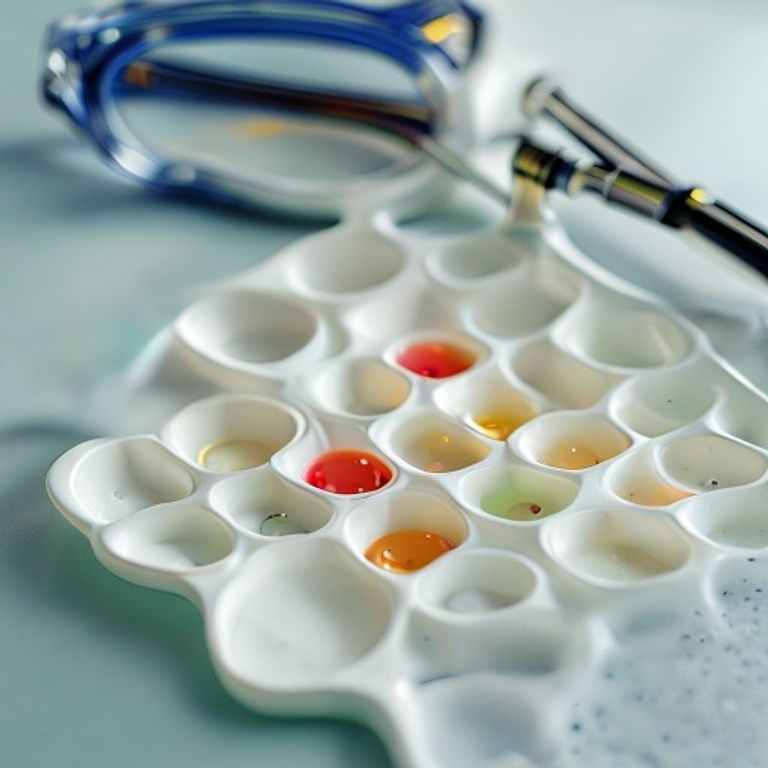
When we step into a chemistry lab, the first thing we often notice is the array of tiny plastic wells arranged in a compact grid. That’s a spot plate – a humble yet powerful tool that makes microscale experiments quick, tidy, and safe. In this article, I’ll walk you through what a spot plate is used for, its common applications, how to run reactions on it, and why it’s not the same as a petri dish. We’ll also cover essential safety guidelines so you can work confidently.
What Is a Spot Plate and Why Do We Need It?
A spot plate (sometimes called a chemical testing plate or sample spotting plate) is a shallow plastic or ceramic tray with multiple small wells, usually 12, 24, or 48. Each well holds only a few microliters of liquid, making it perfect for:
- Screening many reactions at once.
- Performing qualitative tests (e.g., pH, precipitation).
- Saving reagents – you only need a drop or two.
Think of it as a miniature kitchen countertop where you can set up a whole buffet of tiny experiments without spilling over the whole sink.
Spot Plate Applications in Chemistry
1. Microscale Reaction Screening
When you’re optimizing a synthesis, you can test different catalysts, solvents, or temperatures in separate wells. This speeds up the discovery phase and reduces waste.
2. Qualitative Analysis
Classic tests like BaCl₂ for sulfate or FeCl₃ for phenols fit perfectly on a spot plate. You simply add a drop of sample and a drop of reagent, watch the color change, and note the result.
3. Manifestations éducatives
In teaching labs, spot plates let students explore concepts like acid–base reactions or precipitation without handling large volumes of chemicals.
How to Use a Spot Plate for Reactions – Step by Step
Here’s a quick, practical guide that works for most routine labs:
- Label the wells. Use a permanent marker or a printed template so you know which condition belongs where.
- Prepare reagents. Keep them in small vials; a 1‑ml syringe or a micropipette is ideal for accurate drops.
- Add the first component. Place a drop (or two) of the substrate into each well.
- Introduce the second component. Add the catalyst, solvent, or test reagent. Observe any immediate changes.
- Mix gently. A disposable plastic stir rod or a gentle tap of the plate works – you don’t want to splash.
- Record observations. Note color, precipitate formation, gas evolution, or any temperature change.
Because the volumes are so small, you can safely run dozens of variations in a single experiment.
Spot Plate vs. Petri Dish: Purpose Comparison
Both are shallow containers, but they serve different goals:
- Spot Plate: Designed for liquid handling in chemical testing. Wells are isolated, preventing cross‑contamination.
- Petri Dish: Primarily for solid media, like agar, to culture microorganisms. The whole surface is one continuous area.
If you need to observe microbial growth, reach for a petri dish. If you’re testing a handful of drops for color change, the spot plate wins.
Spot Plate Safety Guidelines
Even though the volumes are tiny, safety never takes a back seat. Follow these simple rules:
- Porter l'EPI approprié : Lab coat, goggles, and gloves are mandatory.
- Use a spill tray: Place the spot plate on a disposable absorbent mat to catch accidental drips.
- Label hazardous reagents: Even a single drop of a strong acid or base can cause burns.
- Dispose correctly: After the experiment, neutralize acidic or basic wells before discarding the plate.
- Never reuse a contaminated plate: Cross‑contamination can skew results and create safety risks.
Choosing the Right Spot Plate Material
Most labs use disposable polyethylene plates because they’re cheap and chemical‑resistant. For high‑temperature work or strong solvents, consider a ceramic or glass plate. If you need extra durability, a reusable plastic spot plate can be cleaned with ethanol and autoclaved.
Integrating Spot Plates With Other Lab Tools
Spot plates work hand‑in‑hand with many standard lab accessories. For example, when you need a stable platform for a spot plate, a trépied de laboratoire provides the perfect height and stability. And when you have to transfer tiny amounts of solid reagents onto the wells, a laboratory spatulas guide helps you avoid spillage and maintain precision.
Conclusion
Spot plates are the unsung heroes of microscale chemistry. They let us test many conditions quickly, save reagents, and keep the workspace tidy. By understanding their purpose, mastering the simple steps to run reactions, and adhering to safety guidelines, you’ll get more reliable data with less waste. Whether you’re a student, a researcher, or a hobbyist, the spot plate should be a staple in your lab toolkit.
FAQ
Q: Can I use a spot plate for gas‑evolving reactions?
A: Yes, but make sure the plate is placed inside a fume hood and the wells are not sealed; the gas should be allowed to escape safely.
Q: How many microliters can a typical well hold?
A: Most wells hold 50‑200 µL. Always check the manufacturer’s specifications.
Q: Is it okay to reuse a disposable spot plate?
A: Not recommended. Reusing can lead to cross‑contamination and inaccurate results.
Q: What’s the difference between a plastic spot plate and a ceramic one?
A: Plastic plates are cheap and chemical‑resistant for most reagents, while ceramic plates tolerate higher temperatures and stronger solvents.
Q: Can I store a spot plate with chemicals on it for later analysis?
A: It’s best to finish the experiment and clean the plate promptly. Storing chemicals in the wells can cause evaporation or degradation.