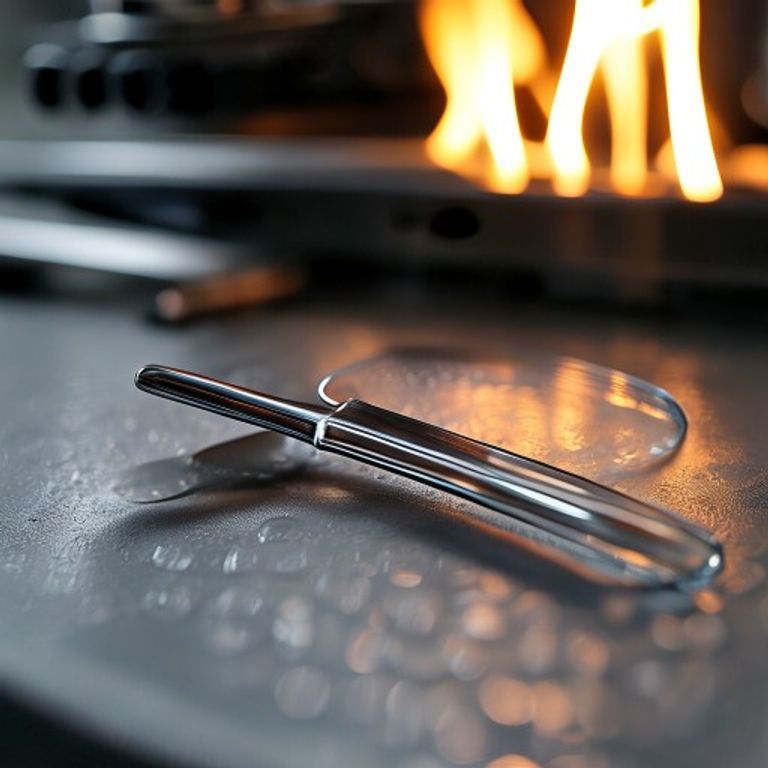
Le guide ultime des spatules de microbiologie : types, stérilisation et meilleures pratiques pour la gélose

Présentation
La première fois que je suis entré dans un laboratoire de microbiologie, spatule microbiologique On dirait un autre morceau de métal. Pourtant, ce petit outil est un cheval de bataille pour quiconque répand des bactéries sur une gélose, choisit des colonies ou transfère des échantillons. Dans cet article, je vais vous guider à travers les différents types de spatules, comment les garder stériles, et qui fonctionne le mieux pour des tâches spécifiques comme la propagation des cellules sur la gélose.
Qu'est-ce qu'une spatule de microbiologie?
Une spatule microbiologique (également appelée épandeur cellulaire ou boucle d'inoculation) est un instrument portatif utilisé pour manipuler de petites quantités de culture microbienne. Pensez-y comme le «spoo» pour les bactéries – il vous permet de scoop, de transférer et de distribuer uniformément des cellules sans contaminer le reste de votre zone de travail.
Types de spatules pour la culture bactérienne
- Spatules métalliques (acier inoxydable): Durable, peut être autoclave, et idéal pour la stérilisation à haute température.
- Spatule plastique: Jetable, léger et parfait pour des tâches rapides où la réutilisation n'est pas nécessaire.
- Spatule en verre: Rarement utilisé aujourd'hui, mais encore pratique pour certaines applications sensibles à la chaleur.
Spatule plastique contre métal pour la microbiologie
Le choix entre le plastique et le métal revient souvent à l'équilibre du coût, de la commodité et de la stérilité.
Spatules métalliques peut être autoclave à 121 °C pendant 15 minutes, vous donnant un outil fiable et réutilisable. Ils sont parfaits pour les laboratoires qui utilisent de nombreuses plaques par jour.
Spatules en plastique sont des articles pré-stérilisés à usage unique. Ils éliminent le besoin d'un cycle d'autoclave, économisant du temps, mais vous dépenserez plus sur les consommables.
Si vous n'êtes pas sûr, gardez-en quelques-uns sur le banc – métal pour le travail de routine, plastique pour quand vous avez besoin d'un transfert rapide et stérile sans les tracas de la stérilisation.
Comment stériliser une spatule de microbiologie
La stérilisation adéquate est l'épine dorsale de la technique aseptique. Voici ma routine étape par étape:
- Rincer la spatule avec de l'eau distillée pour éliminer tout milieu résiduel.
- Placez-le dans une poche en métal autoclave.
- Faire un cycle standard: 121 °C, 15 minutes, 15 psi.
- Laisser refroidir à l'intérieur de l'autoclave fermée pour éviter la condensation.
- Conserver dans un récipient stérile jusqu'à ce qu'il soit nécessaire.
Si vous n'avez pas d'autoclave, un four à chaleur sèche (160 °C pendant 2 heures) ou une flamme de brûleur Bunsen (flamme-stériliser pendant 10-15 secondes) peut fonctionner pour les spatules métalliques. Pour les plastiques, utilisez simplement l'emballage pré-stérilisé – n'essayez jamais de ré-stériliser avec de la chaleur.
La meilleure Spatule pour la propagation des cellules sur la gélose
Quand vous avez besoin d'une pelouse de bactéries, la forme de la spatule compte. Un bord plat légèrement arrondi étend l'inoculum en douceur, tandis qu'un bout pointu aide à choisir des colonies isolées.
Dans mon expérience, une spatule en acier inoxydable avec lame courbée peu profonde donne les résultats les plus cohérents sur les plaques de gélose standard. La courbure agit comme un petit pinceau, distribuant des cellules sans gouger la surface de la gélose.
Conseils pratiques pour la technique aseptique
- Toujours travailler près d'une flamme ou dans une armoire de biosécurité pour créer un flux d'air ascendant qui repousse les contaminants.
- Gardez l'extrémité de la spatule au-dessus de la gélose jusqu'à ce que vous soyez prêt à vous étendre – cela empêche les gouttes accidentelles.
- Après chaque utilisation, remettre la spatule dans la poche autoclave avant de la stériliser.
- Pour les nettoyages rapides, consultez le utilisation en laboratoire de plaques guide – de nombreux hacks de nettoyage s'appliquent également aux spatules.
Conclusion
Que vous soyez un microbiologiste aguerri ou un étudiant qui apprend juste à trier des plaques, le droit spatule microbiologique peut faire une énorme différence dans votre workflow. Choisissez le matériel qui convient à votre labo routine, stérilisez-le correctement, et maîtrisez la technique de diffusion simple – et vous verrez des plaques plus propres, moins de contaminants, et des résultats plus fiables.
FAQ
Puis-je utiliser une spatule de cuisine régulière pour la microbiologie?
C'est pas vrai. Les spatules de cuisine sont stériles et contiennent souvent des surfaces poreuses qui abritent des microbes. Utilisez toujours des spatules de laboratoire conçues pour le travail aseptique.
Combien de fois dois-je remplacer une spatule en plastique?
Les spatules en plastique sont à usage unique. Jeter après chaque inoculation pour éviter toute contamination croisée.
La stérilisation à la flamme est-elle suffisante pour les spatules métalliques?
La stérilisation à la flamme est acceptable pour les tâches rapides, mais un autoclave offre une garantie de stérilité plus fiable et validée.
Quelle taille dois-je utiliser pour les grands plats de pétri?
Une lame plus grande et plus large étend l'inoculum plus uniformément sur des plaques de 150 mm, tandis qu'une pointe plus petite fonctionne bien pour des plats de 90 mm.
Puis-je stériliser une spatule plastique dans un micro-ondes?
Microwave plastique peut le fondre et ne garantit pas la stérilité. S'en tenir aux versions jetables pré-stérilisées.