


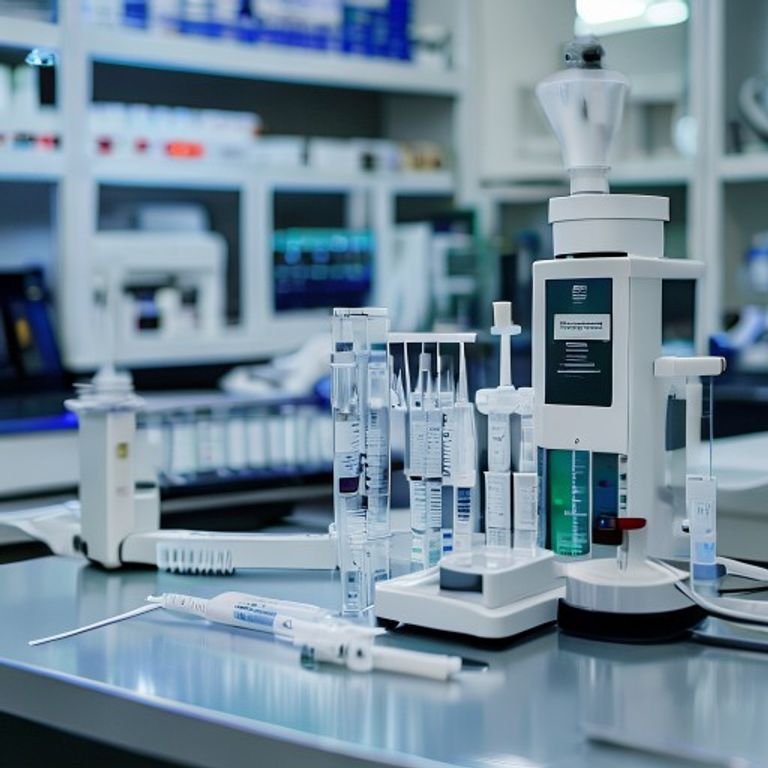
Guide ultime pour mettre en place un laboratoire de seringues sécuritaire et efficace

Présentation
Quand on parle d'un laboratoire de seringues, la plupart des gens voient une pièce stérile remplie de minuscules tubes en verre et de pompes de haute technologie. En réalité, créer un laboratoire fonctionnel de seringues est beaucoup comme assembler une cuisine : vous avez besoin des bons outils, d'une disposition ordonnée et d'un ensemble solide de règles de sécurité. Dans ce guide, je vais tout vous guider, de la liste des équipements essentiels aux procédures d'étalonnage, tout en partageant des conseils pratiques que vous pouvez appliquer immédiatement.
Liste des équipements de laboratoire essentiels pour les seringues
Avant de commencer à acheter, il aide à classer l'équipement dont vous avez besoin. Pensez-y comme une boîte à outils pour un homme à main – chaque article a un travail spécifique.
- Seringues de laboratoire – jetables et réutilisables, allant de 0,5 mL à 50 mL.
- Pompes à seringue – pour des débits précis et programmables.
- Poids et normes d ' étalonnage – essentiel pour la vérification du volume.
- Unités de filtration stériles – garder vos échantillons exempts de contaminants.
- Solde analytique – précis à 0,1 mg pour le pesage des seringues et des réactifs.
- Boîtes à gants ou capots laminaires – maintenir les conditions aseptiques.
- Stations de nettoyage – nettoyeurs à ultrasons et bains de solvant.
Comment configurer un laboratoire de seringues
La configuration de l'espace est comme organiser des meubles dans un petit appartement – vous voulez un flux de travail en douceur et aucun goulot d'étranglement.
1. Planification-cadre
Placez l'équilibre analytique près de l'entrée afin que vous puissiez peser les réactifs avant qu'ils entrent dans la zone propre. Gardez les pompes à seringue sur un banc stable à l'écart des vibrations, et localisez la zone de stérilisation à l'extrémité de la seringue pour éviter toute contamination croisée.
2. Connexions électriques et de gaz
Assurez-vous que toutes les bandes électriques sont mises à la terre et ont une protection contre les surtensions. Si vous utilisez du gaz comprimé pour certaines pompes à seringue, installez des régulateurs et vérifiez régulièrement les fuites.
3. Contrôles environnementaux
Maintenir la température à 20-22 °C et l'humidité à moins de 60 %. Un simple hygromètre numérique peut agir comme un "thermostat pour le laboratoire" – il vous alerte avant que les conditions ne sortent de la main.
Protocoles de sécurité de laboratoire Syringe
La sécurité n'est pas juste une liste de contrôle; c'est un état d'esprit. Traitez chaque seringue comme un minuscule récipient sous pression – un mauvais traitement peut causer des déversements, une contamination, voire des blessures.
- Portez toujours des gants nitriles et une protection oculaire.
- Utilisation pirates de sécurité pratiques pour le Bunsen Burner lorsque vous devez chauffer des échantillons – gardez une couverture de feu à proximité et ne laissez jamais une flamme ouverte sans surveillance.
- Étiqueter clairement toutes les seringues avec le contenu, la concentration et la date d'expiration.
- Mettre en oeuvre une règle « sans nourriture, sans boissons » à l'intérieur du laboratoire.
- Jetez immédiatement les tranchants dans des contenants à l'épreuve de la perforation.
Meilleures marques de laboratoire Syringe
Choisir la bonne marque peut être comme choisir une voiture – vous voulez la fiabilité, la performance et un bon support après-vente.
| Marque | Résistance | Utilisation typique |
|---|---|---|
| Hamilton | Haute précision, faible volume mort | Chimie analytique |
| Terumo | Seringues jetables robustes | Tests médicaux |
| SeringuePumpTM (Harvard Apparatus) | Débits programmables | Pharmacologie et biotechnologie |
Procédures d'étalonnage du laboratoire Syringe
L'étalonnage est le « tune-up » dont votre laboratoire a besoin pour rester précis. Voici une routine étape par étape que j'utilise chaque semaine:
- Chauffer la pompe à seringue pendant 10 minutes pour stabiliser la température.
- Remplir d'eau distillée une seringue d'étalonnage certifiée.
- Distribuer l'eau dans un récipient prépoussié sur la balance analytique.
- Comparer la masse mesurée au volume attendu (1 g 1 mL à 20 °C).
- Régler les paramètres du logiciel de la pompe jusqu'à ce que l'écart soit < 0,5 %.
- Consignez les résultats dans un journal de calibration – considérez-le comme un « enregistrement de service » pour votre équipement.
Si vous avez besoin d'une plongée plus profonde dans les concepts d'étalonnage, la procédé d'étalonnage de la seringue partage de nombreuses similitudes avec la routine utilisée pour d'autres outils volumétriques, comme les pipettes.
Intégration d'autres outils de laboratoire
Même si nous nous concentrons sur les seringues, un laboratoire bien arrondi utilise souvent des équipements complémentaires. Par exemple, choisir et entretenir les couettes en toute sécurité est crucial lorsque vous passez de la manipulation liquide à l'analyse spectroscopique. Les principes de propreté et d'entreposage approprié s'appliquent à tous les niveaux.
Conclusion
La construction d'un laboratoire de seringues ne nécessite pas un doctorat en ingénierie – juste un plan clair, le bon équipement, et des habitudes de sécurité disciplinées. En suivant la liste de contrôle de l'équipement, en arrangeant votre espace de travail judicieusement et en s'en tenant à l'étalonnage régulier, vous aurez un laboratoire qui fournit des résultats fiables jour après jour. Rappelez-vous, le labo est un système vivant; traitez-le avec soin et il vous rendra la faveur.
FAQ
Quel est l'équipement de sécurité le plus important pour un laboratoire de seringues?
Les gants de protection, les lunettes de sécurité et un contenant d'élimination des tranchants appropriés ne sont pas négociables. Ils agissent comme la ceinture et les coussins gonflables d'une voiture.
Combien de fois dois-je calibrer mes pompes à seringue?
Au minimum, effectuer un calibrage hebdomadaire complet. Si vous remarquez une dérive dans les résultats, recalibrez immédiatement.
Puis-je utiliser des seringues jetables pour les travaux d'analyse?
Oui, mais assurez-vous qu'ils sont de faible volume et certifiés pour une utilisation analytique. Pour la plus grande précision, les seringues en verre réutilisables sont toujours l'étalon d'or.
Quelle plage de température est idéale pour les opérations de seringues?
La plupart des seringues fonctionnent mieux entre 20 °C et 25 °C. Les températures extrêmes peuvent affecter la viscosité du liquide et la précision du volume.
Ai-je besoin d'une zone de stérilisation séparée?
Il est fortement recommandé. Une zone de stérilisation dédiée prévient la contamination croisée et maintient l'atelier principal propre.







