


Maîtriser le brûleur Bunsen : sécurité, lutte contre la flamme et choisir le bon modèle pour n'importe quel laboratoire

Présentation
Quand je suis entré dans un laboratoire de chimie, le brûleur de Bunsen s'est senti comme un petit dragon qui attendait d'être dompté. Avec une simple torsion d'un bouton, vous pouvez passer d'une douce lécher bleue à un flambeau orange rugissant. Dans cet article, nous allons explorer comment ajuster la flamme, suivre les directives de sécurité essentielles, choisir le meilleur brûleur pour le travail à haute température, dépanner une situation à faible flamme, et même envisager des options portables pour la chimie du champ. Laissez-le s'allumer—En sécurité !
Comment ajuster la flamme sur un brûleur Bunsen
Le contrôle de la flamme est à peu près deux vannes : le débit de gaz et le collier d'admission d'air. Pensez à la soupape de gaz comme le robinet de carburant et le collier comme la respiration qui se mélange avec elle.
Ajustement étape par étape
- Fermez la soupape à gaz. Commencez toujours avec le gaz éteint.
- Tournez le collier dans le sens des aiguilles d'une montre. Cela bloque l'air, vous donnant une flamme jaune et suie (utile uniquement pour le chauffage rapide, pas pour un travail précis).
- Ouvrez la soupape lentement. Vous verrez apparaître une petite flamme bleu pâle.
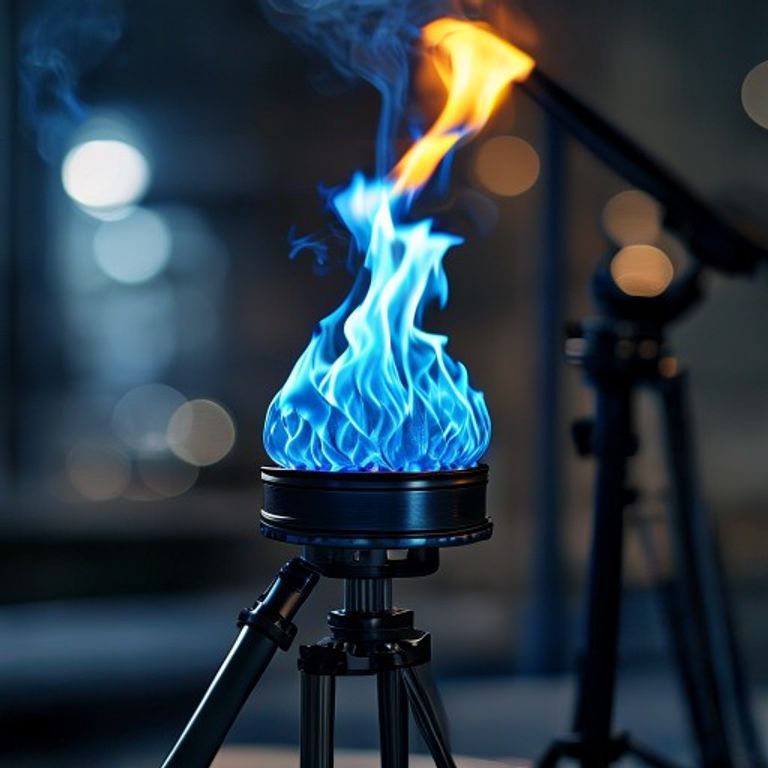
- Rotation du collier dans le sens contraire des aiguilles d'une montre. Comme plus d'air se mélange, la flamme devient un bleu stable et non lumineux avec un cône intérieur—idéal pour la plupart des expériences.
- Parfait. Légères modifications de la valve à gaz changent la dimension de la flamme; les petites modifications de col aiguisent le cône intérieur.
Lignes directrices de sécurité pour l'utilisation d'un brûleur Bunsen dans le laboratoire
La sécurité n'est pas juste une liste de contrôle; c'est une habitude. Voici ce que nous faisons toujours avant d'allumer cette flamme:
- Portez des lunettes de sécurité, un manteau de laboratoire et des gants résistants à la chaleur.
- Assurez-vous que la zone de travail est dégagée des matériaux inflammables (papier, solvants, etc.).
- Vérifiez que la conduite d'alimentation en gaz est intacte et que le régulateur est réglé à la pression correcte.
- Ne jamais laisser un brûleur allumé sans surveillance.
- Gardez un extincteur ou un seau de sable à portée de bras.
Pour une plongée plus profonde dans la sécurité du laboratoire, vous pouvez vous référer à Choisir le bon trépied pour la chimie, qui met également l'accent sur les configurations stables qui empêchent les basculements accidentels.
Meilleur brûleur Bunsen pour les expériences à haute température
Tous les brûleurs ne sont pas égaux. Lorsque vous avez besoin de températures supérieures à 1500 °C, recherchez ces caractéristiques:
- Construction métallique robuste (habituellement en laiton ou en acier inoxydable) pour résister à une chaleur prolongée.
- Collier de mélange d'air réglable qui peut produire une flamme plus chaude et plus lumineuse.
- Cheminée à grande bouche pour une meilleure stabilité des flammes.
- Régulateur de gaz à débit élevé augmenter l'approvisionnement en carburant sans sacrifier le contrôle.
Notre Le guide ultime des brûleurs Bunsen examine plusieurs modèles qui excellent en performance à haute température, vous aidant à choisir le bon pour votre recherche.
Dépannage des problèmes de faible ampleur
Une flamme basse ou enflammée peut être frustrante, mais la plupart des problèmes sont faciles à résoudre:
- Vérifiez l'alimentation en gaz. La basse pression ou un cylindre vide va affamer le brûleur.
- Inspectez le collier d'admission d'air. La poussière ou les débris peuvent bloquer le débit d'air; le nettoyer avec une brosse douce.
- Vérifier le régulateur. Un régulateur défectueux peut ne pas assurer un débit constant.
- Cherchez les fuites. Utilisez une solution d'eau savonneuse sur les raccords; les bulles indiquent une fuite.
Si la flamme reste faible après ces étapes, il pourrait être temps de remplacer le brûleur ou la conduite de gaz.
Brûleurs portables Bunsen pour la chimie sur le terrain
Le travail sur le terrain exige de la flexibilité. Les brûleurs portatifs sont généralement plus petits, plus légers et utilisent des conteneurs jetables (souvent du propane ou du butane). Principales considérations:
- Poids et taille. Visez un design compact qui s'intègre dans un sac à dos.
- Type de carburant. Le propane fonctionne bien dans les climats plus froids; le butane est idéal pour des conditions plus chaudes.
- Caractéristiques de sécurité. Cherchez des soupapes de surpression intégrées et des bases solides.
Même en route, ne sautez jamais les étapes de sécurité : porter des lunettes, garder une couverture de feu à portée de main et travailler dans une zone bien ventilée.
Conclusion
La maîtrise du brûleur Bunsen est un mélange de compréhension de la physique des flammes, de respect des protocoles de sécurité et de choix du bon équipement pour le travail. Que vous ajustiez une flamme pour une titration, le chauffage d'un creuset à 1800 °C, ou la conduite d'une analyse rapide sur le terrain, les principes restent les mêmes : contrôle, prudence et confiance. Gardez ces conseils à l'esprit, et le brûleur Bunsen deviendra un partenaire fiable dans chaque expérience.
FAQ
Quelle est la flamme idéale pour la plupart des travaux de laboratoire?
Une flamme bleue stable et non lumineuse avec un cône intérieur bien défini fournit la chaleur la plus chaude et la plus propre pour la plupart des procédés chimiques.
Puis-je utiliser un brûleur Bunsen au gaz naturel?
Oui, mais vous devez régler le collier de mélange d'air plus ouvert parce que le gaz naturel (principalement le méthane) a un profil de combustion différent de celui du propane.
Combien de fois dois-je nettoyer le collier d'admission d'air?
Inspectez-le avant chaque utilisation. Une brosse rapide une fois par mois suffit pour la plupart des laboratoires, mais les environnements à forte utilisation peuvent nécessiter un nettoyage hebdomadaire.
Un brûleur Bunsen portable est-il aussi sûr qu'un modèle de banc?
Les brûleurs portatifs ont des soupapes de sécurité intégrées, mais vous devez toujours suivre les mêmes règles de protection et de ventilation que dans le laboratoire.
Que dois-je faire si la flamme s'éteint de façon inattendue ?
Éteignez immédiatement l'alimentation en gaz, vérifiez les fuites, assurez-vous que le collier n'est pas complètement fermé et vérifiez la source de carburant avant de ranimer.







