Unlocking Precision: The Essential Uses of Pipettes in Modern Laboratories

Have you ever wondered how scientists manage to handle tiny, precise amounts of liquids in their experiments? Or perhaps you’ve seen those intricate lab setups on TV and noticed peculiar glass or plastic tubes with bulbs? Chances are, you’ve witnessed the unsung hero of liquid transfer: the pipette. For anyone working in a lab, or even just curious about scientific precision, understanding the uses of pipette is absolutely fundamental. It’s not just a fancy dropper; it’s a precision instrument that makes accurate measurements possible, driving discovery and ensuring reliable results.
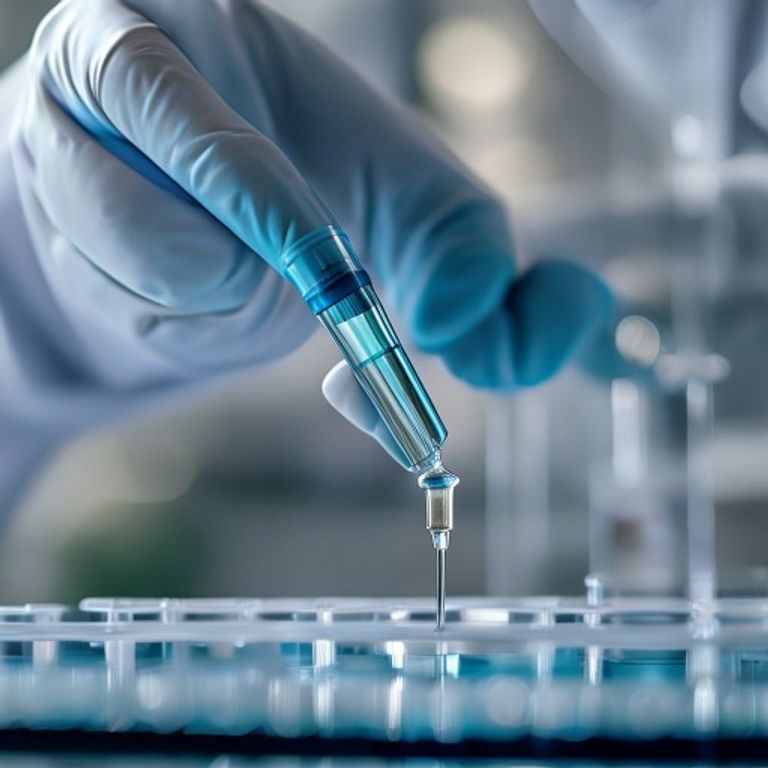
At its core, a pipette is designed for one main purpose: to accurately measure and transfer volumes of liquid, often in very small quantities. Think of it like a super-specialized measuring spoon, but instead of teaspoons or tablespoons, we’re talking about microliters – volumes so tiny they’re practically invisible to the naked eye. Without pipettes, much of modern biology, chemistry, and medicine simply wouldn’t be possible. They are truly the backbone of precise liquid handling in any scientific setting.
What Exactly Are Pipettes Used For in Laboratories?
When we talk about uses of pipette in laboratories, we’re talking about a vast array of applications that require exactness. From preparing samples for analysis to mixing reagents for a critical reaction, pipettes are indispensable. Imagine trying to add precisely 50 microliters of an enzyme to a solution with a regular dropper – it would be impossible! This is where pipettes shine. They allow scientists to perform sensitive experiments with confidence, ensuring that the right amount of substance is transferred every single time.
The applications are incredibly diverse. In a typical biology lab, you might see pipettes being used to transfer DNA samples, prepare cell cultures, or perform diagnostic tests. In chemistry, they’re crucial for titrations, creating standard solutions, and even routine quality control. Even in environmental science, pipettes are essential for measuring pollutants in water samples. Basically, wherever a specific, small volume of liquid needs to be moved from one place to another with high volumetric accuracy, a pipette is the tool for the job.
A Deep Dive into Different Types and Their Common Uses
Not all pipettes are created equal! Just like a chef has different knives for different tasks, scientists use various types of pipettes, each optimized for specific uses of pipette. Let’s explore some of the most common ones:
Applications of Micropipettes in Biology Research
- Micropipettes: These are perhaps the most recognizable laboratory instrument in modern research. They are adjustable and can transfer extremely small volumes, typically ranging from 0.1 microliters to 1000 microliters (1 milliliter).
- Key Uses: In biology research, applications of micropipettes in biology research are vast. We use them for everything from isolating DNA and RNA, setting up Polymerase Chain Reaction (PCR) experiments, performing ELISA assays for disease detection, and precise sample measurement and aliquoting in cell culture work. Their ability to handle such tiny volumes with high precision is critical for the delicate nature of biological samples.
Different Uses of Volumetric Pipettes
- Volumetric (or Bulb) Pipettes: These are single-volume pipettes, meaning they are designed to deliver only one specific volume (e.g., 10 mL, 25 mL). They have a distinct bulb in the middle and are calibrated to provide the highest possible accuracy.
- Key Uses: The different uses of volumetric pipettes often revolve around tasks where utmost precision is paramount. We commonly use them for preparing standard solutions in analytical chemistry, where the exact concentration is crucial, and for titrations to determine an unknown concentration of a substance. They are the gold standard for volumetric accuracy.
Common Uses of Pasteur Pipettes in Chemistry and Beyond
- Graduated (or Serological) Pipettes: These pipettes have volume markings along their length, allowing us to measure different volumes within a specific range. They are more versatile than volumetric pipettes but generally less accurate.
- Key Uses: We often use graduated pipettes for general liquid handling tasks, such as preparing reagents, transferring cell culture media, or adding larger, less critical volumes to a test tube or beaker.
- Pasteur Pipettes: Often called “droppers,” these are simple glass or plastic tubes with a long, tapering tip and a bulb at the top. They are not calibrated for accuracy.
- Key Uses: The common uses of pasteur pipettes in chemistry and other labs are for non-volumetric transfers. We use them to add drops of reagent, to transfer small amounts of liquid where exact volume isn’t crucial, or for qualitative tests. They’re great for quick, rough transfers.
Mastering the Art: How to Properly Use a Pipette for Liquid Transfer
Even the most advanced pipette is only as good as the person using it. Knowing how to properly use a pipette for liquid transfer is a skill that takes practice and attention to detail. Here are some quick tips we always emphasize:
- Choose the Right Pipette and Tip: Always select a pipette that matches the volume you need to transfer and ensure the tip fits snugly.
- Pre-wet the Tip: Before aspirating your sample, draw up and dispense the liquid a few times. This equalizes the temperature and humidity, improving accuracy.
- Proper Immersion Depth: Don’t dunk the tip too deep (liquid can stick to the outside) or keep it too shallow (you might draw up air).
- Smooth and Steady: Aspirate and dispense liquids slowly and smoothly to avoid bubbles and ensure complete transfer.
- Vertical Dispensing: For maximum accuracy, dispense against the side wall of the receiving vessel or into the liquid already present.
- Regular Calibration: Just like any precision tool, pipettes need to be calibrated regularly to maintain their accuracy.
Think of it like pouring a perfect cup of coffee; the technique matters just as much as the machine itself. A slight mistake can throw off an entire experiment, so precision in pipetting is a crucial practical solution for reliable results.
Conclusion: The Indispensable Tool for Precision
From the microscopic world of DNA to the intricate reactions in a chemist’s flask, pipettes are truly the unsung heroes of precision. They allow us to manipulate liquids with an accuracy that would be impossible otherwise, opening doors to new scientific discoveries and ensuring the reliability of countless tests and experiments. Understanding the diverse uses of pipette, and mastering their proper handling, is a cornerstone of modern scientific practice. So, the next time you see a scientist meticulously transferring a liquid, you’ll know they’re not just moving drops; they’re building the future, one precise aliquot at a time.
FAQ
Q1: What is the most accurate type of pipette?
A: Volumetric pipettes (also known as bulb pipettes) are generally considered the most accurate type for delivering a fixed volume of liquid, boasting very low error margins.
Q2: Why is proper pipetting technique important?
A: Proper pipetting technique is crucial because even small errors in volume transfer can significantly impact the accuracy and reliability of experimental results, potentially leading to incorrect conclusions or wasted reagents.
Q3: Can pipette tips be reused?
A: In most laboratory settings, especially those requiring high accuracy or sterility, pipette tips are designed for single use to prevent cross-contamination and ensure precision. Reusing tips can lead to inaccurate volumes and compromised experimental integrity.
Q4: What are pipettes made of?
A: Pipettes can be made of various materials. Older or simpler pipettes (like Pasteur pipettes) are often glass. Modern volumetric and graduated pipettes are typically made from borosilicate glass for chemical resistance and thermal stability. Micropipettes are generally made from durable plastics and metal components, while their disposable tips are almost always polypropylene plastic.