


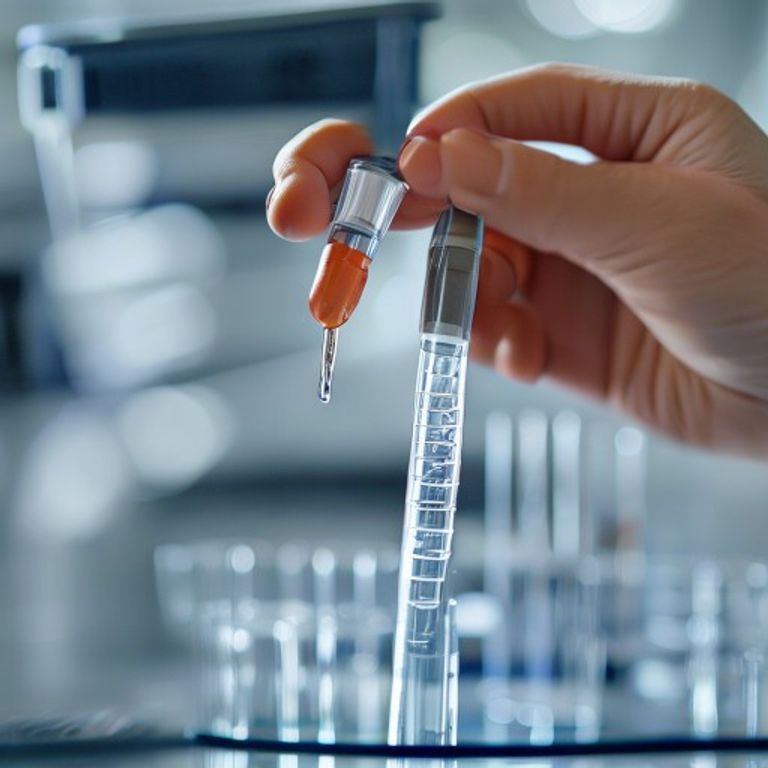
Unlocking the Essential Uses of Pipettes: A Practical Guide for Accurate Liquid Handling

Introduction
When we step into a modern lab, the first tool that often catches our eye is the humble pipette. Whether you’re a seasoned researcher or a student just starting out, mastering pipette techniques can feel like learning to ride a bike—once you get the balance, everything else flows smoothly. In this article, I’ll walk you through the most common pipette uses in laboratories, share tips for precise liquid transfer, and explore the different types of pipettes you might encounter.
Why Pipettes Matter in the Lab
Pipettes are the workhorses of liquid handling. They provide volumetric accuracy that is essential for reproducible results, whether you’re preparing a PCR mix or diluting a reagent for a titration. Think of a pipette as the “digital ruler” for liquids—just as a ruler gives you exact measurements for length, a pipette gives you exact measurements for volume.
What Are Pipettes Used for in Laboratories?
Here are the top scenarios where pipettes become indispensable:
- Sample preparation: Transferring precise volumes of biological samples for downstream analysis.
- Reagent dispensing: Adding exact amounts of chemicals to reaction tubes, ensuring consistent reaction conditions.
- Serial dilutions: Creating a range of concentrations for assays like ELISA or antimicrobial testing.
- Micro-volume handling: Working with nanoliter to microliter volumes in genomics and proteomics.
Common Uses of Micropipettes in Biology
Biology labs love micropipettes because they can handle tiny volumes with high precision. Typical applications include:
- Setting up PCR reactions (usually 1‑5 µL of DNA template).
- Loading cells into culture plates for cell‑based assays.
- Transferring enzyme solutions for kinetic studies.
In fact, the essential uses of pipettes extend far beyond biology, reaching into chemistry, environmental testing, and even forensic analysis.
How to Use a Pipette for Accurate Liquid Transfer
Even the best pipette can give you wrong results if you don’t handle it properly. Below is my step‑by‑step routine that guarantees volumetric accuracy:
- Set the volume: Turn the dial to the desired volume. Never exceed the pipette’s maximum capacity.
- Pre‑wet the tip: Aspirate and dispense the liquid a few times to coat the inner surface of the tip—this reduces surface tension errors.
- Aspirate slowly: Press the plunger to the first stop, submerge the tip just below the liquid surface, then release the plunger smoothly.
- Dispense at an angle: Touch the tip to the side of the receiving tube and press to the second stop to expel the remaining liquid.
- Dispose of the tip: Use a tip ejector to avoid cross‑contamination.
Tips for Improving Accuracy
- Always use calibrated, disposable tips that match the pipette model.
- Keep the pipette upright; tilting can cause volume errors.
- Work at room temperature; extreme temperatures affect liquid viscosity.
- Regularly perform a calibration check with a gravimetric method.
Pipette Applications in Chemical Analysis
Chemists rely on pipettes for tasks that demand exact stoichiometry. For example, when preparing a standard solution for a spectrophotometric assay, a 10 µL aliquot of a stock solution must be transferred accurately to avoid skewed absorbance readings. Pipettes also play a key role in:
- Gravimetric titrations.
- Preparing calibration curves for chromatography.
- Sampling environmental water for pollutant analysis.
Different Types of Pipettes and Their Uses
Not all pipettes are created equal. Here’s a quick rundown:
| Type | Typical Volume Range | Best For |
|---|---|---|
| Air‑displacement micropipette | 0.1 µL – 10 mL | General molecular biology, PCR |
| Positive‑displacement pipette | 0.1 µL – 5 mL | Viscous or volatile liquids |
| Glass serological pipette | 1 mL – 100 mL | Manual dispensing of larger volumes |
| Repeater pipette | 10 µL – 1000 µL | High‑throughput repetitive dispensing |
Conclusion
Mastering pipette uses is like learning the secret handshake of the laboratory world. With the right technique, you’ll achieve the volumetric accuracy needed for reliable data, whether you’re handling DNA, chemicals, or environmental samples. Remember to choose the appropriate pipette type, follow the simple handling steps, and keep your tips clean. Soon, you’ll wonder how you ever managed experiments without this indispensable tool.
FAQ
Q: How often should I calibrate my micropipette?
A: Ideally every 3‑6 months, or sooner if you notice inconsistent volumes or after a major impact.
Q: Can I use the same tip for different reagents?
A: No. Always use a fresh tip for each reagent to prevent cross‑contamination.
Q: What’s the difference between air‑displacement and positive‑displacement pipettes?
A: Air‑displacement pipettes use an air cushion to move liquid, suitable for most aqueous solutions. Positive‑displacement pipettes grip the liquid directly, making them ideal for viscous, corrosive, or volatile liquids.
Q: Is it okay to pipette hot liquids?
A: Only if the pipette is rated for high temperatures; otherwise, let the liquid cool to room temperature to avoid damaging seals.
Q: Why do I need to pre‑wet the tip?
A: Pre‑wetting conditions the tip’s inner surface, reducing surface tension effects and improving accuracy, especially for small volumes.







