The Essential Guide to Graduated Cylinders: What They Are, How to Use Them, and Why They Matter

Ever found yourself in a science class or a home lab, looking at a piece of laboratory glassware that seems both simple and critical? Chances are, you’ve encountered the humble but indispensable graduated cylinder. It might look like just another tall glass tube, but trust me, it’s a powerhouse when it comes to getting accurate liquid measurements. Today, we’re going to dive deep into everything you need to know about this essential piece of laboratory equipment. From understanding what it is and its various uses to mastering the art of reading it correctly, and even how to keep it squeaky clean, we’ve got you covered. Let’s explore why the graduated cylinder is such a vital tool in any science experiment.
What Exactly is a Graduated Cylinder Used For?
At its core, a graduated cylinder is a piece of laboratory equipment designed to measure the volume of liquids with much greater accuracy than, say, a beaker or a flask. Imagine you’re baking a cake. You wouldn’t use a soup ladle to measure your flour, right? You’d use a proper measuring cup. In the lab, the graduated cylinder is our precise measuring cup for liquids.
These cylinders are typically tall and narrow, featuring markings (graduations) along the side that indicate specific volumes. These marks are usually in milliliters (mL). This design helps minimize errors in volume measurement, making it ideal for experiments where precision is key. We often use them in chemistry, biology, and even physics labs to prepare solutions, measure reagents, or determine the density of objects through water displacement.
Graduated Cylinder vs. Beaker: Why Accuracy Matters
You might be thinking, “Can’t I just use a beaker for measuring?” While beakers and flasks also have volume markings, they are primarily designed for mixing, holding, and heating liquids, not for precise measurement. Their wider mouths and less precise markings mean they’re good for approximations, but not for exact figures. Think of it this way: a beaker is like a coffee mug – it holds liquid and has some rough volume indicators, but you wouldn’t use it to measure 150.7 mL for a delicate chemical reaction.
A graduated cylinder, on the other hand, is specifically calibrated for accuracy. The narrow diameter of the cylinder means that even a small change in liquid height corresponds to a measurable change in volume, making readings much more reliable. This distinction is crucial in scientific work where errors in volume can significantly impact experimental results.
Mastering the Art of Reading a Graduated Cylinder
Reading a graduated cylinder accurately is a fundamental skill. It’s not as simple as just glancing at the liquid level. Here’s how we do it:
Place on a Flat Surface: Always make sure your graduated cylinder is on a level surface. Holding it in your hand can lead to tilted readings.
Eye Level is Key: Crouch down so your eye is perfectly level with the top surface of the liquid. Don’t look down from above or up from below, as this will give you an inaccurate reading due to parallax error.
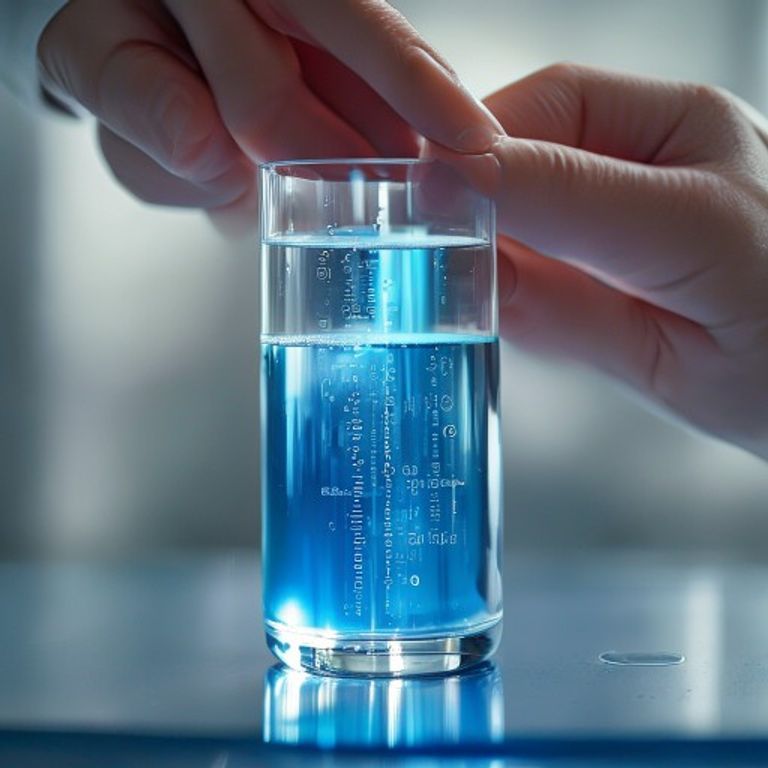
Identify the Meniscus: When you look closely at the liquid in the cylinder, you’ll notice that the surface isn’t perfectly flat. For most liquids, especially water, it forms a curve at the edges, dipping slightly in the middle. This curve is called the meniscus. We always read the volume at the lowest point of this concave meniscus. If you’re working with something like mercury, which forms a convex meniscus, you’d read the highest point.
Estimate the Last Digit: Graduated cylinders have major and minor markings. For example, a 100 mL cylinder might have major marks for every 10 mL, and minor marks for every 1 mL. You should always estimate one digit beyond the smallest marked increment. If the smallest mark is 1 mL, you should estimate to the nearest tenth of a milliliter (e.g., 52.5 mL, not just 52 mL).
Practicing this technique ensures you get the most precise volume measurement possible, vital for any credible science experiment.
Keeping It Clean: The Right Way to Care for Your Graduated Cylinder
Just like any other laboratory glassware, a graduated cylinder needs proper cleaning to maintain its accuracy and prevent contamination. Here’s a simple routine we follow:
Rinse Immediately: As soon as you’re done using it, rinse the cylinder with tap water to remove any immediate residues. This prevents substances from drying and sticking.
Wash with Detergent: Use a mild laboratory detergent and a soft brush to thoroughly scrub the inside and outside. Make sure to get into all crevices.
Rinse Thoroughly: Rinse with tap water several times until all soap bubbles are gone. Then, for a final rinse, use distilled or deionized water to prevent mineral deposits from tap water.
Dry Properly: You can let it air dry by inverting it on a drying rack, or if you need it quickly, you can use a small amount of acetone to help it dry faster (be cautious and ensure proper ventilation!). Never use paper towels or cloth inside, as they can leave fibers and static charge.
A clean cylinder is a happy and accurate cylinder!
Where to Find Your Own: Buying a Graduated Cylinder
Whether you’re setting up a home lab, stocking a school laboratory, or just curious, knowing where to buy graduated cylinder is helpful. You’ll generally find them in two main materials: glass and plastic. Glass cylinders (usually borosilicate glass) are known for their chemical resistance and optical clarity, but they can break. Plastic cylinders (often made from polypropylene or polymethylpentene) are shatter-resistant and lighter, making them great for educational settings or fieldwork, though they might not offer the same chemical resistance or long-term clarity as glass.
You can purchase them from scientific supply companies online (like Fisher Scientific, VWR, or even Amazon for basic versions), or through specialized lab equipment distributors. Consider the volume capacity you need (from 10 mL to 2000 mL or more) and the level of accuracy (Class A are more accurate than Class B) before making a purchase.
FAQ tentang Graduated Cylinder
Q: Can I heat a graduated cylinder?
A: Generally, no. While some glass graduated cylinders are made of borosilicate glass (which is heat resistant), their primary purpose is measurement, not heating. Heating can affect the calibration and accuracy. For heating liquids, we typically use beakers or Erlenmeyer flasks.
Q: Are all graduated cylinders the same?
A: No. They vary in material (glass, plastic), capacity (from small to very large), and accuracy (Class A for high precision, Class B for general purpose). Choose the one that fits your specific needs.
Q: Why is it called “graduated”?
A: The term “graduated” refers to the markings or “graduations” along the side that indicate specific volumes. These lines allow us to read the volume precisely.
Conclusion
So there you have it – your comprehensive guide to the graduated cylinder! We’ve explored what is a graduated cylinder used for, how it differs from a beaker, the precise steps for how to read a graduated cylinder, and even practical tips on how to clean a graduated cylinder and where to buy graduated cylinder. This seemingly simple piece of laboratory equipment is truly vital for accurate volume measurement in countless scientific applications. Mastering its use is a foundational step in becoming a confident and competent scientist, whether you’re in a professional lab or just enjoying a science experiment at home. Keep experimenting, keep measuring accurately, and keep exploring the wonders of science!