The Pipette in Chemistry: Unveiling Its Definition, Uses, and Why It’s Crucial for Accuracy

Hello, fellow science enthusiasts! Have you ever wondered how chemists measure tiny, precise amounts of liquid with such accuracy? In the world of chemistry, where every drop can make a difference, precision is not just a preference; it’s an absolute necessity. And when we talk about precise liquid measurement, one essential laboratory apparatus immediately comes to mind: the pipette. Today, we’re going to dive deep into the fascinating world of pipettes, from their fundamental definition to their critical role in various chemical applications. So, let’s explore why this seemingly simple tool is a true workhorse in any chemistry lab!
What is a Pipette? The Fundamental Chemistry Definition
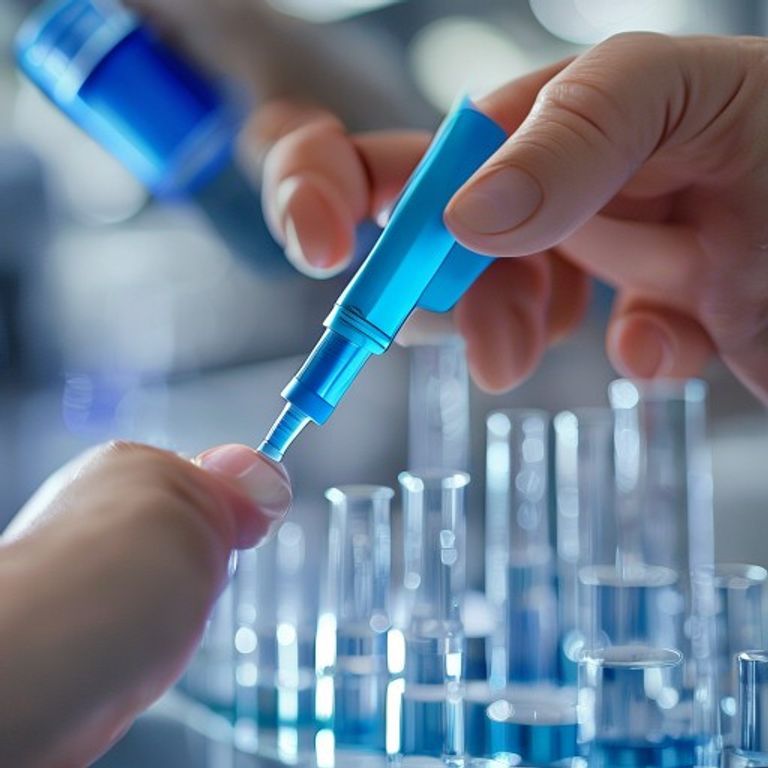
At its core, the pipette definition chemistry refers to a laboratory tool used to accurately measure and transfer small, specific volumes of liquid. Think of it like a very precise, tiny straw designed for scientific work. Typically made from glass or plastic, pipettes are a staple piece of volumetric glassware (or plasticware, in many modern applications) that enables chemists, biologists, and other scientists to handle liquids with controlled precision. Its main function is to draw up a specific volume of liquid and then dispense it, often into another container, ensuring minimal error. Without this tool, many of the experiments and analyses we rely on today simply wouldn’t be possible due to the lack of exact liquid measurements.
Beyond the Basics: What is a Pipette Used For in Chemistry?
Now that we understand the basic definition of pipette and its function, let’s explore the vast array of tasks where this indispensable tool shines. You might be surprised by just how versatile it is! When we ask what is a pipette used for in chemistry, the answers span across nearly every sub-discipline:
- Preparing Solutions: When you need to create a solution with an exact concentration, pipettes are crucial for measuring the solvent or solute accurately.
- Chemical Titration: This is a classic example. During a titration, a solution of known concentration (the titrant) is added precisely to a solution of unknown concentration to determine its quantity. Pipettes ensure that the initial volume of the unknown solution, and the additions of the titrant, are exact.
- Dilutions: Creating a more dilute solution from a concentrated one requires precise transfer of the concentrated stock solution.
- Sample Preparation: In analytical chemistry, preparing samples for instrumental analysis (like chromatography or spectroscopy) demands exact volumes.
- Reagent Addition: Adding specific amounts of reagents to a reaction mixture to control stoichiometry and reaction rates.
Essentially, any task requiring accurate volume transfer of liquids, especially in small quantities, will likely involve a pipette. It’s one of the most fundamental liquid measurement tools in any lab setting.
A World of Precision: Understanding the Types of Pipettes in Chemistry
Just like screwdrivers come in different shapes and sizes for various screws, pipettes also come in several specialized forms, each designed for specific levels of precision and volume ranges. Understanding the types of pipettes in chemistry definition is key to choosing the right tool for the job:
- Volumetric Pipettes (or Bulb Pipettes): These are the gold standard for accuracy. They are designed to deliver a single, fixed volume (e.g., 10 mL, 25 mL) with extremely high precision. You’ll notice a distinct bulb in the middle, and a single graduation mark. They are ideal for preparing standard solutions or for initial sample transfers in titrations.
- Graduated Pipettes (or Measuring Pipettes): These pipettes have multiple graduation marks along their length, allowing you to measure and dispense variable volumes. While more versatile than volumetric pipettes, they are generally less accurate. They are excellent for tasks where high precision isn’t absolutely critical, but measured volumes are still important.
- Micropipettes (or Adjustable Pipettes): Common in molecular biology and analytical chemistry, micropipettes are used for extremely small volumes, typically in the microliter range. They are piston-driven and usually come with disposable tips, allowing for adjustable volume settings and preventing cross-contamination.
- Pasteur Pipettes: Often called “droppers,” these are simple glass or plastic tubes with a bulb. They are used for transferring unmeasured amounts of liquid where precision isn’t a concern, such as adding reagents drop by drop or transferring waste.
Choosing the correct type of pipette is critical for achieving reliable experimental results. Each variant serves a unique purpose, contributing to the overall integrity of scientific work.
Why Every Drop Counts: The True Meaning of a Pipette in the Chemistry Lab
When we talk about the chemistry lab pipette meaning, it goes beyond just being a tool for liquid transfer. It embodies the very principle of accuracy and reproducibility that underpins all scientific endeavor. Imagine trying to perform a complex experiment where the exact amount of reactants is unknown because your measuring tools are unreliable. The results would be meaningless! The pipette ensures that we can control one of the most fundamental variables in chemistry: volume.
Achieving this level of precision requires not only the right type of pipette but also correct technique and regular maintenance. A poorly used or uncalibrated pipette can introduce significant errors, leading to flawed data and incorrect conclusions. This is why proper training in pipette usage is a cornerstone of any chemistry education. While pipettes are kings of precision, it’s good to remember other volumetric glassware like graduated cylinders serve their own purposes in the lab. If you’re interested in learning how to master liquid volumes with confidence using these other essential tools, we have a comprehensive guide just for you.
Tips for Mastering Your Pipette: Achieving Accurate Liquid Transfer
So, how do we ensure we’re getting the most out of our pipettes? Here are a few practical tips:
- Choose the Right Pipette: Always select the pipette type that matches your required precision and volume range.
- Proper Technique: For glass pipettes, ensure the meniscus is at eye level when reading the volume. For micropipettes, use proper aspiration and dispensing techniques (first stop/second stop).
- Temperature Control: Liquid volume changes with temperature. Try to work with solutions at a consistent room temperature for maximum accuracy.
- Cleanliness: Always use clean pipettes. Residues can affect surface tension and thus, the dispensed volume.
- Calibration: Regularly check the calibration of your pipettes, especially micropipettes, to ensure they are delivering the stated volumes accurately.
Conclusion
From understanding the basic pipette definition chemistry to exploring its varied uses and types, it’s clear that this unassuming piece of laboratory apparatus is an absolute hero in the scientific community. It empowers us to conduct precise experiments, produce reliable data, and ultimately, advance our understanding of the chemical world. So, the next time you see a chemist meticulously transferring liquid with a pipette, you’ll know that behind that careful movement is a commitment to accuracy, precision, and the relentless pursuit of scientific truth. Keep experimenting safely and precisely!
FAQ
What is a pipette in simple terms?
A pipette is a laboratory tool used to accurately measure and transfer small, specific amounts of liquid from one container to another, much like a very precise scientific eyedropper.
What is the primary function of a pipette in chemistry?
The primary function of a pipette in chemistry is to facilitate the accurate transfer of specific liquid volumes, which is crucial for tasks like preparing solutions, conducting titrations, and making precise dilutions.
What are the three main types of pipettes?
The three main types of pipettes commonly used in chemistry are volumetric pipettes (for fixed, high-precision volumes), graduated pipettes (for variable, good-precision volumes), and micropipettes (for very small, adjustable volumes in the microliter range).
Why is accurate measurement with a pipette important?
Accurate measurement with a pipette is vital because even small errors in liquid volumes can significantly affect the concentration of solutions, the rates of chemical reactions, and the overall reliability and reproducibility of experimental results.
How does a pipette differ from a graduated cylinder?
While both are used for liquid measurement, pipettes (especially volumetric ones) are designed for much higher precision and typically for smaller, specific volumes. Graduated cylinders are used for measuring larger, approximate volumes and are less precise than pipettes.