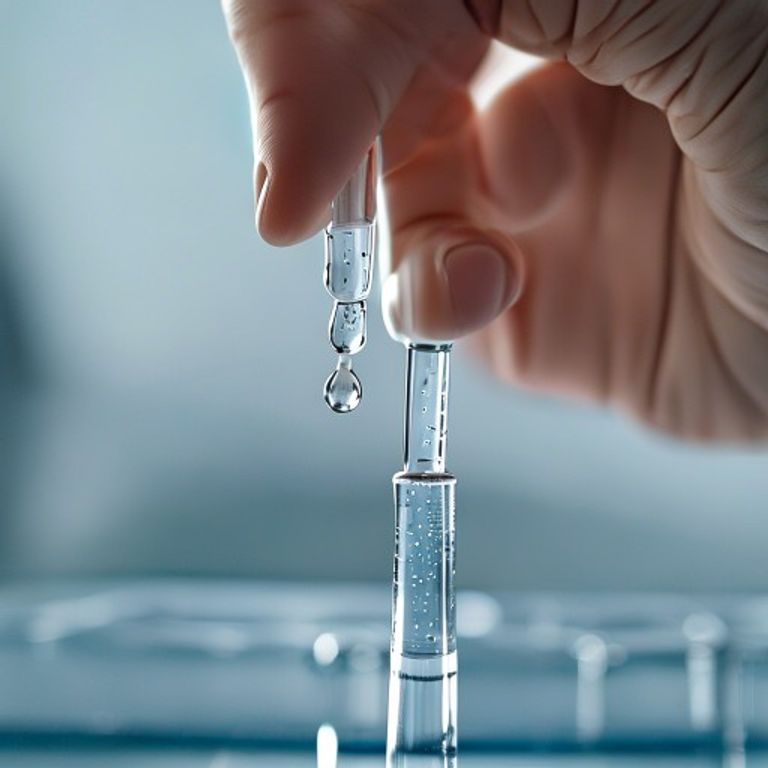
Comprendre la fonction Pipette : comment elle permet une manipulation précise des liquides dans le laboratoire

Présentation
When I first stepped into a research lab, the most intimidating tool on the bench was the sleek plastic tube we call a pipette. Yet, after a few practice squeezes, I realized that its real magic lies in the pipette function—the precise way it aspirates and dispenses liquids. In this article, I’ll walk you through how pipettes work, why their function matters for experimental accuracy, and practical tips to keep them performing at their best.
Comment fonctionnent les pipettes?
Think of a pipette as a tiny, controlled syringe. When you press the plunger, a piston moves inside a sealed barrel, creating a vacuum that draws liquid up through the tip. Releasing the plunger lets the piston push the liquid out. This simple push‑and‑pull action is the core of the aspiration et distribution cycle.
- Air displacement pipettes: Most common in molecular biology; they use an air cushion between the piston and the liquid.
- Positive displacement pipettes: Ideal for viscous or volatile liquids because the piston contacts the sample directly.
Both types rely on calibrated volume settings, which translate the distance the piston travels into a specific amount of liquid—this is the essence of Mesure volumétrique.
Primary Function of a Micropipette
The primary function of a micropipette is to deliver tiny volumes (usually 0.1 µL to 1000 µL) with high precision. In my own experiments, this accuracy can be the difference between a clear PCR band and a blurry mess. Micropipettes achieve this by:
- Providing adjustable volume settings.
- Ensuring repeatable aspiration/dispensing cycles.
- Minimizing dead volume through fine tip design.
Understanding Different Pipette Types
Not every pipette fits every job. Here’s a quick cheat sheet:
- Single‑channel pipettes: Best for individual samples or when you need to change tips frequently.
- Multi‑channel pipettes: Perfect for 96‑well plates; they save time by dispensing to multiple wells simultaneously.
- Pipettes électroniques: Offer programmable volumes and reduce repetitive strain.
If you’re setting up a new bench, consider pairing your pipettes with other essential lab gear. For example, the essential test tube rack uses can keep your tubes organized and within arm’s reach, minimizing unnecessary movements that could disturb your pipetting rhythm.
Proper Pipette Usage for Accurate Function
Even the best pipette can give sloppy results if you treat it like a regular bottle. Here are my go‑to practices:
- Préhumidifier la pointe : Aspirate and dispense the target liquid a few times to coat the inner surface.
- Set the volume correctly: Rotate the dial slowly; a mis‑set volume can cause a 10‑20% error.
- Use the correct tip size: Match tip volume to the pipette’s range to avoid dead‑space errors.
- Maintain a consistent angle: Hold the pipette vertically during aspiration and at a slight angle (≈45°) when dispensing into a tube or well.
- Avoid air bubbles: Release the plunger slowly and watch the liquid rise in the tip.
And don’t forget regular calibration—most labs schedule it quarterly. A calibrated pipette is the backbone of reliable manipulation des liquides and ensures your data stands up to scrutiny.
Why Pipette Function Matters in Scientific Research
Accurate pipetting underpins every quantitative assay—from enzyme kinetics to drug screening. A small volume error can propagate through a series of dilutions, leading to misleading conclusions. In my experience, the reliability of a study often hinges on two things:
- Consistent aspiration et dispensing mechanics.
- Proper maintenance of the equipment.
When you pair a well‑functioning pipette with other reliable lab tools—like the utilisation polyvalente des béchers for bulk mixing—you create a workflow where each step reinforces the next, reducing cumulative error.
Tips for Extending Pipette Longevity
Think of your pipette as a high‑precision instrument that deserves care:
- Never force a tip onto the shaft; gently push until it clicks.
- Keep the barrel clean—wipe with a lint‑free cloth after each use.
- Store it upright in a protective case to avoid accidental drops.
- Replace seals and O‑rings according to the manufacturer’s schedule.
Following these simple habits not only preserves the pipette function but also saves you money on repairs.
Conclusion
Understanding the function of a pipette transforms it from a simple plastic tube into a cornerstone of experimental accuracy. By mastering how pipettes work, choosing the right type for each task, and practicing proper technique, we can ensure that our liquid handling is both precise and reproducible. Remember, a well‑maintained pipette is the silent hero behind every successful experiment.
FAQ
- How often should I calibrate my pipette? Ideally every 3 months, or sooner if you notice volume drift.
- Can I use the same tip for different liquids? No—always use a fresh tip to avoid cross‑contamination.
- What’s the difference between air‑displacement and positive‑displacement pipettes? Air‑displacement uses an air cushion; positive‑displacement contacts the sample directly, making it better for viscous or volatile liquids.
- Is it okay to pipette hot liquids? Only if the pipette is rated for high temperatures; otherwise, let the liquid cool to avoid damaging seals.
- How do I prevent bubbles during aspiration? Aspirate slowly and keep the tip submerged just below the liquid surface.