


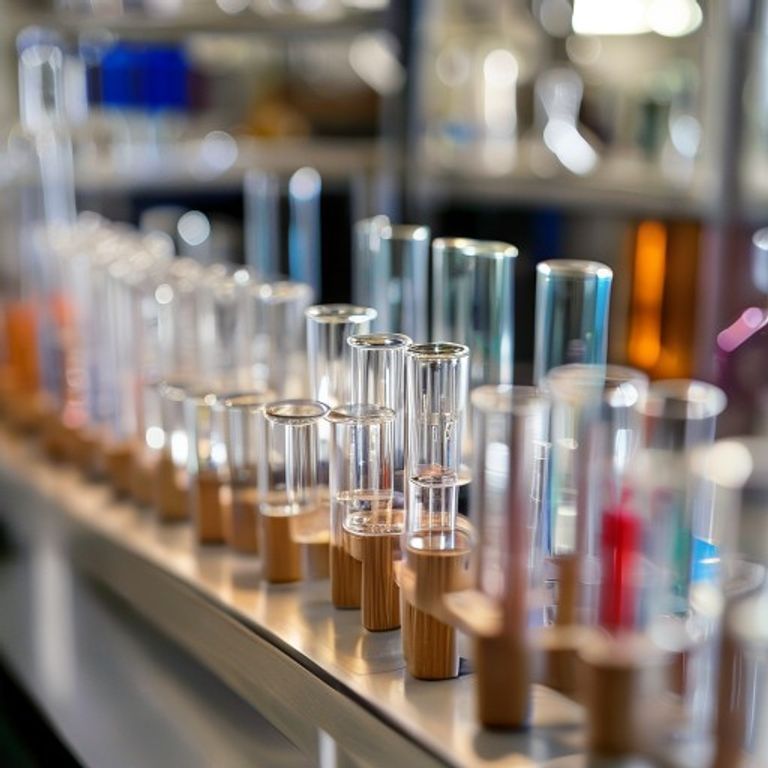
Le monde polyvalent des tubes d'essai: des expériences scientifiques aux hacks domestiques

Quand nous imaginons un labo scientifique, qu'est-ce que l'une des premières choses qui vient à l'esprit? Pour beaucoup d'entre nous, il est ces minces, transparents tubes à essai, souvent bouillonnant avec des concoctions mystérieuses. Ils peuvent sembler simples, juste de minuscules cylindres en verre ou en plastique, mais ces morceaux sans matériel de laboratoire sont vraiment les héros méconnus d'innombrables découvertes scientifiques et expériences passionnantes. Aujourd'hui, on plonge profondément dans le monde des tubes d'essai, en explorant leurs types, utilisations, et même comment faire partie de vos propres aventures scientifiques à la maison.
Que sont exactement les tubes d'essai? (Et pourquoi sont-ils si importants?)
À son cœur, un tube d'essai est un morceau cylindrique de verrerie scientifique ou de plastique, généralement avec un fond en U et un haut ouvert. Considérez-les comme des bols de mélange miniatures conçus spécifiquement pour des expériences à petite échelle. Leur forme étroite et leur fond arrondi les rendent idéales pour contenir de petites quantités de liquides, mélanger des réactifs et observer des réactions chimiques. Ils sont fantastiques pour chauffer des échantillons sur un Brûleur Bunsen (surtout la variété de verre!), pour cultiver des microorganismes, ou simplement pour stocker temporairement des échantillons.
Nous oublions souvent leur signification, mais les tubes d'essai sont cruciaux parce qu'ils nous permettent de travailler avec précision et sécurité. Leur forme uniforme les rend faciles à manipuler, à chauffer uniformément et à stocker efficacement dans des racks. Ils sont un élément fondamental de matériel de laboratoire, essentiel pour tout, des projets de sciences de base à la recherche avancée. Si vous êtes curieux de toutes les façons spécifiques que ces petites merveilles contribuent au progrès scientifique, nous avons un article entier dédié à Fonctions du tube d'essai que vous pourriez trouver illumination.
Un monde de variété : verre contre plastique, et au-delà
Comme les voitures viennent dans différents modèles, les tubes d'essai ne sont pas un-size-fits-all. Le matériau et la conception dépendent souvent de leur utilisation prévue.
Tubes d'essai en verre avec bouchons
Ce sont les images classiques que nous associons souvent aux laboratoires. Fabriqués en verre borosilicate (penser Pyrex), ces tubes d'essai sont incroyablement résistants à la chaleur, ce qui les rend parfaits pour chauffer les réactions directement sur une flamme. Ils sont également chimiquement inertes, ce qui signifie qu'ils ne réagissent pas avec la plupart des produits chimiques que vous mettez dedans, assurant des résultats précis. Souvent, vous les trouverez avec tubes d'essai en verre avec bouchons ou des bouchons en caoutchouc, qui sont excellents pour prévenir l'évaporation ou contenir des gaz au cours d'une expérience. Ils sont réutilisables, mais doivent être soigneusement nettoyés et manipulés en raison de leur nature fragile.
Petits tubes d'essai en plastique en vrac
Pour les environnements éducatifs, les projets de science domestique ou les situations où la déposabilité et la sécurité sont primordiales, les tubes d'essai en plastique sont une option fantastique. Ils sont beaucoup moins enclins à casser, ce qui les rend plus sécuritaires pour les jeunes scientifiques. Vous pouvez souvent acheter petits tubes d'essai en plastique en vrac, qui est très rentable pour les grands groupes ou l'utilisation fréquente. Cependant, les tubes d'essai en plastique ne sont généralement pas conçus pour la chaleur élevée et certains produits chimiques peuvent réagir avec ou dégrader le plastique au fil du temps.
Au-delà de celles-ci, vous pourriez rencontrer des types spécialisés comme les tubes de culture (conçus pour les microorganismes en croissance) ou les tubes à centrifugation (muré pour tourner à haute vitesse).
Au-delà du banc de laboratoire : où acheter des tubes d'essai pour des expériences scientifiques et plus
Donc, vous êtes inspiré et voulez mettre la main sur des tubes d'essai pour vos propres expériences ou même pour des projets d'artisanat ? Bonne nouvelle ! Ils sont largement disponibles. Si vous vous demandez où acheter des tubes d'essai pour des expériences scientifiques, voici quelques endroits à vérifier:
- Détaillants en ligne : Les sites Web comme Amazon, eBay et les magasins d'approvisionnement en laboratoire spécialisés (p. ex. Fisher Scientific, VWR, Carolina Biological Supply) sont d'excellentes sources. Vous trouverez une gamme énorme de plastique de base à haute qualité verre borosilicate.
- Magasins de fournitures pédagogiques : De nombreux magasins destinés aux écoles et aux éducateurs transportent du matériel scientifique de base, y compris des tubes d'essai.
- Magasins de loisirs et d'artisanat : Étonnamment, certains magasins d'artisanat vendent des tubes d'essai en plastique plus petits à des fins décoratives ou de parti.
Lors de l'achat, considérez à quoi vous allez les utiliser. Pour une chimie sérieuse, investir dans du verre de bonne qualité. Pour le plaisir des enfants, le plastique est roi !
Comment nettoyer efficacement les tubes d'essai de laboratoire
Un nettoyage adéquat n'est pas négociable, surtout pour les tubes d'essai en verre réutilisables, pour éviter toute contamination et garantir des résultats expérimentaux précis. Si vous demandez comment nettoyer les tubes d'essai de laboratoire, ici est un processus simple que nous suivons souvent:
- Rincement initial: Immédiatement après l'utilisation, rincer soigneusement le tube d'essai avec de l'eau du robinet pour éliminer tout produit chimique ou débris lâches.
- Fabrication dans laquelle: Utilisez une brosse à tubes d'essai spécialisée et un détergent de laboratoire léger (ou même du savon pour les expériences moins sensibles). Frotter vigoureusement l'intérieur, en veillant à atteindre le fond et les côtés.
- Rincement final: Rincer plusieurs fois avec de l'eau distillée ou désionisée pour éliminer toutes traces de détergent et de minéraux du robinet.
- Séchage: Dans un laboratoire professionnel, ils sont souvent inversés sur des grilles de séchage ou dans un four. À la maison, laissez-les simplement sécher à l'air à l'envers sur une serviette en papier propre ou une Dimensions du support du tube d'essai pour éviter les taches d'eau.
Portez toujours un équipement de sécurité approprié comme des gants et une protection oculaire lors du nettoyage, surtout si vous travaillez avec des substances dangereuses.
Le Héros Unsung : les racks de tubes d'essai et leurs dimensions
Imaginez essayer de mener plusieurs expériences sans place pour supporter vos tubes d'essai. Chaos ! C'est là que l'humble porte-tubes entre en jeu. C'est comme un garage de stationnement pour vos mini expériences, les gardant organisés, droits et à l'abri de basculer. Les sacs sont disponibles en différents matériaux (bois, métal, plastique) et configurations.
Lors du choix d'un rack, vous devrez considérer le Dimensions du support du tube d'essai. Ils sont conçus pour s'adapter à des diamètres spécifiques du tube d'essai (p. ex. 13mm, 16mm, 18mm) et des capacités (p. ex. 6-place, 12-place, 24-place). Assurez-vous que les trous sont suffisamment larges pour que vos tubes d'essai s'adaptent confortablement, mais suffisamment serrés pour les maintenir solidement. Certains supports ont même des picots pour le séchage après le nettoyage, ajoutant à leur utilité.
FAQ (Foire aux questions)
Q: Puis-je chauffer les tubes d'essai en plastique?
R: Généralement, non. La plupart des tubes d'essai en plastique ne sont pas conçus pour le chauffage direct et vont fondre ou se déformer. Utilisez toujours des tubes d'essai en verre borosilicaté lors du chauffage des échantillons.
Q: Quelle est la différence entre un tube d'essai et une fiole bécher ou conique?
R: Bien que tous soient des verreries de laboratoire, ils servent des buts primaires différents. Les tubes d'essai sont destinés aux réactions à petite échelle, au mélange et au chauffage. Les béchers sont plus larges, utilisés pour maintenir des volumes plus importants, le mélange et les mesures rugueuses. Les flacons coniques (ou les flacons Erlenmeyer) ont un cou étroit, ce qui les rend idéales pour le mélange en tourbillonnant et en empêchant les déversements, en particulier pendant la titration.
Q: Les tubes d'essai sont-ils réutilisables?
R: Les tubes d'essai en verre sont absolument réutilisables, à condition qu'ils soient soigneusement nettoyés et inspectés pour détecter les fissures ou les copeaux. La plupart des tubes d'essai en plastique, en particulier les plus petits, sont souvent considérés comme jetables après une ou quelques utilisations, surtout s'ils sont utilisés avec des échantillons biologiques ou des produits chimiques solides.
Conclusion
Du laboratoire de chimie animé à une curieuse chambre d'enfant, les tubes d'essai sont indéniablement des outils vitaux. Ils encapsulent l'esprit d'expérimentation, nous permettant d'observer, de réagir et d'apprendre à l'échelle micro. Si vous effectuez des recherches sérieuses avec résistant à la chaleur tubes d'essai en verre avec bouchons ou explorer des réactions colorées avec petits tubes d'essai en plastique en vrac, comprendre leur fonction et leurs soins est essentiel. Donc, la prochaine fois que vous verrez ces humbles cylindres, rappelez-vous le vaste monde de découverte qu'ils détiennent, et peut-être envisager d'en obtenir pour vos propres expériences fascinantes!







