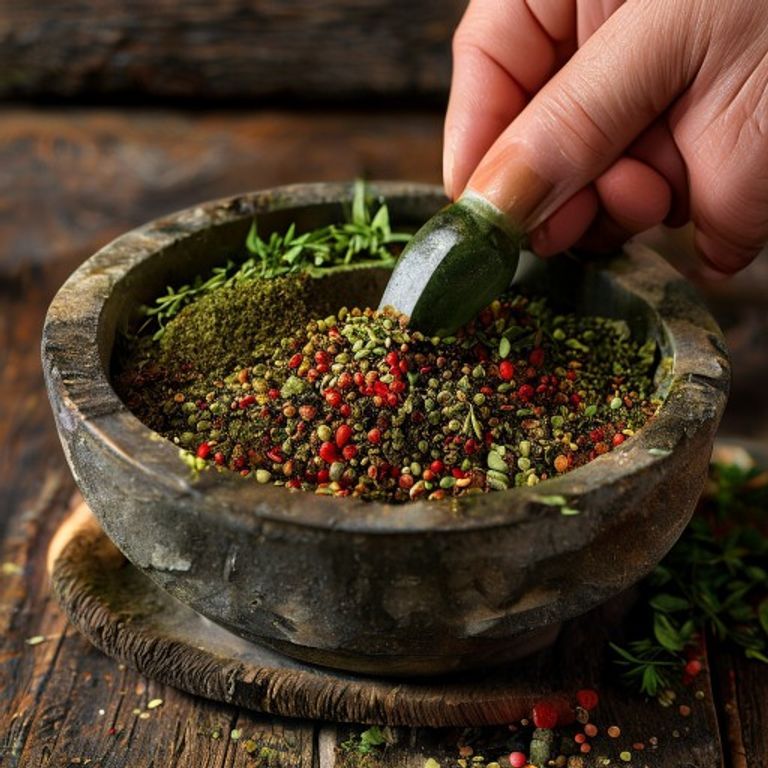
Le guide essentiel de la fonction Mortaire et Pestle : de la cuisine au laboratoire

Présentation
Quand j'ai commencé à expérimenter avec des herbes fraîches, j'ai trouvé un broyeur électrique. Le résultat? Une texture faible et inégale qui a volé l'arôme des épices. C'est quand j'ai redécouvert les humbles mortier et pilon. Cet outil simple fait plus que simplement écraser; il déverrouille les saveurs, préserve les huiles essentielles, et trouve même une place dans les laboratoires scientifiques. Dans cet article, je vais vous guider fonction mortier et pilon, comment l'utiliser efficacement, et pourquoi il bat souvent les broyeurs modernes.
À quoi sert un mortier et un peste?
Au cœur, un mortier et un pilon est un bol (le mortier) et un outil en forme de club (le pilon). Ensemble, ils permettent :
- Broyage – réduire les épices entières en poudres fines.
- Broyage – décomposer les graines, les noix ou les herbes séchées.
- Mâcher – transformer l'ail, le gingembre ou le piment en pâte.
- Mélange – combinant plusieurs ingrédients dans un mélange homogène.
De la fabrication du pesto à la préparation d'un échantillon de laboratoire, le principe reste le même : appliquer la pression et le frottement pour libérer des arômes ou des composés.
Comment utiliser un mortier et un peste pour broyer les épices
Voici ma routine étape par étape qui garantit des résultats cohérents:
- Choisissez le bon matériau. Les mortiers en céramique ou en pierre sont parfaits pour les épices; le verre est utilisé pour les mélanges acides.
- Sécher les épices. L'humidité entrave le broyage. Toast épices entières légèrement pour augmenter l'arôme.
- Commencez par un doux béguin. Utilisez la base du pestle pour casser les graines en petits morceaux.
- Appliquer une motion circulaire. Presser et tordre, laisser le poids du pestle.
- Fermez les côtés. Une petite cuillère ou le bord du pestle aide à recueillir la poudre.
Pour des mesures précises, en particulier lors de la cuisson, jumeler le mortier mesure du cylindre gradué technique pour s'assurer que la bonne quantité de liquide est ajoutée après le broyage.
Avantages de l'utilisation d'un mortier et d'un peste en cuisine
Pourquoi échanger un broyeur motorisé contre cet outil vieux ? Voici les avantages principaux :
- La rétention d'arôme. Le processus lent et manuel maintient les huiles volatiles intactes, vous donnant un résultat plus aromatique.
- Contrôle des textures. Vous décidez si vous voulez un sel grossier ou une poudre fine.
- Pas de chauffage. Les meuleuses électriques peuvent se réchauffer, modifiant le goût des fines herbes.
- La polyvalence. Des grains de poivre à la fabrication du guacamole, un seul outil fait tout.
Utilisations traditionnelles du mortier et du peste
Dans toutes les cultures, le mortier et le pilon sont des produits de cuisine depuis des siècles. Dans la cuisine indonésienne, nous l'utilisons pour créer Bumbu—les pâtes d'épices qui définissent les plats comme le rendang. Dans la cuisine mexicaine, il est essentiel pour faire de la salsa fresca authentique. Même les anciens pharmaciens l'utilisaient pour broyer les herbes pour les teintures médicinales.
Dans les laboratoires scientifiques, le même principe s'applique. Les chercheurs comptent souvent sur un mortier et un pilon pour pulvériser les échantillons solides avant l'analyse. Pour le pesage précis de ces poudres finement moulues, comprendre incertitude de la balance analytique est crucial.
Pourquoi utiliser un mortier et pester au-dessus d'un broyeur?
Si vous êtes toujours sur la clôture, considérez ces comparaisons pratiques:
| Aspect | Mortier et peste | Grinder électrique |
|---|---|---|
| Saveur | Préserve les huiles essentielles | Peut perdre de l'arôme en raison de la chaleur |
| Contrôle | texture fine-tune manuellement | Paramètres souvent fixés |
| Nettoyage | Rincer simplement | Désassemblage complexe |
| Durabilité | Décennies d ' utilisation | L'usure du moteur dans le temps |
Bref, la méthode manuelle peut prendre quelques minutes supplémentaires, mais le gain dans le goût et la polyvalence en vaut la peine.
FAQ
Puis-je utiliser un mortier et un pilon pour les ingrédients humides?
Yes, but choose a non‑porous material like glass or glazed ceramic to prevent staining and odor retention.
Comment nettoyer mon mortier et mon pilon ?
Rinse with warm water, scrub gently with a brush, and let it air‑dry. For stubborn residues, a paste of coarse salt and a few drops of oil works wonders.
Un mortier et un pilon convient-il à de grands lots?
For very large quantities, you may need a bigger stone mortar or split the work into several batches to maintain consistency.
Je peux l'utiliser dans une cuisine professionnelle ?
Absolutely. Many top chefs keep a set at each station for quick finishing touches.
Quelle taille dois-je acheter de mortier ?
A 4‑inch (10 cm) bowl is perfect for everyday home cooking; larger (6‑8 inch) mortars are ideal for batch prep or lab work.