


Le Guide ultime pour les spatules de laboratoire utilise : Types, Techniques et Entretien

Présentation
Quand je suis entré dans un laboratoire de chimie, le petit outil métallique sur le banc m'a attiré l'attention. C'est une spatule de laboratoire, et malgré sa taille modeste, c'est une centrale pour manipuler les poudres, les cristaux et même les liquides visqueux. Dans ce guide, je vais vous guider spatule de laboratoire, explorer les différents types, vous montrer comment travailler avec les poudres en toute sécurité, et partager des conseils sur le nettoyage et le choix de la meilleure spatule pour les échantillons chimiques.
À quoi servent les spatules de laboratoire?
Considérez une spatule comme les « chants à main » d'un laboratoire. Son rôle principal est de transférer des réactifs solides sans les contaminer ni l'environnement environnant. Les utilisations typiques comprennent :
- Collecte d'échantillons solides d'un bateau de pesage ou d'un flacon de stockage.
- Poudres à jeter dans un creuset, un bécher ou un tube d'essai.
- Mélanger de petites quantités de réactifs directement sur un papier de pesage.
- Résidus de trempage de verrerie ou de barres à remuer.
Parce qu'il offre un contrôle précis, une spatule est indispensable pour toute tâche qui implique Traitement des réactifs ou Instrument de prélèvement travail.
Différents types de spatules de laboratoire et leurs utilisations
Tout comme il y a de nombreux types de couteaux dans une cuisine, les spatules de laboratoire viennent en différentes formes et matériaux, chacun adapté pour un travail spécifique.
Spatules métalliques (acier inoxydable)
Elles sont robustes, résistantes à la chaleur et idéales pour transférer des poudres lourdes ou abrasives. Ils sont également faciles à stériliser, ce qui en fait un outil de laboratoire de microbiologie.
Spatules plastiques
Fabriqués en polypropylène ou en polyéthylène, les spatules en plastique sont chimiquement inertes à la plupart des solvants organiques. Utilisez-les lorsque vous avez besoin d'éviter la contamination des métaux, en particulier avec l'analyse des métaux traces.
Spatules en verre
Parfait pour les substances très réactives ou à haute température. Le verre a gagné l'étincelle et peut être chauffé directement sur une flamme.
Spatules en bois
Rare dans les laboratoires modernes mais toujours utile pour des réactions extrêmement sensibles où tout métal ou plastique pourrait interférer.
Comment utiliser une spatule de laboratoire pour les poudres
La manipulation des poudres peut sembler simple, mais quelques trucs simples peuvent prévenir la perte, la contamination croisée et l'exposition.
- Porter un équipement de protection: Les lunettes, les gants et un manteau de labo sont un must.
- Utiliser un bateau ou un papier de pesage: placer l'extrémité de la spatule à l'intérieur, écoper la poudre, et tapoter doucement pour la libérer.
- Évitez l'accumulation statique: si la poudre colle, brosser légèrement la spatule avec une brosse antistatique sèche.
- Transférez rapidement : déplacer la poudre dans le contenant cible (p. ex., un bécher ou un tube d'essai) en un mouvement lisse.
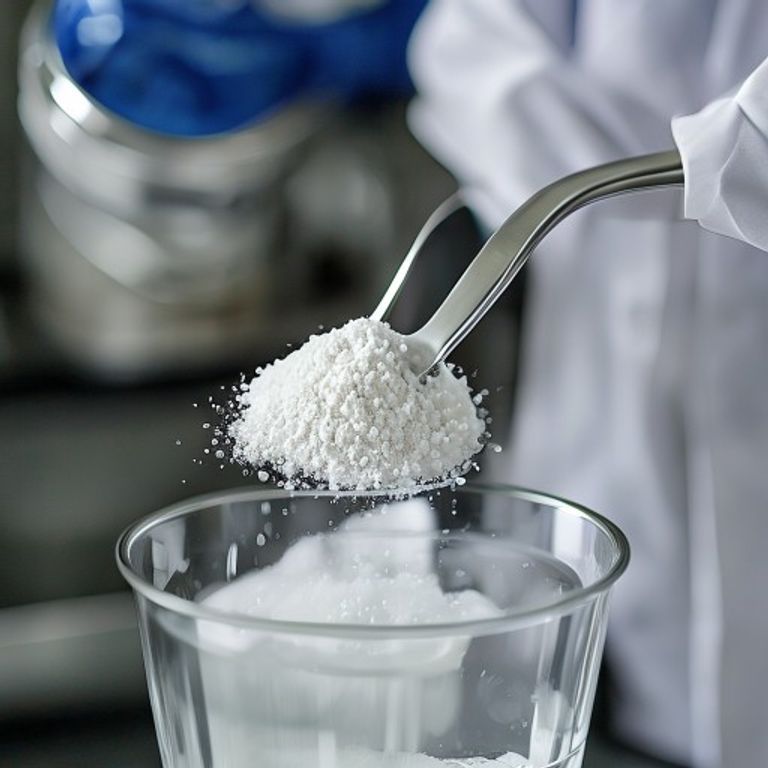
Lorsque vous devez déplacer une petite quantité dans un bécher, le bord plat d'une spatule métallique vous donne le contrôle dont vous avez besoin sans déborder.
Nettoyage et entretien des spatules de laboratoire
Des soins appropriés prolongent la vie de votre spatule et maintiennent les expériences fiables.
- Rincer immédiatement: Après chaque utilisation, rincer avec le solvant approprié (eau pour le travail aqueux, acétone pour les produits organiques).
- Frottez doucement: utiliser une brosse douce; éviter les tampons abrasifs qui pourraient gratter les surfaces métalliques.
- Sécher soigneusement: L'humidité peut causer de la rouille sur les spatules d'acier.
- Conserver séparément: éloigner les spatules métalliques des acides forts ou des bases qui pourraient les corroder.
Pour les laboratoires qui utilisent souvent de l'agitation, rappelez-vous qu'une spatule propre fonctionne main dans la main avec une Barre de brassage assurer un mélange uniforme sans contamination croisée.
Choisir la meilleure spatule de laboratoire pour les échantillons chimiques
Toutes les spatules ne sont pas égales. Voici un arbre de décision rapide:
| Demande | Matériel recommandé | Pourquoi ? |
|---|---|---|
| Travaux à haute température | Verre | Peut résister à une flamme directe. |
| Analyse des traces de métaux | Plastique (PP/PE) | Minimise la contamination des métaux. |
| Poudres lourdes ou solides abrasifs | Acier inoxydable | Durable et facile à nettoyer. |
| Objectif général | Acier inoxydable avec embout en polymère | Combine force et inerte. |
Combinez votre choix de spatule avec le bon bateau de pesage et vous aurez un système d'échantillonnage fiable à chaque fois.
Conclusion
Même si une spatule de laboratoire semble simple, maîtriser ses utilisations peut considérablement améliorer la précision, la sécurité et l'efficacité dans le laboratoire. En choisissant le bon type, en manipulant les poudres avec soin, et en maintenant l'outil correctement, vous allez réduire les erreurs et garder vos expériences sur la bonne voie. La prochaine fois que vous atteindrez pour cette petite cuillère, rappelez-vous qu'il est plus qu'un utensile—c'est un instrument de précision.
FAQ
Q: Puis-je utiliser une spatule métallique avec des solutions acides?
R: Oui, l'acier inoxydable résiste à la plupart des acides, mais évite l'acide fluorhydrique fort car il peut attaquer le métal.
Q: À quelle fréquence dois-je remplacer mes spatules?
R: Remplacez quand vous remarquez la corrosion, la déformation, ou les résidus persistants qui ne sont pas nettoyés.
Q: Les spatules en plastique sont-elles sans danger pour les solvants organiques?
R: La plupart sont compatibles avec des solvants courants comme l'éthanol, l'acétone et l'hexane, mais vérifiez le tableau de résistance chimique du fabricant.
Q: Quelle est la différence entre une spatule et une scoop?
R: Une spatule a une pointe plate, souvent effilée pour le grattage et les transferts précis, tandis qu'une scoop a généralement un bol plus profond pour des volumes plus grands.
Q: Puis-je autoclaver une spatule plastique?
R: Seulement si elle est étiquetée autoclavable; autrement, la chaleur élevée peut chaîner le plastique.







