


Mesurer l'utilisation des cylindres: Conseils pratiques, applications communes, et Hacks d'exactitude

Présentation
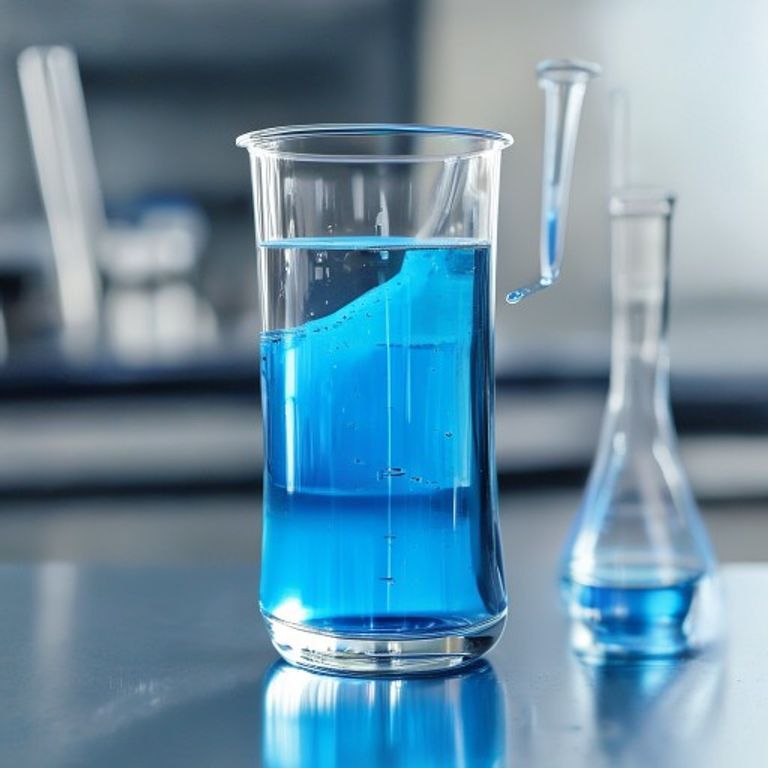
Quand on entre dans n'importe quel laboratoire de chimie, l'un des premiers morceaux de verre que nous prenons est le cylindre de mesure. Cela peut sembler simple—un grand tube gradué—Mais son rôle dans la mesure du volume n'est que trivial. Dans cet article, je vais partager comment utiliser un cylindre de mesure avec précision, explorer ses utilisations les plus courantes en chimie, et souligner pourquoi il reste indispensable dans les expériences scientifiques.
Comment utiliser un cylindre de mesure avec précision
Obtenir une lecture précise d'un cylindre gradué est un peu comme lire un thermomètre: vous devez aligner votre œil avec le ménisque. Voici ma routine étape par étape:
- Choisissez la bonne taille. Un cylindre de 100 mL est parfait pour des volumes de 10 à 90 mL, tandis qu'un cylindre de 10 mL donne une meilleure résolution pour de petites quantités.
- Rincer avant utilisation. Rincer le cylindre avec le liquide que vous mesurez pour éviter la contamination croisée.
- Remplir au niveau souhaité. Verser lentement et arrêter juste avant que le ménisque atteigne la note de graduation.
- Lisez au niveau des yeux. Positionnez votre tête pour que le fond du ménisque soit exactement sur la ligne d'étalonnage.
- Enregistrez la température. Le volume peut changer avec la température; la plupart des laboratoires le notent à 20 °C.
Après ces étapes réduit l'erreur systématique et vous rapproche de la vraie précision volumétrique.
Utilisation courante des bouteilles de mesure en chimie
Même avec des distributeurs numériques avancés, le cylindre de mesure reste pertinent en raison de sa polyvalence :
1. Préparation de solutions standard
Lorsque nous avons besoin d'une concentration connue pour les titrations ou les calibrations, nous mesurons d'abord un volume spécifique de solvant dans un cylindre, puis ajoutons le soluté. Les marquages transparents du cylindre permettent de toucher le volume cible rapidement.
2. Série de dilution
Créer une série d'échantillons dilués (par exemple, 1 M → 0,1 M → 0,01 M) commence souvent par mesurer des volumes précis de solution de stock et de diluant. L'échelle linéaire du cylindre gradué assure la cohérence de chaque étape.
3. Surveillance des réactions
Dans les études cinétiques, nous avons parfois besoin d'enregistrer le volume de gaz évolué ou de liquide ajouté à chaque moment. Un cylindre nous permet de le faire sans interrompre la réaction.
4. Manifestations éducatives
Dans les laboratoires scolaires, les élèves utilisent des cylindres pour visualiser des concepts comme la densité (en mesurant la masse d'un volume connu) ou la relation entre le volume et la pression dans les gaz.
Applications spécifiques dans le laboratoire
Au-delà des bases, les cylindres de mesure brillent dans les tâches de niche:
- Étalonnage d'autres verres. Nous pouvons utiliser un cylindre avec un volume connu pour vérifier la précision des pipettes ou des burettes.
- Préparation des tampons. Des volumes précis de composants acides et de base sont combinés dans un cylindre avant de passer dans une bouteille de stockage.
- Échantillonnage de l'eau ambiante. Les scientifiques de terrain apportent souvent un cylindre portable pour mesurer les échantillons d'eau sur place.
Pour ceux qui aiment la précision, jumeler un cylindre pipettes Le flux de travail crée un système de gestion des liquides robuste.
Pourquoi mesurer la matière des bouteilles dans les expériences scientifiques
L'exactitude du volume se traduit directement par la fiabilité des résultats. Une erreur de seulement 0,5 mL dans une solution de 50 mL peut fausser les calculs de concentration de 1 %, ce qui peut être la différence entre une synthèse réussie et une synthèse échouée. En outre, les bouteilles sont:
- Rentabilité. Par rapport aux flacons volumétriques, ils sont moins chers et réutilisables.
- Facile à nettoyer. Le rinçage simple élimine les résidus et réduit le risque de contamination croisée.
- Durable. La plupart sont fabriqués en verre borosilicate, résistant aux chocs thermiques.
Fonctions des cylindres diplômés dans les laboratoires scolaires
Dans un cadre de lycée, le cylindre gradué sert d'outil d'enseignement :
- Démontrer le concept de ménisque et comment le lire.
- Illustrating the difference between Précision volumétrique et précision.
- Practicing safe liquid handling alongside other glassware like spatules de laboratoire.
FAQ
Q: Can I use a measuring cylinder for very small volumes (≤1 mL)?
A: It’s possible, but accuracy drops. For sub‑milliliter work, a micropipette is a better choice.
Q: How often should I calibrate my measuring cylinder?
A: At least once a year, or whenever you notice a discrepancy during a cross‑check with a calibrated pipette.
Q: Is it okay to use a plastic cylinder for acidic solutions?
A: Generally no—plastic can degrade. Stick to borosilicate glass for strong acids or bases.
Conclusion
Whether you’re a student learning the basics or a researcher fine‑tuning a synthesis, the measuring cylinder remains a cornerstone of laboratory glassware. By mastering its proper use, understanding its common applications, and appreciating its role in ensuring volumetric accuracy, you’ll boost the reliability of your experiments and save time in the lab. So next time you reach for that tall glass tube, remember: a little attention to detail can make a huge difference in your results.







