Dévoilement du flasque de distillation : votre guide essentiel pour la purification et la précision

Avez-vous déjà demandé comment les scientifiques purifient les liquides, extraient les huiles essentielles ou séparent les mélanges complexes? Le secret se trouve souvent dans une pièce d'équipement trompeusement simple mais incroyablement puissante : la fiole de distillation. Comme quelqu'un fasciné par le monde de la chimie et des applications pratiques, je rencontre souvent des outils qui semblent simples mais possèdent un immense potentiel. Le flacon de distillation est certainement l'un d'entre eux.
Dans ce guide, nous allons plonger profondément dans tout ce qui concerne la fiole de distillation. Nous allons explorer ce qu'il est, pourquoi il est si crucial pour différents processus, les différents types que vous pourriez rencontrer, et même des conseils pratiques sur Comment l'utiliser efficacement dans les applications de verrerie de laboratoire. Que vous soyez un chimiste en herbe, un passionné d'huile essentielle de bricolage, ou tout simplement curieux, préparez-vous à débloquer les secrets de ce morceau fondamental d'équipement de chimie organique.
Qu'est-ce que c'est exactement un Flacon Distillant ? Une introduction simple
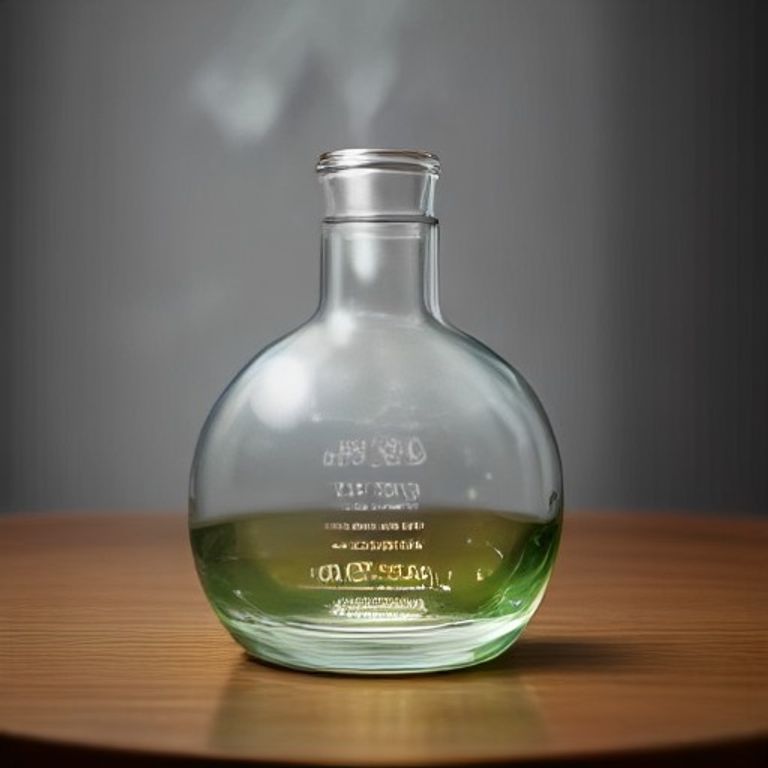
Dans son noyau, une fiole de distillation est un type de verrerie de laboratoire conçu spécifiquement pour le processus de distillation. Pensez-y comme un pot spécialisé pour les liquides bouillants. Habituellement, il dispose d'un fond rond pour le chauffage même et un long cou étroit qui a souvent un bras latéral s'étendant vers le haut puis vers le bas. Ce bras latéral est crucial car il dirige le liquide vaporisé vers un condenseur, où il peut se refroidir en forme liquide.
À la différence d'un bécher régulier ou d'un flacon Erlenmeyer, la conception d'un Flacon rond inférieur utilisé pour la distillation est optimisé pour la stabilité sous chaleur et pour une collecte efficace de vapeur. Nous fabriquons généralement ces flacons à partir de verre borosilicate, qui est connu pour son excellente résistance au choc thermique, ce qui signifie qu'il peut gérer des changements de température rapides sans fissuration. Cela les rend parfaits pour les exigences rigoureuses de l'ébullition et du chauffage dans un laboratoire.
La magie de la distillation : pourquoi nous utilisons des flaques de distillation
Alors, pourquoi ce flacon est-il si important ? Tout revient au principe de distillation. Imaginez que vous ayez un mélange d'eau et d'alcool. Si vous chauffez ce mélange, l'alcool, avec son point d'ébullition inférieur, se transformera en vapeur d'abord. Une fiole de distillation sert de réservoir primaire où se produisent ce chauffage et cette vaporisation.
La vapeur monte ensuite dans le cou et passe par le bras latéral, atteignant finalement un condenseur qui le refroidit. Ce que nous obtenons de l'autre côté est un liquide purifié – dans ce cas, un alcool plus concentré. Cette configuration entière est connue comme une Appareils de distillation.
Nous utilisons des flacons de distillation pour diverses applications critiques:
- Purification: Enlever les impuretés des liquides. Par exemple, créer de l'eau distillée.
- Séparation: Séparer les composants d'un mélange à partir de leurs différents points d'ébullition, un procédé appelé distillation fractionnelle.
- Concentration: Augmentation de la concentration d'une substance désirée.
- Extraction: Such as extracting essential oils from plant materials, where the flask helps separate the volatile oils from water or other solvents.
Types de flasques de distillation: plus qu'une simple balle de base
While the basic concept remains the same, you’ll find a few variations of distilling flasks, each designed for specific needs:
Flacon de distillation du fond rond standard
This is your most common type, often just a round-bottom flask with a single neck and a side arm angled downwards. It’s ideal for simple distillation where the components have significantly different boiling points.
Distillation Flask avec utilisation des bras latéraux: Claisen et plus
Some flasks, like the Claisen flask, feature multiple necks or more complex side arm arrangements. These are incredibly useful for:
- Fractional Distillation: When you need to separate liquids with very close boiling points, you might use a flask with an additional neck for a fractionating column.
- Vacuum Distillation: For heat-sensitive compounds that might decompose at their normal boiling point, we reduce the pressure inside the flask. A flask with multiple necks can accommodate a thermometer and a vacuum adapter simultaneously.
- Adding Reactants: Extra necks allow for the addition of reagents during the distillation process without breaking the seal of the system.
Flacon de distillation en verre pour huiles essentielles
For essential oil extraction, specialized distilling flasks are often used in conjunction with a Clevenger apparatus or similar setups. These flasks are designed to handle the specific volumes and heating requirements needed to gently extract delicate aromatic compounds from plant materials through hydrodistillation or steam distillation.
Comment utiliser un jet de distillation en toute sécurité et efficacement
Using a distilling flask isn’t rocket science, but it does require attention to detail and safety. Here are some practical tips:
- Configuration sécurisée & #160;: Always clamp your distilling flask securely to a retort stand. Remember, it will be heated, and you don’t want it tipping over.
- Source de chaleur: Use an appropriate heat source. For laboratory settings, a heating mantle is common for even, controlled heat. A Bunsen burner can also be used, but with a wire gauze to spread the flame and ensure even heating.
- Filling: Never fill the flask more than two-thirds full to prevent boil-overs. Always add boiling chips to ensure smooth boiling and prevent bumping.
- Connecting Apparatus: Connect the side arm to a condenser, and then the condenser to a receiving flask. Ensure all connections are snug but not overtightened (you don’t want to break the glass!).
- Cooling Water: For the condenser, make sure water flows in at the bottom and out at the top to ensure the jacket is completely filled for efficient cooling.
- Temperature Monitoring: Place a thermometer in the main neck of the flask (if applicable) to monitor the vapor temperature, which indicates the boiling point of the substance being distilled.
- Sécurité d'abord: Always wear appropriate personal protective equipment (PPE) like safety goggles. Work in a well-ventilated area, ideally under a fume hood, especially when dealing with volatile or hazardous substances.
Où acheter des flasques de distillation?
Si vous vous demandez where to buy distilling flask, you have several options:
- Laboratory Suppliers: Companies like Fisher Scientific, VWR, or local lab equipment distributors are your go-to for professional-grade verrerie de laboratoire. They offer a wide range of sizes and types.
- Détaillants en ligne : Websites like Amazon, eBay, or specialized scientific e-commerce stores also sell distilling flasks. Be sure to check seller reviews and product specifications carefully.
- Fournisseurs d'éducation: For schools or hobbyists, educational science suppliers might offer more affordable options.
When purchasing, consider the volume you need, the type of glass (borosilicate is best), and whether you need a flask with a ground glass joint (for easy connection to other apparatus) or a simple cork/rubber stopper opening.
Maintenir votre distillateur : Longévité dans le laboratoire
Proper care ensures your distilling flask lasts a long time. After each use, clean it thoroughly. For most residues, a simple wash with soap and water followed by a rinse with distilled water will suffice. For stubborn organic residues, you might need an appropriate solvent or a specialized laboratory detergent. Always handle glassware with care to prevent chipping or breaking, and store it safely where it won’t be easily knocked over.
Conclusion
The distilling flask might seem like a humble piece of laboratory equipment, but its role in science and industry is immense. From purifying water to extracting valuable essential oils, this flask is a cornerstone of many chemical processes. I hope this guide has demystified the distilling flask for you, showing you its versatility and how you can safely and effectively incorporate it into your own scientific endeavors or home projects. Happy distilling!
Foire aux questions (FAQ)
Q1: Puis-je utiliser une casserole de cuisson régulière pour la distillation au lieu d'une fiole de distillation?
A1: While you can technically boil liquids in a cooking pot, a distilling flask is specifically designed for the efficiency and safety required for distillation. Its round bottom ensures even heating, and the neck and side arm are crucial for directing and collecting vapors without loss or contamination. Cooking pots lack these features, making them unsuitable for precise or effective distillation.
Q2: Quelle est la différence entre une fiole de distillation et une fiole volumétrique?
A2: These are two distinct types of flasks. A distilling flask is designed for heating and boiling liquids during distillation, with features to direct vapors. A volumetric flask, on the other hand, is designed for highly accurate measurement and preparation of solutions to a precise volume at a specific temperature. They serve entirely different purposes in the lab.
Q3: Pourquoi les flacons de distillation ont-ils souvent un fond rond?
A3: A round bottom provides several advantages: it allows for more uniform heating, prevents ‘hot spots’ that can cause bumping (sudden, vigorous boiling), and makes it easier to stir contents, especially with magnetic stirrers. It also offers better resistance to pressure changes, which is beneficial during heating or vacuum applications.
Q4: Est-il sûr de chauffer une fiole de distillation directement sur une flamme ouverte?
A4: While borosilicate glass can withstand direct flame, it’s generally safer and more efficient to use a heating mantle for laboratory distillation, especially for larger flasks or sensitive materials. If using an open flame (like a Bunsen burner), always use a ceramic-centered wire gauze to distribute the heat evenly and prevent localized overheating, which can stress the glass.
Q5: Puis-je réutiliser une fiole de distillation après le nettoyage?
A5: Absolutely! Distilling flasks are designed for repeated use. Proper cleaning after each experiment is essential to remove any residues that could contaminate future distillations. Inspect the flask for any cracks or chips before each use; damaged glassware should be discarded safely.