Que sont les pipettes? Votre guide essentiel de précision de la manipulation des liquides dans le laboratoire

Have you ever watched a scientist in a lab carefully drawing up a tiny amount of liquid and wondered what magical tool they were using? Chances are, it was a pipette! As someone deeply involved in laboratory practices, I can tell you that pipettes are truly the unsung heroes of precision liquid handling. They are fundamental laboratory instruments that allow us to measure and transfer incredibly accurate volumes of liquids, from a few milliliters down to a fraction of a microliter.
In this article, we’ll dive deep into what are pipettes, why they’re so crucial, and explore the different types you might encounter. Understanding these tools isn’t just for chemists or biologists; it’s for anyone curious about the precise world of scientific discovery!
What Exactly Is a Pipette? A Definition in Chemistry
At its core, a pipette is a laboratory tool used to accurately measure and transfer small, precise volumes of liquid. Think of it like a super-accurate straw with markings. In chemistry and other scientific fields, the ability to dispense exact amounts of reagents or samples is paramount for achieving reliable and reproducible results. Without pipettes, many experiments would be impossible due to the challenges of precise Mesure du volume.
From a technical standpoint, a pipette works by creating a partial vacuum above the liquid to be drawn in, and then releasing that vacuum to dispense the liquid. The design varies greatly depending on the required accuracy, volume range, and type of liquid being handled.
What Are Pipettes Used For in Laboratories?
The applications for pipettes in a laboratory setting are vast and varied. Basically, any task that requires moving a specific amount of liquid from one container to another will likely involve a pipette. Here are some common uses:
Transfert d'échantillons : Moving biological samples (like blood, DNA, cell cultures) or chemical reagents into tubes, wells, or reaction vessels.
Ajout de réactif : Adding specific volumes of chemicals to initiate reactions, prepare solutions, or perform titrations.
Serial Dilutions: Creating a series of progressively diluted solutions, essential in microbiology and biochemical assays to determine concentrations.
Diagnostic Testing: In medical laboratories, pipettes are critical for preparing patient samples and adding reagents in tests for diseases or conditions.
Contrôle de la qualité : Ensuring product consistency and purity in industries like pharmaceuticals, food and beverage, and environmental monitoring.
Different Types of Pipettes and Their Functions
Not all pipettes are created equal! There’s a whole family of them, each designed for specific tasks, volumes, and levels of precision. Let’s explore some of the most common types:
1. Volumetric (Transfer) Pipettes
These pipettes are designed to deliver a single, fixed volume with extremely high accuracy. They have a bulb in the middle and a single calibration mark. Think of them like a measuring cup that only fills up to one specific line, but with incredible precision. We typically use them when we need to prepare standard solutions or transfer a precise, known volume of liquid.
2. Graduated (Measuring) Pipettes
Unlike volumetric pipettes, graduated pipettes have multiple calibration marks along their length, allowing for variable volume measurement. They are less accurate than volumetric pipettes but offer more flexibility. They come in two main types: Mohr pipettes (calibrated to a stopcock, meant to drain partially) and Serological pipettes (calibrated to the tip, meant to dispense the entire volume). We use these for less critical liquid dispensing where moderate accuracy is acceptable.
3. Micropipettes (Air Displacement Pipettes)
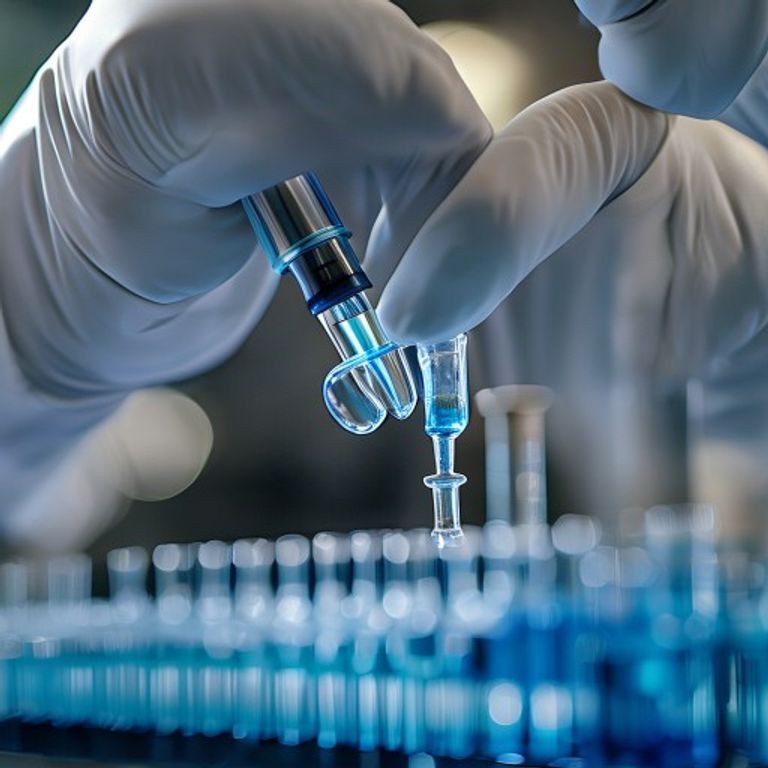
These are perhaps the most common pipettes you’ll see in modern molecular biology and chemistry labs. They are adjustable, allowing us to select a wide range of small volumes (typically from 0.1 µL to 1000 µL). They use disposable tips to prevent cross-contamination. Micropipettes are fantastic for précision de la manipulation des liquides of very small samples. They can be:
Single-channel pipettes: Used for transferring one sample at a time.
Multi-channel pipettes: Used for simultaneously transferring multiple samples (e.g., 8 or 12 channels) into multi-well plates, significantly speeding up work.
4. Positive Displacement Pipettes
These pipettes are similar to micropipettes but do not use an air cushion. Instead, the piston directly contacts the liquid, making them ideal for handling viscous, volatile, or high-density liquids that might not aspirate correctly with air displacement pipettes. They are less common but vital for specific applications.
5. Pasteur Pipettes (Droppers)
While not precise measuring instruments, Pasteur pipettes (often called droppers) are simple glass or plastic tubes with a bulb, used for transferring approximate, non-critical volumes of liquid. They are handy for quick, qualitative transfers when exact Mesure du volume is not required.
How Do Pipettes Work? The Principle Behind Precision
Let’s briefly touch upon how do pipettes work principle, especially for the commonly used air displacement micropipettes. Imagine you have a syringe. When you push the plunger down, air goes out. When you pull it up, air comes in. Pipettes work on a similar principle:
Aspiration: You depress a piston, which expels air from the pipette tip. When you release the piston slowly, a vacuum is created, drawing the liquid up into the disposable tip.
Délivrance: You then move the pipette over your target container and depress the piston again, pushing the measured volume of liquid out of the tip.
The key here is the air cushion between the piston and the liquid. This cushion must be consistent for accurate results, which is why proper pipetting technique is so important!
The Importance of Pipettes in Scientific Research
Why do we fuss so much over these little tubes? The importance of pipettes in scientific research cannot be overstated. They are fundamental for:
Accuracy and Reproducibility: Scientists need to ensure their experiments can be replicated with consistent results. Pipettes provide the precision needed to achieve this, minimizing human error in transfert d'échantillon and reagent addition.
Data Reliability: Incorrect volumes can skew results, leading to false conclusions or wasted time and resources. Pipettes ensure the data collected is trustworthy.
Cost Efficiency: In many experiments, reagents are expensive. Accurate pipetting minimizes waste, making research more cost-effective.
Sécurité: For hazardous chemicals, precise liquid dispensing ensures that only necessary amounts are handled, reducing exposure risks.
FAQ About Pipettes
Q: What’s the main difference between a pipette and a dropper?
A: The main difference lies in precision. Pipettes are designed for accurate, measured volume transfer, often with calibration marks or adjustable settings. Droppers (or Pasteur pipettes) are for approximate, non-critical liquid transfer and do not offer precise Mesure du volume.
Q: Why is calibration important for pipettes?
A: Pipette calibration ensures that the volume dispensed is exactly what the pipette is set to deliver. Over time, wear and tear can affect accuracy, leading to errors in experiments. Regular calibration is crucial for maintaining the reliability of your results and is a key aspect of good laboratory practice.
Q: Can I reuse pipette tips?
A: Generally, no. Most pipette tips are designed for single use to prevent cross-contamination between samples or reagents. Reusing tips can lead to inaccurate results and compromise the integrity of your experiments.
Conclusion
Alors, what are pipettes? They are indispensable tools in any scientific setting, enabling the precise and accurate transfer of liquids. From basic chemistry experiments to cutting-edge molecular biology, their role in ensuring reliable data and reproducible results is paramount. By understanding their types, principles, and proper usage, we can all appreciate the delicate dance of précision de la manipulation des liquides that drives scientific progress. Remember, the accuracy of your results often starts with the careful handling of your pipette!