


Maîtriser les précipitations : conseils pratiques pour contrôler, filtrer et récupérer les solides dans le laboratoire et l'industrie

Présentation
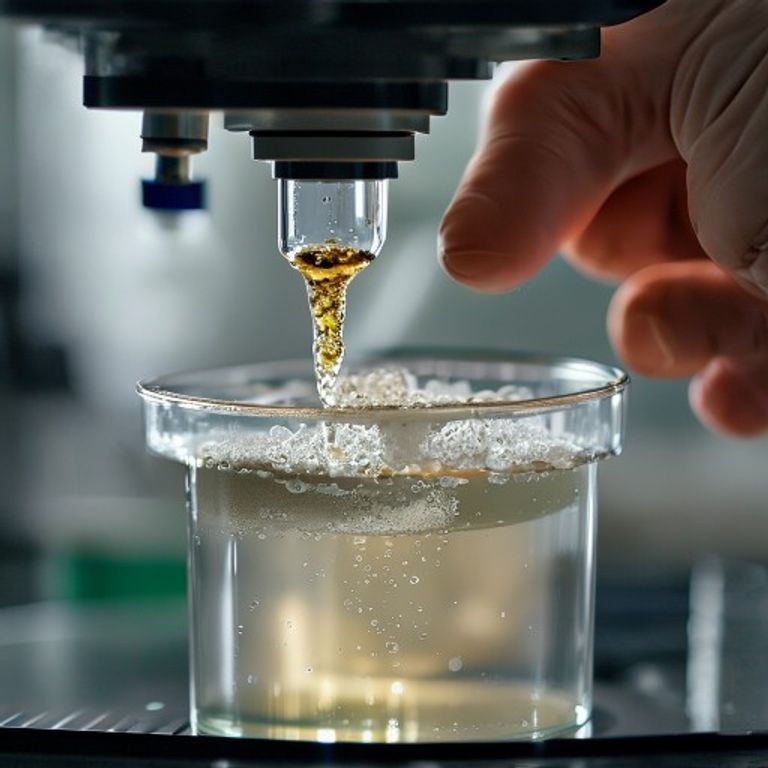
Avez-vous déjà regardé des cristaux de sucre se former dans un pot d'eau et vous êtes-vous demandé comment nous pouvons faire cela exprès? En chimie, ce processus « doux » est appelé précipitation. Que vous essayiez de sortir un métal d'un flux d'eaux usées ou d'isoler un produit dans une synthèse, la maîtrise des précipitations peut faire gagner du temps, de l'argent et des maux de tête. Dans cet article, je vais vous guider à travers les bases, partager des techniques pratiques, et vous donner des solutions pratiques pour filtrer et laver vos précipités.
Comment précipiter une réaction chimique
Pensez à une réaction de précipitation comme une partie où deux invités solubles se rencontrent, échangent des partenaires, et finissent par être un couple insoluble. Les principales étapes sont les suivantes:
- Choisissez les bons réactifs : Vous avez besoin d'ions dont le produit a une faible solubilité constante du produit (KS).
- Supersaturation de contrôle: L'ajout de l'agent précipité crée lentement une solution sursaturée, semblable au refroidissement des bulles de soude.
- nucléation de déclenchement: Les petites « graines » (souvent particules de poussière) agissent comme des noyaux où les cristaux peuvent commencer à croître.
Par exemple, pour précipiter le carbonate de calcium, vous pouvez mélanger le chlorure de calcium et le carbonate de sodium. En ajoutant le carbonate de sodium dans le sens goutte en remuant, vous gardez la supersaturation modérée, qui donne des cristaux fins et uniformes au lieu d'un gâchis maladroit.
Réactions des précipitations dans le traitement de l'eau
Dans le traitement municipal de l'eau, les précipitations sont le cheval de bataille pour l'élimination des métaux lourds, des phosphates et de la dureté. Le processus suit généralement ces étapes:
- Ajuster le pH à la plage optimale où l'ion cible est KS est le plus bas.
- Introduire un contre-ion (p. ex. chaux pour l'élimination du phosphate) pour former un précipité insoluble.
- Laisser suffisamment de temps pour la croissance du cristal, puis séparer le solide.
La compréhension de l'équilibre des précipitations vous permet d'éviter la surdose de produits chimiques, ce qui peut entraîner un excès de boues et des coûts d'élimination plus élevés.
Techniques de laboratoire pour la précipitation des solides
Au labo, la reproductibilité est roi. Voici quelques trucs que j'utilise quotidiennement:
- Contrôle de température: Le refroidissement du mélange ralentit la croissance du cristal, ce qui vous donne des particules plus grandes et plus faciles à filtrer.
- Vitesse d'étirement: Un brassage doux favorise une nucléation uniforme sans briser les cristaux fragiles. Si vous avez besoin d'une référence rapide sur la façon de remuer correctement, consultez choisir la bonne tige de brassage pour un mélange optimal.
- Semences: L'ajout d'une petite quantité de cristaux préformés peut orienter la forme et la taille du nouveau précipité.
Facteurs influant sur le taux de formation des précurseurs
Plusieurs variables agissent comme le "temps" pour votre jardin en cristal:
| Facteur | Effet sur le taux |
|---|---|
| Concentration des réactifs | Des concentrations plus élevées augmentent la supersaturation → nucléation plus rapide. |
| pH | Alter la spéciation ionique et KS valeurs. |
| Température | Les températures plus élevées augmentent généralement la solubilité, ralentissant les précipitations. |
| Présence d'additifs | Les agents complexes peuvent inhiber ou favoriser la croissance du cristal. |
En modifiant ces paramètres, vous pouvez déplacer l'équilibre entre les précipitations rapides (bon pour l'élimination rapide) et la croissance contrôlée du cristal (idéal pour l'isolement du produit).
Méthodes pour filtrer et laver les précurseurs
Une fois que vous avez votre solide, le prochain défi est la séparation et la purification. Voici trois méthodes fiables :
- Filtration sous vide: Utilisez un entonnoir Buchner et du papier filtre; le vide fait passer le liquide, laissant un gâteau solide.
- Centrifugation: Tourner de 3 000 à 5 000 tr/min pendant 5 à 10 min; le précipité forme une pelle compacte qui peut être décantée.
- Décantation avec une étape de lavage: Gently pour off the supernatant, then add a small amount of cold solvent (often distilled water) to rinse away soluble impurities.
After washing, drying the precipitate at 60‑80 °C (or under a gentle stream of nitrogen) removes residual moisture without altering crystal structure.
Connexion à la gestion des surnageants
Every precipitation experiment leaves behind a liquid phase – the supernatant. Proper handling of this waste stream is just as important as the solid recovery. For detailed guidance on extracting and analyzing supernatants, see practical tips for extraction, handling, and analysis of supernatant. Good supernatant management reduces contamination risk and helps you comply with environmental regulations.
Conclusion
Precipitation may sound like a simple “solid out of solution” trick, but mastering it involves chemistry, physics, and a bit of art. By controlling supersaturation, temperature, and stirring, you can steer crystal size and purity. Then, choose the right filtration or centrifugation method, wash thoroughly, and don’t forget to treat the supernatant responsibly. Apply these practical tips and you’ll turn any messy reaction into a clean, reproducible process.
FAQ
Q: How do I know the KS of a compound?
A: Most common salts have their solubility product listed in standard chemistry handbooks or online databases. If it’s not available, you can determine it experimentally by measuring solubility at different concentrations.
Q: Can I precipitate a product at room temperature?
A: Yes, but temperature influences solubility. For heat‑sensitive compounds, keep the reaction cold to favor precipitation.
Q: What’s the best way to avoid clogging the filter paper?
A: Keep the particle size small enough to pass through the pores, or use a pre‑filter (e.g., a glass frit) before the final vacuum filtration.
Q: How many wash cycles are enough?
A: Typically 2–3 quick rinses with cold solvent remove most soluble impurities. Test the wash water for residual ions if purity is critical.
Q: Is centrifugation always better than filtration?
A: Not necessarily. Centrifugation is faster for fine powders, while filtration provides a larger surface area for washing. Choose based on your solid’s texture and the volume of liquid.







