


Beyond the Beaker: Unpacking the Essential Graduated Cylinder Uses in Your Lab

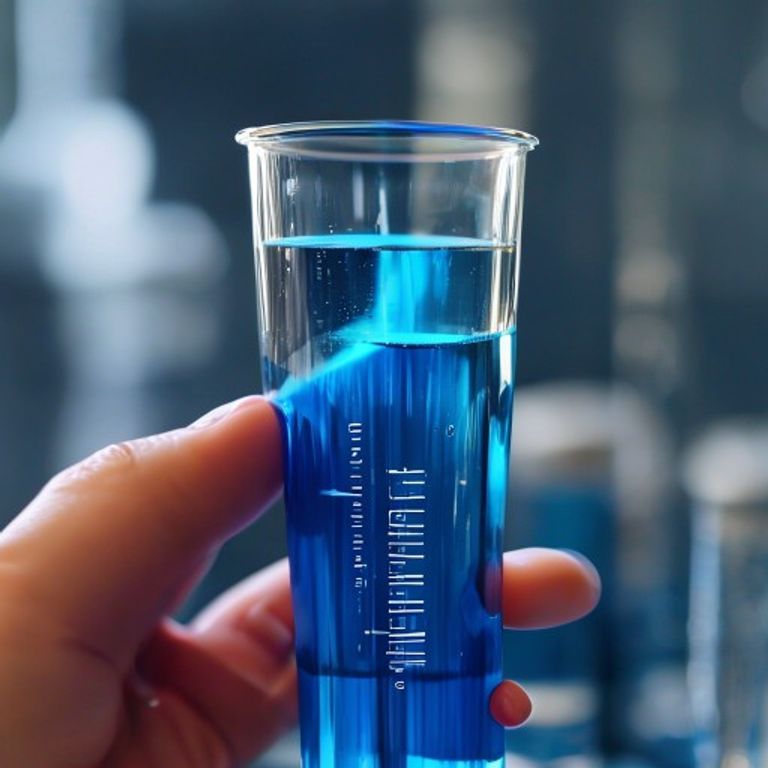
Ever walked into a science lab and noticed those tall, slender glass or plastic tubes with markings along the side? Chances are, you’ve spotted a graduated cylinder! While it might seem like a simple piece of laboratory equipment, its role is absolutely fundamental, especially when we talk about accuracy in science. Today, we’re going to dive deep into the world of graduated cylinders, exploring their crucial uses, why they’re indispensable, and how to get the most out of them. Think of it as your personal guide to mastering this humble yet mighty lab tool!
Why Precision Matters: The Core Graduated Cylinder Uses
At its heart, the graduated cylinder is all about one thing: precise volume measurement. Unlike a chemistry beaker use, which is generally for holding, mixing, or roughly measuring liquids, a graduated cylinder is specifically designed to provide accurate readings of liquid volumes. This precision is vital in countless scientific applications.
Accurate Volume Measurement in Chemistry and Beyond
When we need to measure specific amounts of liquid, whether it’s for diluting a solution to a precise concentration or preparing reagents for a complex reaction, the graduated cylinder is our go-to tool. Here are some common scenarios:
- Preparing Solutions: Imagine you need to make a 100 mL solution of a chemical. Using a graduated cylinder ensures that you add exactly 100 mL of solvent, giving you the correct concentration.
- Measuring Reagents: In experiments, the exact amount of each reagent can significantly impact the outcome. Graduated cylinders help us measure these crucial quantities accurately.
- Collecting Filtrates: After filtering a substance, we often need to know the volume of the liquid collected. A graduated cylinder makes this task straightforward and reliable.
- Density Calculations: To determine the density of a liquid, we need both its mass and its precise volume. The graduated cylinder provides that essential volume data.
Decoding the Meniscus: How to Read with Accuracy
You might have noticed that when you pour liquid into a graduated cylinder, the surface isn’t perfectly flat. Instead, it curves either upwards or downwards. This curve is called the “meniscus,” and it’s super important for accurate readings. For most aqueous (water-based) solutions, the meniscus will curve downwards, forming a U-shape. To read it correctly, we always read the volume at the bottom of this curve, at eye level. This might sound finicky, but trust me, it’s a simple trick that ensures you’re getting the most precise measurement possible.
Graduated Cylinder vs. Beaker: Knowing When to Use What
It’s easy to confuse different pieces of laboratory glassware, especially if you’re new to the lab. Think of it this way: if you’re baking a cake and need “about a cup” of milk, a measuring cup (like a beaker) is fine. But if you’re formulating a delicate recipe and need “exactly 236.5 mL” of a specific ingredient, you’d reach for something more precise, like a graduated cylinder. Beakers are fantastic for mixing, heating, and holding larger volumes of liquids where exact measurements aren’t critical. They have wide mouths and often only rough volume markings. Graduated cylinders, on the other hand, are designed for one primary purpose: precise volume measurement. Their narrow shape and finely marked scales allow for much greater accuracy.
Common Applications in Science Labs and Everyday Life
The utility of graduated cylinders isn’t just confined to university research labs. We encounter their principles, if not the actual tool, in many places:
- School Science Experiments: From elementary school science fairs to high school chemistry classes, graduated cylinders are a staple for teaching basic measurement skills.
- Medical Laboratories: In clinical labs, precise measurements of patient samples or reagents are crucial for accurate diagnoses and treatments.
- Industrial Settings: Quality control in industries like pharmaceuticals, food and beverage, or cosmetics often relies on accurate volume measurements using graduated cylinders.
- Environmental Testing: Measuring precise volumes of water or soil samples is key in environmental analysis to determine pollutant levels or nutrient content.
Tips for Maximizing Accuracy and Safety
To ensure you’re always getting the best results and staying safe, here are a few practical tips:
- Read at Eye Level: Always position your eye directly level with the meniscus to avoid parallax error (where the reading appears different from various angles).
- Cleanliness is Key: Before use, ensure your graduated cylinder is clean and dry. Residue from previous experiments can affect readings.
- Handle with Care: While made of robust materials, graduated cylinders are still glassware. Avoid dropping them or subjecting them to sudden temperature changes, as this can cause breakage.
- Choose the Right Size: For the most accurate reading, select a graduated cylinder whose capacity is close to the volume you need to measure. For example, if you need to measure 15 mL, a 25 mL cylinder will be more accurate than a 100 mL one.
Frequently Asked Questions (FAQ)
What is a graduated cylinder used for in chemistry?
In chemistry, a graduated cylinder is primarily used for accurately measuring the volume of liquids. This is crucial for preparing solutions with specific concentrations, carrying out titrations, or ensuring precise reagent amounts for reactions.
How to accurately read a graduated cylinder volume?
To accurately read a graduated cylinder, place it on a flat surface. Bring your eye level with the bottom of the meniscus (the curved surface of the liquid). Read the value on the scale that aligns with the lowest point of the meniscus.
What is the difference between a graduated cylinder and a beaker for measurement?
The main difference lies in their purpose for measurement. Graduated cylinders are designed for accurate and precise volume measurement, indicated by their narrow shape and fine scale markings. Beakers, on the other hand, are mainly for holding, mixing, and heating liquids, offering only approximate volume measurements.
Can I heat liquids in a graduated cylinder?
Generally, it’s not recommended to heat liquids directly in a standard glass graduated cylinder. While some are made of borosilicate glass, which has good thermal resistance, the narrow opening and design are not ideal for even heating, and sudden temperature changes can cause them to crack. Use a beaker or an Erlenmeyer flask for heating instead.
So, there you have it! The graduated cylinder, a seemingly simple piece of laboratory equipment, is truly a cornerstone of accurate scientific work. Its ability to measure liquid volumes with precision makes it invaluable in everything from high-stakes chemical research to everyday educational experiments. By understanding its purpose, how to use it correctly, and its limitations, you’re well on your way to becoming a more confident and capable scientist. Happy measuring!







