Beyond the Basics: Unveiling the Essential Beaker Uses in Chemistry Labs

When we picture a chemistry lab, what’s one of the first things that comes to mind? For many of us, it’s that classic glass container with a spout – yes, the humble beaker! It might seem like just a basic piece of laboratory equipment, but believe me, a beaker is far more versatile than it appears. As a chemistry enthusiast, I’ve spent countless hours in the lab, and I can tell you that understanding the true scope of beaker uses in every lab is fundamental to any successful experiment.
Today, we’re going on a little journey to explore the many facets of a beaker in chemistry. From its primary functions to its role in complex setups, we’ll dive into what makes this piece of glassware an indispensable tool for chemists everywhere.
The Primary Function: Holding, Mixing, and Stirring Solutions
At its core, what is a beaker used for in the lab? Its primary function is quite simple: to hold liquids. Beakers come in various sizes, from small 50 mL containers to large 2-liter vessels, making them suitable for different volumes of solutions. We often use them for:
- Preparing Solutions: Dissolving solid reagents into solvents like water to create a uniform solution.
- Mixing Liquids: Their wide mouth allows for easy stirring with a glass rod, ensuring thorough mixing of different substances.
- Collecting Liquids: We might use them to collect filtrates, distillates, or simply waste products during an experiment.
Think of it like a general-purpose bowl in your kitchen – it’s great for mixing pancake batter, holding ingredients, or simply serving something up. That’s pretty much the primary function of a chemistry beaker, albeit in a more scientific setting!
Heating Liquids Safely and Effectively
One of the most common applications of beakers in chemistry is heating. Many chemical reactions require heat, and beakers are designed to withstand significant temperature changes. We often place them on a hot plate or over a Bunsen burner (usually with a wire gauze and tripod) to heat various liquids. For example, when we need to speed up a dissolution process or induce a reaction, gently heating the contents of a beaker is a go-to method.
However, it’s crucial to remember a few things when heating: always use appropriate safety gear, never heat a sealed beaker, and ensure even heating to prevent bumping or sudden boiling.
More Than Just Liquids: Reactions and Transfers
While beakers are excellent for holding liquids, their utility extends beyond that. We frequently use them as reaction vessels for qualitative experiments, where precise measurements aren’t the main concern. For instance, if we’re observing a color change, precipitate formation, or gas evolution, a beaker provides an excellent transparent container to witness these phenomena.
They are also incredibly handy for transferring liquids from one container to another, especially when working with larger volumes where a laboratory tripod for safe & efficient experiments could provide stability. Their spout makes pouring relatively neat, minimizing spills and ensuring efficient transfer of chemicals.
The Measurement Myth: Why Beakers Aren’t for Precision
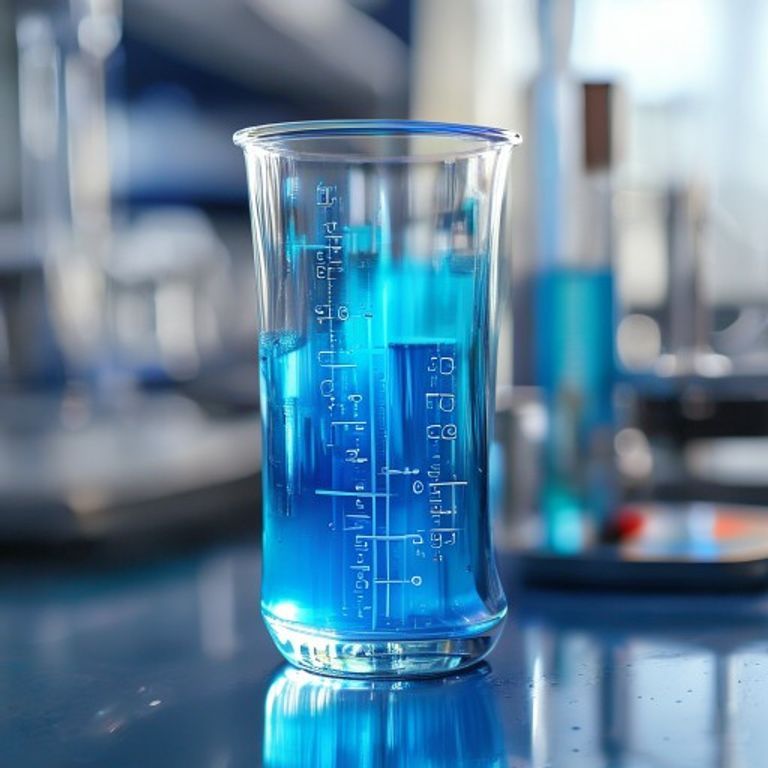
Here’s a common misconception I often encounter: “Can beakers be used for precise measurements?” The short answer is no, not really. While beakers have volume markings (graduations) on their sides, these are approximate. They are designed for estimation, not accuracy.
If we need to measure a liquid’s volume with high precision, we turn to specialized laboratory equipment like a graduated cylinder, a volumetric flask, or a burette. Think of it like a measuring cup versus a precise kitchen scale – both measure, but for different levels of accuracy. So, while a beaker is fantastic for its different uses for beakers in chemistry, precise volumetric analysis isn’t one of them.
Common Applications of Beakers in Chemistry
Let’s sum up some common applications where we heavily rely on beakers:
- Dissolving Solids: Rapidly dissolving substances to create solutions.
- Filtering: Collecting filtrates after a filtration process.
- Decanting: Carefully separating a liquid from a solid precipitate.
- Performing Reactions: As an open vessel for many chemical reactions.
- Holding Samples: Temporarily holding samples or waste liquids.
- Heating Solvents: Boiling water or other solvents for experiments.
From a simple demonstration to complex syntheses, beakers are truly the workhorses of the chemistry lab. They might not always be the star, but they certainly play a crucial supporting role.
Conclusion
So, the next time you see a beaker, I hope you’ll look at it with new appreciation. It’s not just a glass container; it’s a fundamental piece of essential wire gauze laboratory uses and chemistry, enabling a vast array of experiments from simple mixing to complex heating processes. Its versatility, durability, and practical design make it an indispensable tool for anyone working in a chemistry lab, truly embodying the spirit of an unsung hero. We rely on them daily for their flexibility and robust nature, making chemistry possible and, frankly, a lot easier!
Frequently Asked Questions (FAQ)
- Q: Are all beakers made of glass?
A: While most common lab beakers are made of borosilicate glass (Pyrex or Kimax) for heat resistance, you can also find plastic beakers for less demanding applications or for educational purposes where breakage is a concern. Glass beakers are preferred for heating liquids.
- Q: What’s the difference between a beaker and a conical flask (Erlenmeyer flask)?
A: A beaker has straight sides and a wide mouth, making it ideal for mixing, heating, and general holding. A conical flask, or Erlenmeyer flask, has a flat bottom, a conical body, and a cylindrical neck. Its narrow neck is better for preventing solvent evaporation during heating or for swirling without spilling, but it’s less ideal for easy stirring or pouring large volumes compared to a beaker.
- Q: Can I use a beaker to store chemicals long-term?
A: Generally, no. Beakers are not designed for long-term storage due to their wide opening, which allows for evaporation and potential contamination. For long-term storage, we typically use reagent bottles with airtight stoppers or caps.
- Q: Why do beakers have a spout?
A: The spout on a beaker is designed for easy and controlled pouring of liquids, minimizing drips and spills. It helps in transferring solutions from the beaker to another container without making a mess.