


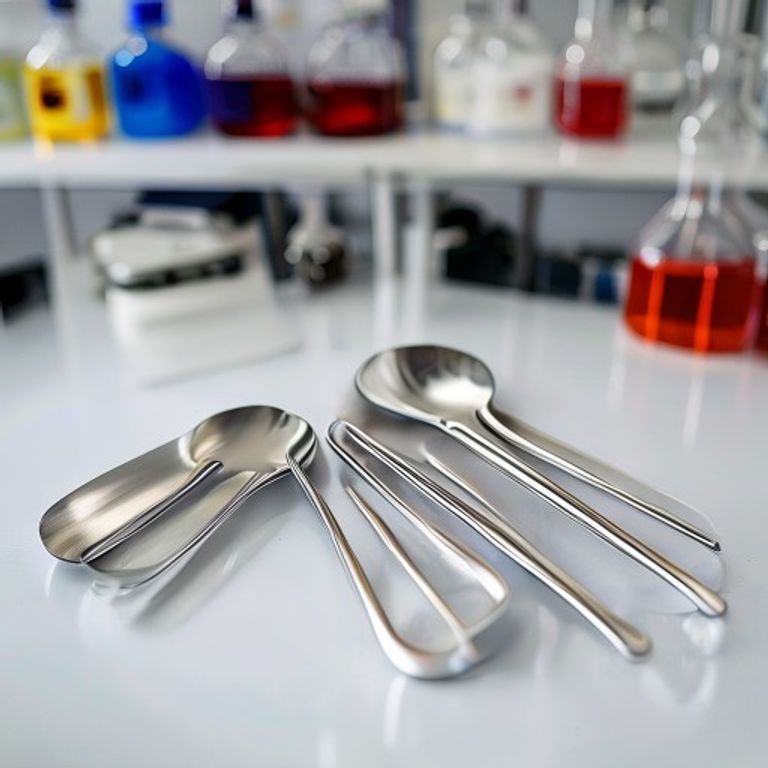
Spatula Laboratorium Guide: Stainless Steel vs. Heat‑Resistant Plastic, Cleaning Tips, and Budget Options

Introduction
When we step into a chemistry lab, the first thing we notice isn’t the fancy spectrometer or the towering fume hood—it’s the simple, unglamorous tools that make every experiment possible. One of those unsung heroes is the spatula laboratorium. Whether you’re scooping a powder, transferring a solid, or scraping the last bit of a reagent, the right spatula can save you time, prevent contamination, and even protect your budget. In this article I’ll walk you through the main types, how to keep them clean, and where to find affordable options without compromising quality.
Types of Laboratory Spatulas
Lab spatulas come in a few distinct shapes and sizes, each designed for a specific task. Here’s a quick rundown:
- Flat or scoop spatulas – Ideal for transferring bulk powders.
- Pointed or needle spatulas – Perfect for precise scraping in tight corners.
- Rounded‑edge spatulas – Used when you need a gentle touch to avoid damaging fragile crystals.
Choosing the right shape is like picking the right brush for a painting; the wrong one can smudge your results.
Material Matters: Stainless Steel vs. Heat‑Resistant Plastic
Two materials dominate the market: stainless steel and high‑temperature‑resistant plastics (often PTFE or polypropylene). Both have pros and cons.
Stainless Steel Spatulas
Stainless steel spatulas are the “steel swords” of the lab. They are:
- Durable – Resist bending, corrosion, and mechanical wear.
- Temperature tolerant – Can handle heating up to 500 °C, making them suitable for high‑heat transfers.
- Easy to sterilize – Autoclave‑compatible, which means you can kill microbes without worrying about melting.
The downside? They can react with strong acids or bases if not properly coated, and they’re heavier to handle for delicate work.
Heat‑Resistant Plastic Spatulas
Plastic spatulas are the “flexible knives” that bend to your needs. They are:
- Lightweight – Easy to maneuver for small‑scale operations.
- Chemically inert – PTFE resists most solvents, acids, and bases.
- Cost‑effective – Generally cheaper than stainless steel, especially for disposable use.
However, they can melt or deform above 200 °C, and they may scratch delicate glassware if you’re not careful.
How to Clean a Laboratory Spatula
Keeping your spatula clean is as important as the experiment itself. Here’s my step‑by‑step routine that works for both metal and plastic:
- Rinse immediately after use with distilled water to remove loose residues.
- Soak in a mild detergent solution (5 % lab‑grade soap) for 5‑10 minutes.
- Scrub gently with a non‑abrasive brush; avoid steel wool on stainless steel to prevent scratches.
- Rinse thoroughly with deionized water to eliminate soap traces.
- Dry with lint‑free wipes or let air‑dry in a clean area.
- For stubborn contamination, use a brief autoclave cycle (for steel) or a 70 % ethanol dip (for plastic).
Remember, cross‑contamination is the silent enemy of reproducible results. A quick clean can be the difference between a successful synthesis and a failed trial.
Spatula Laboratorium vs. Kitchen Spatula
It might be tempting to borrow a kitchen spatula for a quick transfer, but the two are not interchangeable. Kitchen spatulas are usually coated with food‑grade silicone or wood and are not designed to withstand harsh chemicals or high temperatures. In contrast, a spatula laboratorium is engineered to resist corrosion, maintain dimensional stability, and meet strict laboratory safety standards. Think of it like using a racing bike on a dirt road—it just isn’t built for that terrain.
Finding Affordable Options (Harga Spatula Laboratorium Murah)
If you’re on a tight budget, don’t panic. Here are three practical ways to get quality spatulas without breaking the bank:
- Buy in bulk – Suppliers often offer discounts for sets of 10‑20 pieces.
- Consider reusable plastic – They’re cheaper than stainless steel and can be autoclaved a few times before replacement.
- Check university surplus sales – Many institutions sell lightly used lab gear at a fraction of the original price.
While hunting for deals, keep an eye on the material specifications to ensure the spatula meets your experimental needs.
Integrating the Right Tools into Your Workflow
Choosing the right spatula is just one piece of the puzzle. A well‑rounded lab setup includes other essential tools. For example, mastering the essential uses of pipettes can dramatically improve liquid handling accuracy, and understanding stirring rod chemistry helps you achieve uniform mixing without splashes. When each tool works harmoniously, your experiments become smoother and more reproducible.
Conclusion
In the end, the spatula laboratorium is a small but mighty component of any chemistry lab. By selecting the appropriate material—stainless steel for high‑heat, durable tasks or heat‑resistant plastic for lightweight, chemically inert work—you set the stage for cleaner, safer, and more cost‑effective experiments. Remember to clean your spatulas promptly, avoid mixing them up with kitchen gear, and scout for affordable sources when budgeting. With these practical tips, you’ll spend less time worrying about tools and more time discovering new chemistry.
FAQ
Q: Can I use a stainless steel spatula with strong acids?
A: Generally, yes, but prolonged exposure can cause pitting. For highly corrosive acids, a PTFE‑coated spatula is safer.
Q: How often should I replace a plastic lab spatula?
A: If you notice cracks, discoloration, or loss of chemical resistance, replace it. Typically, 6‑12 months of regular use is a good rule of thumb.
Q: Is it okay to sterilize a plastic spatula in an autoclave?
A: Only if the plastic is rated for autoclaving (e.g., polypropylene). Otherwise, use chemical sterilization methods like ethanol.
Q: What size spatula should I buy for most routine tasks?
A: A medium‑sized flat spatula (about 10 cm long) covers the majority of powder transfers and scraping needs.
Q: Are disposable spatulas recommended?
A: For high‑throughput or contamination‑sensitive work, disposable PTFE spatulas are convenient, though they add to waste.







