

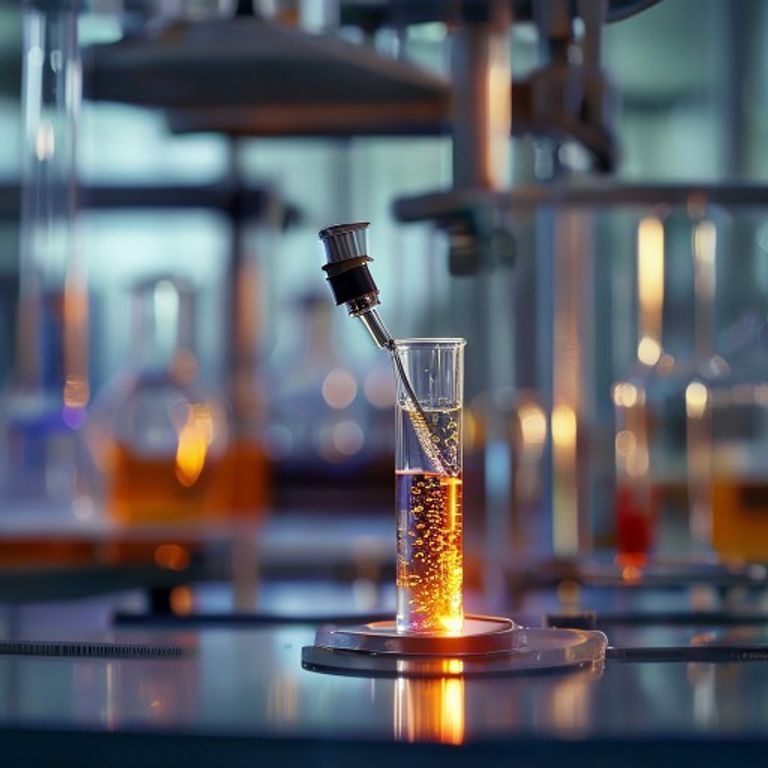
What Are Test Tubes Really For? Your Guide to Their Indispensable Lab Uses

Have you ever walked into a science lab, whether in school or a professional research facility, and noticed those simple, cylindrical glass tubes? Yes, I’m talking about test tubes! They might seem unassuming, but these humble pieces of laboratory equipment are true workhorses. If you’ve ever wondered, “what are test tubes used for?” or “what is the real test tube purpose in chemistry?”, you’ve come to the right place. Today, we’re going to dive deep into understanding why these small tubes are so essential to scientific discovery.
Think of a test tube like a personal mini-stage for tiny chemical dramas or a cozy temporary home for precious samples. It’s designed for simplicity and versatility, making it one of the most frequently used items in scientific experiments and various laboratory settings. We’ll explore their primary functions, why they’re so good at what they do, and some common applications you might not even realize.
The Core Purpose: Holding, Observing, and Reacting
At its heart, the main test tube purpose is to hold small quantities of liquids or solids for experimental purposes. They are perfect for observing chemical reactions, mixing solutions, or simply temporarily storing samples. Their small diameter and upright design are ideal for:
- Small-Scale Reactions: When you only need to mix a few drops of reagents, a test tube is perfect. It minimizes waste and makes it easy to see any changes.
- Heating Substances: Many experiments require heating. Test tubes are specifically designed to withstand direct flame, making them indispensable for heating small amounts of liquids or solids.
- Visual Observation: Their clear glass construction allows scientists to easily observe color changes, precipitate formation, gas evolution, or other visual indicators of a chemical reaction.
It’s like having a magnifying glass and a miniature cauldron all in one! The simplicity of their design is what truly makes them shine in a bustling laboratory environment.
Why Are Test Tubes Used for Heating? The Science Behind It
One of the most common questions people ask is, “why are test tubes used for heating?” The answer lies in their design and the material they’re made from. Most test tubes are crafted from borosilicate glass (like Pyrex), which is known for its excellent thermal shock resistance. This means they can be heated directly over a Bunsen burner flame without cracking, unlike regular glass. Here’s why this is so crucial:
- Even Heat Distribution: Their narrow, cylindrical shape allows for relatively even heating of the liquid or solid inside, especially when gently swirled.
- Safety: The material prevents shattering from rapid temperature changes, enhancing safety in the lab.
- Quick Heating: Due to their small volume, substances inside test tubes heat up quickly, saving valuable experiment time.
However, when heating, we always use a test tube holder and point the open end away from ourselves and others – safety first, always!
Beyond Heating: More Uses for Test Tubes in a Laboratory
While heating is a prominent application, the uses for test tubes in a laboratory extend far beyond just applying heat. They are incredibly versatile for various scientific disciplines.
Mixing and Reactions on a Small Scale
In chemistry, test tubes are superb for initiating and observing chemical reactions. Imagine you’re trying to see if two chemicals react. Instead of mixing large, potentially dangerous quantities in a beaker, you can test it safely in a test tube. It’s also great for Discovering the Versatile Uses of Spot Plates in Chemistry for even smaller scale reactions, but test tubes offer more volume and depth for mixing.
Temporary Sample Storage
When you collect a small sample, perhaps a soil sample or a liquid extract, a test tube serves as an excellent temporary container. They can be easily stoppered to prevent contamination or evaporation. For longer-term storage or larger volumes, other glassware like The Ultimate Guide to Erlenmeyer Flask Use might be preferred, but for immediate use, test tubes are perfect.
Biological and Medical Applications
In biology and medicine, test tubes are fundamental. Think about blood tests – blood samples are often collected and processed in test tubes. They are also used for culturing microorganisms, performing diagnostic tests, and holding small aliquots of reagents for assays. Their sterile nature (when properly sterilized) makes them safe for biological samples.
Practical Tips for Using Test Tubes
To get the most out of your test tubes and ensure safety, here are a few practical tips:
- Always use a test tube rack to hold them upright and prevent spills.
- When heating, never fill a test tube more than one-third full.
- Use a test tube brush and appropriate cleaning solutions for thorough cleaning after each use.
- Label your test tubes clearly to avoid mixing up samples or reagents.
Conclusion
So, there you have it! The humble test tube, far from being just a simple glass tube, plays a critical role in almost every laboratory around the globe. From allowing us to safely conduct and observe small chemical reactions and providing a robust vessel for heating, to serving as a convenient temporary storage for vital samples, its purpose is truly indispensable. It’s a testament to how sometimes the simplest tools are the most powerful in the pursuit of scientific understanding. Next time you see a test tube, you’ll know it’s not just a piece of glass, but a gateway to discovery.
FAQ: Your Test Tube Questions Answered!
Q: Can I put any liquid in a test tube?
A: Generally, yes, but always be mindful of chemical compatibility. Strong acids or bases can sometimes etch glass over time, and some highly reactive substances might require specialized containers. Always check your substance’s safety data sheet.
Q: How do test tubes differ from beakers or flasks?
A: Test tubes are typically smaller and narrower, designed for small-scale work, observation, and direct heating. Beakers are wider, good for mixing larger volumes, and less precise for measurement. Flasks (like Erlenmeyer flasks) are good for mixing, heating, and preventing splashing due to their narrow necks.
Q: Are test tubes reusable?
A: Absolutely! Most test tubes are made of durable glass and can be thoroughly cleaned, sterilized, and reused many times, making them an environmentally friendly option in the lab.
Q: Is it safe to hold a test tube by hand while heating?
A: No, absolutely not! Always use a test tube holder or clamps when heating a test tube to prevent burns. The glass can become extremely hot very quickly.