Beyond the Beaker: Discovering the Versatile Uses of Spot Plates in Chemistry

Introduction: The Unsung Hero of Microscale Chemistry
In the bustling world of chemistry, we often hear about grand experiments involving complex setups, boiling flasks, and intricate distillations. But what about the unsung heroes, the small, practical tools that make everyday lab work efficient and insightful? Today, we’re going to shine a spotlight on one such indispensable item: the spot plate. You might have seen these little ceramic palettes in a lab, looking unassuming with their multiple indentations. But trust me, their utility is vast, making them a cornerstone for many chemical investigations. We’ll dive deep into spot plate uses, exploring why these simple tools are so crucial in the lab, from basic qualitative analysis to more advanced screening processes.
What Exactly is a Spot Plate? A Mini Lab on Your Bench
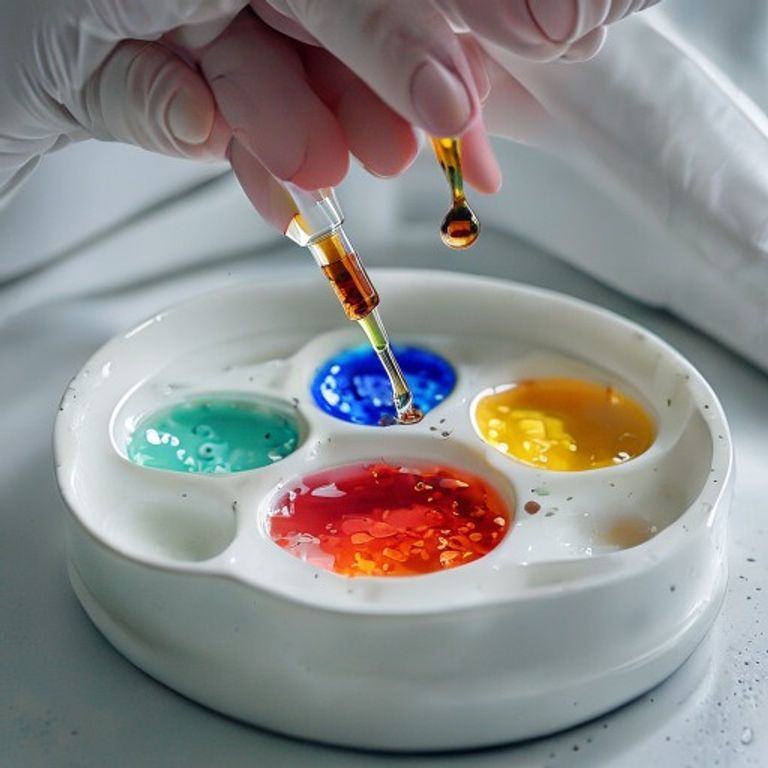
So, what are spot plates used for in chemistry, and what do they even look like? Imagine a miniature painter’s palette, but instead of holding dollops of paint, it holds tiny drops of chemical solutions. A spot plate is typically a flat, white ceramic or porcelain plate featuring multiple concave depressions, often called wells. These wells come in various numbers, from six to twelve, or even more. The white background is crucial because it helps us clearly observe color changes and precipitate formation, which are often key indicators in chemical reactions. Their small size means we can conduct many different tests simultaneously, using minimal amounts of precious or hazardous reagents.
Why Do We Use Spot Plates? The Core Benefits
You might wonder, why not just use test tubes or beakers? While those have their place, spot plates offer unique advantages that make them ideal for specific tasks:
Microscale Reactions: They allow for reactions on a very small scale, conserving valuable reagents and reducing waste. This is particularly important for expensive or dangerous chemicals.
Quick Observations: The open, flat design of the wells makes it easy to observe subtle color changes, gas evolution, or precipitate formation immediately.
Simultaneous Testing: With multiple wells, we can run several tests or variations of a single test side-by-side, making comparisons straightforward and efficient.
Safety: Working with smaller quantities of chemicals inherently reduces potential hazards. Plus, the solid ceramic material is heat-resistant and chemically inert.
Cost-Effective: They are relatively inexpensive, durable, and reusable, making them a cost-effective choice for many laboratory applications.
Spot Plate Uses in Qualitative Analysis: Unraveling Chemical Mysteries
One of the most common and vital spot plate uses is in qualitative analysis. This is where we identify the presence or absence of specific ions or compounds in a sample, often by observing characteristic reactions. Here’s how they shine:
Ion Identification: We often use spot plates to test for specific cations or anions. For instance, adding a few drops of a known reagent to a sample in one well might produce a distinct color or precipitate, indicating the presence of a particular ion. Imagine testing for chloride ions by adding silver nitrate – a cloudy white precipitate immediately tells us chloride is present!
Acid-Base Tests: Indicators that change color at different pH levels can be easily observed in spot plate wells. You can add a drop of your sample, then a drop of indicator, and instantly see if it’s acidic, basic, or neutral.
Precipitation Reactions: Many qualitative tests involve forming precipitates. The white background of the ceramic plate makes even faint precipitates easy to spot.
Colorimetric Tests: Some reactions produce distinct colors indicating the concentration or presence of a substance. Spot plates are perfect for these rapid visual assessments.
Beyond Qualitative Analysis: Diverse Laboratory Applications of Ceramic Spot Plates
While qualitative analysis is a primary use, the versatility of spot plates extends to many other laboratory applications of ceramic spot plates:
Screening Tests: In research or industrial settings, we might need to quickly screen a large number of samples for a particular property or reaction. Spot plates allow for high-throughput, small-scale screening without needing complex automation, making them an excellent alternative to microplates for simpler tasks.
Teaching Tools: For students, spot plates are an excellent way to learn about chemical reactions and observation skills in a safe, controlled, and visually engaging manner. They can perform multiple experiments without handling large volumes of chemicals.
Microscale Synthesis: Sometimes, chemists use spot plates for very small-scale synthesis or crystallization experiments, especially when working with novel compounds or for optimization studies where only tiny amounts are available.
Titration Endpoint Detection: Although not for full titrations, a spot plate can be used to test small aliquots from a titration flask to pinpoint the endpoint more precisely, especially when using an external indicator. This is where precise liquid dispensing, as detailed in an article about mastering burettes, becomes critical.
How to Use a Spot Plate for Chemical Reactions Effectively
How to use a spot plate for chemical reactions is quite straightforward, but a few tips can make your experiments smoother:
Cleanliness is Key: Always start with a perfectly clean and dry spot plate to prevent contamination. Residual chemicals from previous experiments can lead to false positives or negatives.
Add Reagents Carefully: Typically, you’ll add a few drops of your sample solution to a well first. Then, add a few drops of the test reagents. Use droppers or pipettes to ensure accurate, small volumes. For adding solid reagents, understanding the spatula’s role in chemistry can be very helpful.
Observe and Record: Immediately observe any changes – color, precipitate formation, gas bubbles, or even heat release. Record your observations accurately in your lab notebook.
Comparing Reactions: When doing comparative tests, it’s often helpful to set up a control reaction in an adjacent well. This helps confirm your observations.
Cleaning: After use, thoroughly rinse the spot plate with water, perhaps with a little detergent if needed, and then dry it completely before storing. Many find that a small brush helps clean out the wells effectively.
Spot Plates vs. Test Tubes: Why Choose One Over the Other?
It’s natural to wonder about the differences between spot plates and other common lab ware. For instance, while a humble test tube is excellent for larger reaction volumes, heating, or storing solutions, a spot plate excels at specific tasks where test tubes fall short. Spot plates are superior for rapid, qualitative comparisons of multiple small samples side-by-side, especially when looking for immediate color changes or precipitate formation. They use far less reagent and are easier to clean when dealing with multiple small reactions. Test tubes, on the other hand, offer better containment for vigorous reactions, allow for mixing by inversion, and are more suitable for heating or performing reactions that require a larger volume.
Conclusion: The Small Plate with a Big Impact
From the precise identification of ions in qualitative analysis to being a go-to tool for educational demonstrations and rapid screening, the spot plate truly is a versatile and indispensable piece of laboratory equipment. Its simplicity belies its profound utility, making it a favorite among chemists for its efficiency, economy, and ease of use. Next time you’re in the lab, take a moment to appreciate this unsung hero, quietly facilitating countless discoveries and experiments, one tiny well at a time!
FAQ: Your Questions About Spot Plate Uses Answered
Q1: What materials are spot plates usually made from?
Most spot plates are made from white ceramic or porcelain. This material is chemically inert, heat-resistant, and provides an excellent contrast for observing color changes.
Q2: Can I heat chemicals directly on a spot plate?
While ceramic spot plates are heat-resistant, they are not typically designed for direct heating with a Bunsen burner. For reactions requiring heating, it’s usually better to use test tubes or beakers.
Q3: How many wells does a typical spot plate have?
Spot plates commonly have 6, 8, 12, or even 24 wells, depending on the manufacturer and intended use. The number of wells determines how many different reactions can be run simultaneously.
Q4: Are spot plates reusable?
Yes, absolutely! Spot plates are designed for repeated use. After each experiment, they should be thoroughly cleaned, rinsed, and dried to prevent cross-contamination.
Q5: Is a spot plate the same as a microplate or well plate?
They are similar in concept but differ. A microplate (or well plate) is generally made of plastic, has a much higher number of smaller wells (e.g., 96 or 384), and is often used with automated liquid handling systems for very high-throughput screening in biological or analytical applications. Spot plates are typically ceramic, have fewer, larger wells, and are used for manual chemical tests and qualitative analysis.