Unveiling the Mystery: Why Glycerin and Water Mix Perfectly (And How to Separate Them!)

Have you ever tried to mix oil and water? We all know what happens, right? They stubbornly refuse to blend, forming distinct layers. This clear separation is why we often reach for a separating funnel in the lab to part ways with such immiscible liquids. But what if I told you there are some liquids that defy this easy separation, even when you really want them to? Today, we’re going to dive deep into the fascinating world of glycerin and water, and unravel the mystery behind their perfect embrace. So, grab your imaginary lab coat, and let’s get started!
Is Glycerin Miscible with Water or Immiscible? Let’s Find Out!
Right off the bat, let’s answer one of our main questions: is glycerin miscible with water or immiscible? The simple, straightforward answer is a resounding yes, glycerin is completely miscible with water. This means that when you combine them, they don’t form separate layers like oil and water. Instead, they blend seamlessly, creating a single, uniform solution. Think of it like mixing sugar into your tea; once it dissolves, you can’t see the individual sugar granules anymore, can you?
What Does “Miscible” Actually Mean? The Science Behind the Blend
Before we go further, let’s clarify what “miscible” really implies in a scientific context. When two liquids are miscible, it means they can dissolve in each other in any proportion, forming a homogeneous mixture or an aqueous solution. The key to understanding this phenomenon lies in the chemical properties of the liquids involved, particularly their polarity and the types of intermolecular forces at play.
In simple terms, we often use the phrase “like dissolves like.” This means that polar substances tend to dissolve other polar substances, and non-polar substances dissolve non-polar substances. Water, as we know, is a highly polar molecule. Glycerin, with its unique structure, also falls into the category of polar solvents. It’s this shared characteristic that makes them such good companions.
The Undeniable Bond: Hydrogen Bonding and Intermolecular Forces
So, why exactly do glycerin and water love each other so much? It all boils down to their molecular structure and the incredibly strong attractive forces they can form called hydrogen bonding. Imagine each water molecule as a tiny magnet with positive and negative ends. Glycerin molecules are quite large, but they’re packed with three hydroxyl (-OH) groups. Each of these -OH groups acts like a little magnet, just like water.
When you mix glycerin and water, the hydrogen atoms in the -OH groups of glycerin are strongly attracted to the oxygen atoms in water molecules, and vice versa. These powerful intermolecular forces, specifically hydrogen bonds, essentially “hug” the molecules together, preventing them from separating into distinct layers. They form a vast, interconnected network of attractions, making it energetically favorable for them to stay mixed.
Why Can’t Glycerin and Water Be Separated by a Separating Funnel?
Now, let’s tackle a very common question: why can’t glycerin and water be separated by a separating funnel? The answer is quite simple once you understand miscibility. A separating funnel, often used in chemistry labs, works on the principle of density differences between two *immiscible* liquids. For instance, if you mix oil and water, the denser water settles at the bottom, and the less dense oil floats on top. The separating funnel then allows you to drain the bottom layer, effectively separating the two.
However, since glycerin and water form a homogeneous mixture and become one unified phase, there are no distinct layers to separate! They don’t exist as separate entities within the mixture. Therefore, trying to separate them with a separating funnel would be like trying to separate salt from saltwater by pouring it through a funnel – it just won’t work because the salt is fully dissolved.
Best Method to Separate Glycerin from Water: Practical Solutions
Since a separating funnel is out of the question, what is the best method to separate glycerin from water? The most effective and commonly used method for separating miscible liquids with different boiling points is distillation. We essentially exploit the fact that water has a boiling point of 100°C (212°F), while glycerin has a much higher boiling point of around 290°C (554°F).
How Distillation Works:
- When you heat the glycerin-water mixture, the water will start to vaporize first because it has a lower boiling point.
- This water vapor is then collected and cooled, causing it to condense back into liquid water.
- The glycerin, with its much higher boiling point, will remain in the original flask, effectively separating the two components.
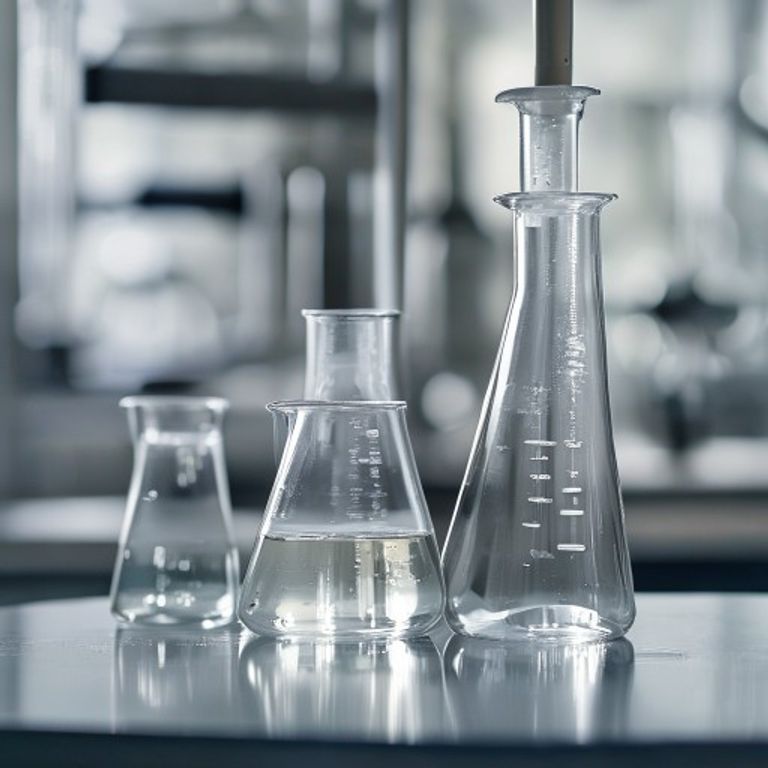
This process requires careful temperature control and specific laboratory glassware, but it’s a reliable way to get pure glycerin and water back from their mixture. When preparing such solutions, choosing the right glassware for accurate solution prep is crucial to ensure good results in subsequent separation processes like distillation.
Conclusion: A Perfect Partnership
So, there you have it! Glycerin and water are perfect partners in the chemical world, thanks to their shared polarity and incredible ability to form extensive hydrogen bonds. This makes them completely miscible, forming a single, stable aqueous solution. Consequently, tools designed for separating immiscible liquids, like the separating funnel, are rendered useless. When it comes to parting ways with this dynamic duo, distillation is our go-to method, leveraging their significant differences in boiling points. Understanding this miscibility helps us appreciate their widespread use in everything from pharmaceuticals to cosmetics, where their ability to blend seamlessly is often a key ingredient for success.
Frequently Asked Questions (FAQ)
Q: Can a separating funnel separate glycerin and water mixture?
A: No, a separating funnel cannot separate a glycerin and water mixture. This is because glycerin and water are completely miscible, meaning they blend together to form a single, homogeneous solution. A separating funnel only works for immiscible liquids that form distinct layers.
Q: What is the best method to separate glycerin from water?
A: The best method to separate glycerin from water is distillation. This technique exploits the significant difference in their boiling points (water at 100°C and glycerin at 290°C) to vaporize and then condense the water, leaving the glycerin behind.
Q: What makes glycerin and water miscible?
A: Glycerin and water are miscible primarily due to their polar nature and their ability to form extensive hydrogen bonds with each other. Both molecules have hydroxyl (-OH) groups that readily form strong intermolecular attractions, pulling them into a uniform mixture.
Q: Is glycerin an aqueous solution?
A: When glycerin is dissolved in water, the resulting mixture is considered an aqueous solution. An aqueous solution is simply a solution in which water is the solvent.