Beyond Grinding: Mastering Mortar and Pestle Chemistry for Lab Success

In the vast world of chemistry, where precision and minute details often dictate success, there are certain tools that, despite their simplicity, remain absolutely indispensable. One such duo is the humble yet mighty mortar and pestle. You might think of them as just basic grinding tools, but their role in a chemistry lab goes far beyond merely crushing substances. They are critical for achieving specific chemical reactions, ensuring accurate analyses, and preparing samples with utmost care.
Today, we’re going to dive deep into the fascinating world of mortar and pestle chemistry. We’ll explore not just how to use them, but why they are so crucial, and how mastering their use can significantly elevate your laboratory work. Think of them as the unsung heroes of particle size reduction and sample preparation!
The Unsung Heroes: What Exactly Are Mortar and Pestle?
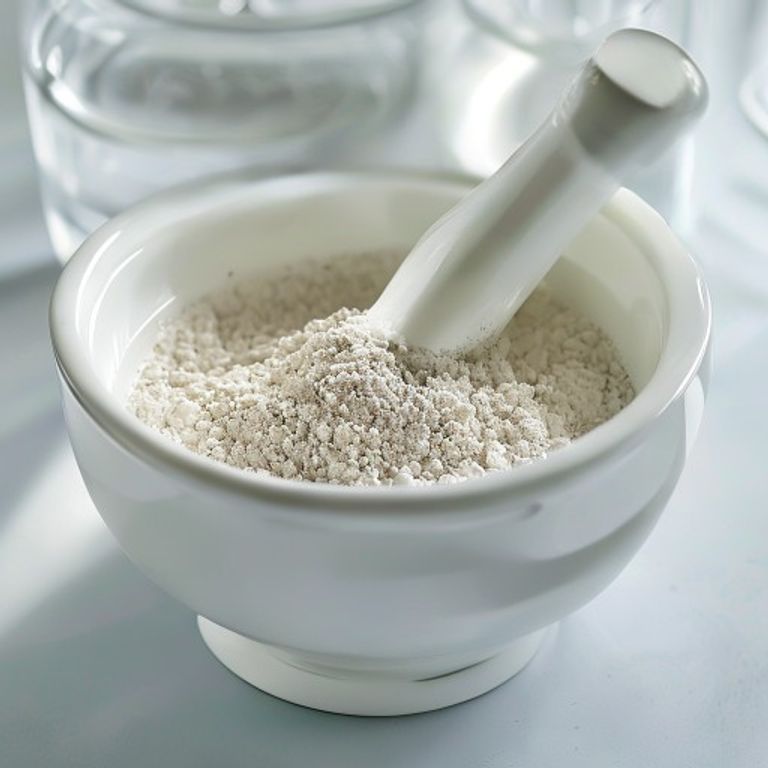
At its core, a mortar is a sturdy bowl, and a pestle is a heavy club-shaped object. Together, they form a powerful pair designed for crushing, grinding, and mixing solid substances. While their design is ancient, their application in modern chemistry is anything but outdated.
We often encounter different types in the lab, each suited for specific tasks. For instance, porcelain mortars and pestles are common for general use, offering good chemical resistance and ease of cleaning. Agate versions, known for their extreme hardness, are perfect when you need to grind very hard materials or avoid contamination from the mortar itself. Understanding the nuances between these materials is key to effective lab work. If you’re curious to unravel more about the mystery of these essential grinding tools, we’ve got an article that sheds more light on their individual characteristics.
Why Particle Size Matters: The Chemistry Behind the Grind
The magic of the mortar and pestle lies in their ability to perform particle size reduction, a process often referred to as pulverization or trituration. But why is this so important in chemistry?
- Increased Surface Area: Imagine trying to dissolve a whole sugar cube versus granulated sugar in water. The granulated sugar dissolves much faster because it has a larger surface area exposed to the water. The same principle applies to chemical reactions. By reducing particle size, we drastically increase the surface area of a solid reactant, leading to faster and more efficient reactions.
- Enhanced Dissolution: Many experiments require substances to be fully dissolved. Smaller particles dissolve more readily and completely, ensuring a homogeneous solution.
- Improved Extraction: When extracting compounds from solid matrices (like extracting a chemical from a plant material), grinding increases the efficiency of solvent penetration, leading to a higher yield.
- Better Mixing and Homogenization: For mixtures of different solids, especially if they have varying densities, fine grinding ensures a truly uniform mix. This homogenization is crucial for consistent results in subsequent analyses or reactions.
Mastering the Technique: How to Use Mortar and Pestle Effectively
Simply smashing substances isn’t enough; there’s a technique to grinding chemicals with mortar and pestle effectively and safely. Here’s a practical guide:
- Start Small: Begin with small amounts of material. Overloading the mortar makes grinding inefficient and potentially dangerous.
- Crush First, Then Grind: Use the pestle to gently crush larger pieces against the bottom or sides of the mortar. Once they’re broken down, switch to a grinding motion.
- Circular Motion with Pressure: Hold the pestle firmly and use a circular motion, applying steady pressure against the material and the inside surface of the mortar. Think of it like a gentle, controlled swirling, rather than aggressive pounding.
- Scrape Down Sides: Periodically scrape down any material clinging to the sides of the mortar with a spatula to ensure everything gets properly ground.
- Protect Yourself: Always wear appropriate personal protective equipment (PPE), including safety goggles, especially when dealing with fine powders that can become airborne. Some materials might also react violently if ground too vigorously or if they’re unstable.
Ultimately, the goal is to achieve a consistent, fine powder. If you’re looking for more advanced techniques and insights, there’s a whole science to optimizing grinding efficiency in the lab that can further refine your skills.
Keeping It Clean: Best Practices for Your Chemistry Lab
Contamination is the enemy of accurate chemistry. Therefore, cleaning mortar and pestle for chemistry is not just good practice; it’s essential.
- Immediate Cleaning: Clean them immediately after use. Dried residues are much harder to remove.
- Soap and Water: For most non-hazardous substances, a thorough wash with detergent and water, followed by rinsing with distilled water, is sufficient.
- Solvent Rinse: If you’ve used organic compounds or highly insoluble materials, an appropriate solvent rinse might be necessary before washing with soap and water.
- Grinding with Sand (for stubborn stains): For particularly stubborn residues or to refresh a porous surface, you can sometimes grind a small amount of clean, abrasive material like fine sand or silica with a bit of solvent, then thoroughly wash.
- Sterilization (if needed): For biological or sensitive applications, sterilization techniques like autoclaving might be required.
Always ensure they are completely dry before storage or next use to prevent mold growth or reaction with residual moisture.
Choosing Your Weapon: Types of Mortar and Pestle for Labs
While the basic function remains the same, the materials used for mortar and pestle vary significantly, dictating their suitability for different lab tasks. When considering types of mortar and pestle for labs, think about these common materials:
- Porcelain: Most common for general grinding. Good chemical resistance, relatively easy to clean.
- Agate: Very hard and non-porous. Ideal for grinding hard samples or when minimal contamination is critical. More expensive.
- Ceramic: Similar properties to porcelain, often used for general lab work.
- Glass: Less common for grinding hard solids, but useful for mixing liquids or very fine, soft powders where visual observation is key.
- Metal (e.g., Stainless Steel): Used in specific applications where high impact is needed, or for samples that might react with ceramic/porcelain.
Conclusion
From increasing reaction rates through enhanced surface area to achieving perfect homogenization for analytical samples, the mortar and pestle are far more than just rudimentary tools. They are fundamental instruments in sample preparation that empower chemists to manipulate matter at a foundational level. By understanding their purpose, mastering proper usage, and maintaining them diligently, you can ensure precision and efficiency in all your chemical endeavors. So, next time you reach for that pestle, remember the profound chemistry happening right in your hand!
FAQ
Q: What is the primary purpose of a mortar and pestle in chemistry?
A: The primary purpose is to reduce the particle size of solid substances (pulverization or trituration) to increase their surface area, enhance dissolution, improve reaction rates, and achieve thorough mixing or homogenization.
Q: Can I use the same mortar and pestle for different chemicals?
A: It is highly recommended to thoroughly clean the mortar and pestle between uses with different chemicals to prevent cross-contamination, which can lead to inaccurate results or unwanted reactions. In some critical applications, dedicated sets might even be used for specific types of chemicals.
Q: What kind of materials should NOT be ground with a mortar and pestle?
A: Avoid grinding explosive, highly volatile, or extremely hard materials that could damage the mortar/pestle or create a safety hazard. Also, be cautious with substances that produce hazardous dust; perform such grinding in a fume hood if necessary.
Q: How do I ensure my ground sample is truly homogeneous?
A: To ensure homogeneity, grind the material to the finest possible powder, continuously scraping down the sides of the mortar to reincorporate all particles. For very critical applications, multiple grinding and mixing steps might be employed.