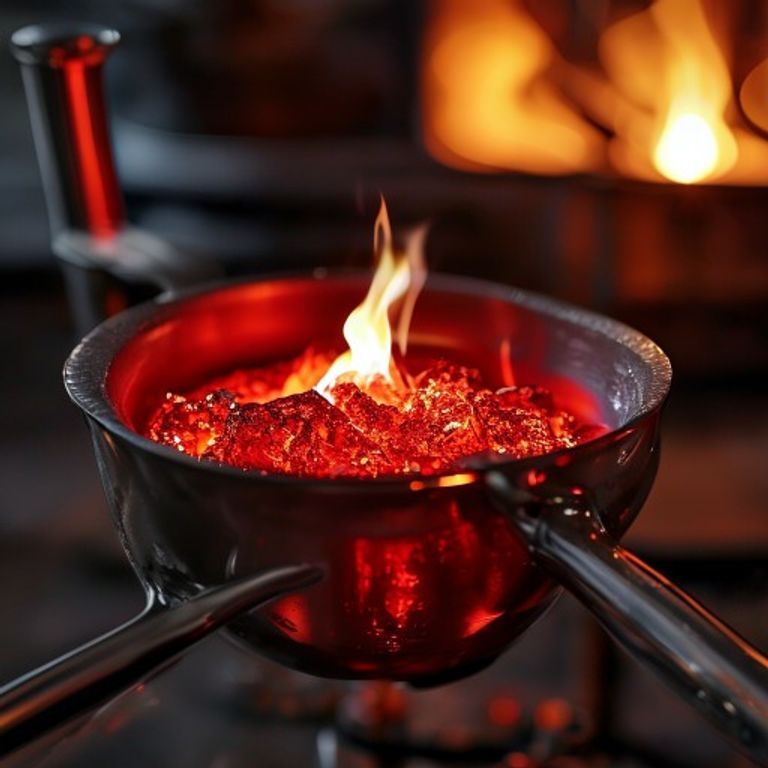
Unlocking the Grip: Your Essential Guide to Crucible Tongs Definition and Safe Lab Use

Ever walked into a chemistry lab and seen all sorts of strange-looking tools? It can feel a bit like stepping into a mad scientist’s lair, right? Among the myriad of essential beaker uses in chemistry labs and other specialized equipment, there’s one simple yet incredibly vital instrument that often goes unnoticed until you really need it: the crucible tongs. But what exactly are crucible tongs, and why are they so important? Let’s dive in and explore the complete crucible tongs definition, their purpose, and how we use them safely to keep our experiments running smoothly.
Imagine trying to pick up a red-hot piece of metal or a scorching ceramic dish straight from a flame. Ouch, right? That’s where crucible tongs come to the rescue! They are our extended, heat-resistant fingers, designed specifically for handling objects that are far too hot or too dangerous to touch with bare hands. Think of them as the ultimate safety accessory when working with high temperatures.
What Exactly Are Crucible Tongs? A Clear Definition
At its core, the definition of crucible tongs describes them as a type of laboratory equipment, typically made from heat-resistant metals like stainless steel or nickel-plated steel. They feature two long arms joined by a pivot point, allowing them to open and close, much like a pair of oversized tweezers. The ends are often flattened or slightly curved, sometimes with ribbed jaws, to provide a secure grip on various laboratory items.
So, what are crucible tongs used for in a lab? Primarily, their function is to safely grasp and move hot crucibles, evaporating dishes, beakers, or other containers that have been heated over a Bunsen burner, hot plate, or furnace. Their robust construction ensures they can withstand extreme temperatures without deforming or transferring heat to the user’s hand, making them indispensable scientific instruments for safety in chemistry.
The Indispensable Function of Crucible Tongs Explained
The function of crucible tongs is straightforward yet critical. When we’re conducting experiments that involve heating substances to high temperatures, we often use crucibles (small, heat-resistant containers, usually ceramic) or evaporating dishes. After heating, these items retain a tremendous amount of heat and can cause severe burns if handled incorrectly.
This is where the tongs step in. They provide:
- Thermal Insulation: The long arms keep our hands a safe distance from the hot object.
- Secure Grip: The jaws are designed to hold various shapes and sizes firmly, preventing accidental drops.
- Durability: Made from materials that won’t melt or warp under high heat, unlike plastic or thinner metal tools.
Without them, many common laboratory procedures involving heating apparatus would be impossible or extremely hazardous. They are fundamental for maintaining a secure and controlled environment when working with high-temperature materials.
Proper Use of Crucible Tongs in Chemistry: Safety First!
Knowing the description of crucible tongs in science is one thing, but knowing how to use them properly is another. Safety in the laboratory is paramount, and using tongs correctly is a key part of that. Here are some practical tips we should always follow:
- Choose the Right Tongs: Ensure the tongs are clean, free of damage, and appropriate for the size and weight of the object you’re handling.
- Test the Grip: Before lifting a hot object, practice grasping a similar cold object to get a feel for the grip and balance.
- Approach Carefully: Always approach the hot object with a steady hand. Don’t rush.
- Secure Hold: Grasp the object firmly but not so tightly that you might crush it. Ensure the jaws are around a stable part of the item, usually near the rim for crucibles.
- Maintain Control: Move slowly and deliberately when transferring the hot item to a cooling rack or another safe location. Keep the object away from your body and face.
- Cool Down: Always place hot items on a heat-resistant surface, like a ceramic tile or wire gauze with an insulating mat, to cool completely before handling them with gloves or bare hands.
Remember, crucible tongs are not for picking up small pieces of glassware or stirring solutions. They have a specific job, and sticking to that job helps us maintain a safe and efficient lab environment.
FAQ: Your Quick Answers About Crucible Tongs
Q: What is the primary purpose of crucible tongs?
A: The primary purpose is to safely grasp, hold, and transfer hot objects, such as crucibles, evaporating dishes, or beakers, in a laboratory setting without direct hand contact.
Q: Can I use crucible tongs for very small objects?
A: While they can technically pick up small objects, their design is optimized for larger, heavier, and typically hotter lab containers. For very small items like weighing boats or tiny reagents, other specialized forceps or tweezers might be more appropriate.
Q: How do I clean crucible tongs?
A: Crucible tongs can usually be cleaned with soap and water, then thoroughly dried. For persistent residues or if they’ve come into contact with corrosive substances, specific laboratory cleaning procedures may be required. Always ensure they are dry before storage to prevent rust.
Q: Are all crucible tongs made of the same material?
A: No, while many are made from stainless steel or nickel-plated steel for heat resistance and durability, variations exist. Some might have rubber or PVC-coated handles for better grip or comfort, but the gripping ends are always metal to withstand heat.
Kesimpulan
So, there you have it! From a clear crucible tongs definition to understanding their critical role and proper usage, we’ve covered everything you need to know about these unsung heroes of the lab. They might seem like a simple tool, but their contribution to safety and precision in chemistry experiments is immense. By using them correctly, we ensure our experiments are not only successful but also safe for everyone involved. Keep experimenting, and always prioritize safety!