

The Humble Hero: Uncovering the World of Laboratory Spatulas

In the bustling environment of a laboratory, where precision and accuracy are paramount, there are often unsung heroes working quietly behind the scenes. One such hero, frequently overlooked but undeniably essential, is the laboratory spatula. You might think, “It’s just a spatula, right?” But trust me, this simple scientific apparatus is far more versatile and critical than you might imagine. From carefully transferring tiny samples to mixing complex compounds, the lab spatula is a fundamental chemical handling tool that we rely on daily.
Today, let’s embark on a journey to appreciate this indispensable piece of laboratory equipment supplies. We’ll explore its many applications, delve into the different types available, discuss how to choose the best one for specific tasks, and even cover the proper methods for its care and sterilization. Get ready to discover why this seemingly basic instrument is, in fact, a cornerstone of scientific work!
The Many Uses of Laboratory Spatulas
Just like a chef’s multi-tool in the kitchen, a laboratory spatula has an impressive array of applications in the lab. Its primary function, of course, is the safe and efficient handling of solid chemicals and biological materials. Let’s break down some of the common uses of laboratory spatulas we encounter:
- Transferring Solids: This is perhaps its most common use. We use spatulas to scoop powders, granules, or crystals from storage containers to weighing boats, test tubes, or reaction vessels. It allows for precise control, preventing spills and contamination.
- Mixing and Stirring: Many reactions require thorough mixing of solid components or stirring viscous liquids. A lab spatula, especially those with flat or spoon-shaped ends, is perfect for this.
- Scraping and Cleaning: Residues can cling to glassware or other lab surfaces. A spatula can effectively scrape off solid material, ensuring thorough cleaning and recovery of substances.
- Applying Coatings or Spreading Samples: In certain experiments, we might need to spread a thin layer of a substance onto a slide or plate. The flat edge of a spatula comes in handy for this precise task.
- Breaking Up Aggregates: Sometimes, powders can clump together. A spatula can gently break up these aggregates, making them easier to measure and dissolve.
Unpacking the Types of Lab Spatulas
When we talk about types of lab spatulas, we’re not just looking at one design. There’s a whole family of them, each designed for specific purposes and materials. Understanding these variations helps us pick the right tool for the job:
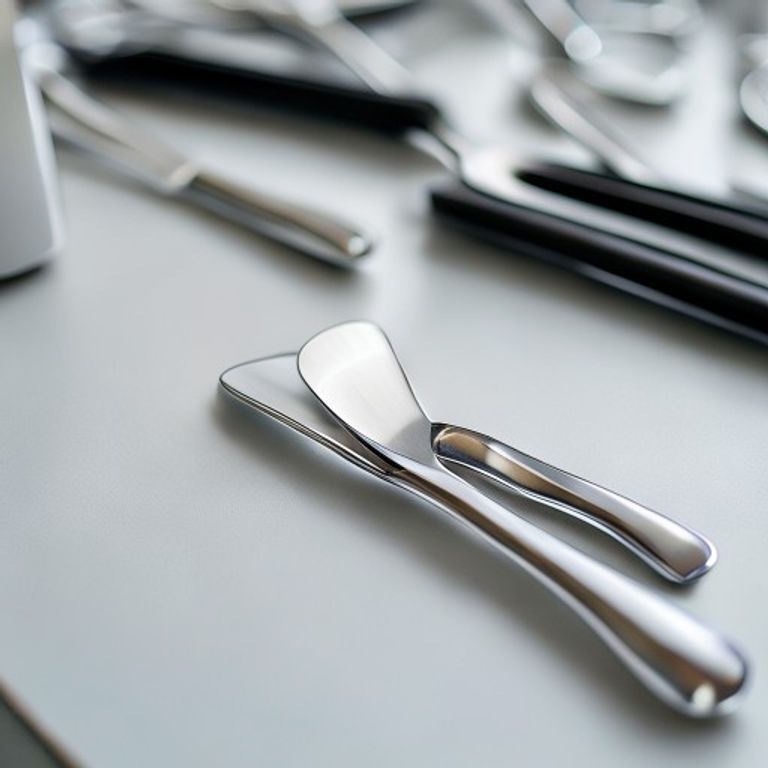
- Flat Spatulas: These are your general-purpose spatulas, often double-ended with one flat blade and one spoon-shaped end. They are excellent for scooping, scraping, and transferring.
- Spoon Spatulas (Scoops): As the name suggests, these have a spoon-like end, making them ideal lab scoop tools for transferring larger quantities of powder or granular material.
- Micro Spatulas: For those extremely delicate tasks involving minuscule amounts of substance, micro spatulas come with very small, thin blades, allowing for precision in milligram quantities.
- Semi-Micro Spatulas: A good middle ground between standard and micro spatulas, offering precision for smaller, but not microscopic, samples.
- Flexible Spatulas: Made from thinner, more flexible stainless steel, these are great for scraping material from curved surfaces or for tasks requiring a gentle touch.
The material also plays a huge role. Most commonly, we find stainless steel lab spatula applications due to their durability, corrosion resistance, and ease of sterilization. However, we also use spatulas made from plastic (for corrosive or sensitive materials), rubber (for non-scratch applications), or even ceramic for very high-temperature work.
Choosing the Best Spatula for Chemical Handling
Selecting the best spatula for chemical handling isn’t just about grabbing the nearest one. It involves considering a few key factors to ensure safety, accuracy, and prevent contamination:
- Material Compatibility: Always ensure the spatula material is inert to the chemical you’re handling. For strong acids or bases, plastic spatulas might be preferred over metal to avoid corrosion. For most organic and inorganic chemicals, stainless steel is a safe bet.
- Size and Shape: Match the spatula to the container and the quantity. A micro spatula won’t help much with a kilogram of salt, and a large scoop will be clumsy in a small vial.
- Sterility Requirements: If you’re working with biological samples or in sterile environments, the spatula must be sterile. Pre-sterilized disposable spatulas or autoclavable metal spatulas are crucial.
- Ease of Cleaning: Simple designs without intricate crevices are easier to clean thoroughly, reducing the risk of cross-contamination.
Remember, using the wrong spatula can lead to inaccurate measurements, sample contamination, or even dangerous chemical reactions. Always think about your specific task before making a choice.
Mastering Spatula Care: How to Sterilize Laboratory Spatulas & Maintenance
Like all scientific apparatus, proper care and maintenance extend the life of your spatulas and, more importantly, prevent contamination. Knowing how to sterilize laboratory spatulas is critical, especially when working in microbiology or analytical chemistry.
- Cleaning: After each use, spatulas should be thoroughly cleaned. For non-hazardous materials, washing with detergent and water, followed by a rinse with distilled water, is usually sufficient. For stubborn residues, a solvent compatible with the material might be needed.
- Drying: Always dry spatulas completely to prevent rust (especially for stainless steel) and inhibit microbial growth. Air drying in a clean area or using a lint-free wipe are good practices.
- Sterilization:
- Autoclaving: Stainless steel spatulas can be autoclaved, which uses high-pressure steam to kill microbes.
- Flame Sterilization: For quick sterilization between samples, a metal spatula can be flamed using an alcohol lamp or Bunsen burner until red-hot, then allowed to cool. This method is effective but should be done carefully to avoid burns and always in a fume hood.
- Chemical Sterilization: Soaking in appropriate disinfectants can be used for heat-sensitive materials like certain plastics, followed by a sterile rinse.
- Storage: Store clean and dry spatulas in a designated, dust-free drawer or container to prevent recontamination.
Just as we focus on the cleaning and calibration tips for various lab tools like graduated cylinders, understanding the nuances of spatula care ensures optimal performance and reliable experimental results.
Conclusion
The laboratory spatula may seem like a minor player in the grand scheme of scientific discovery, but its importance cannot be overstated. It’s a precision tool, a safety implement, and a versatile workhorse rolled into one. By understanding the different types, their specific uses, how to choose the right one, and how to maintain it properly, we empower ourselves to conduct experiments more safely, accurately, and efficiently. So, the next time you reach for a spatula in the lab, take a moment to appreciate this humble hero – it’s doing a lot more than just scooping!
FAQ
Q1: Can I use the same spatula for different chemicals?
A: Ideally, no. To prevent cross-contamination, it’s best to use a clean, separate spatula for each chemical or thoroughly clean and sterilize a spatula between uses. In highly sensitive analyses, dedicated spatulas for specific reagents are common.
Q2: What’s the difference between a spatula and a scoop?
A: While often used interchangeably, a “spatula” generally refers to a tool with a flatter blade designed for scraping, spreading, and precise transfer, often with a spoon-like end as well. A “scoop” is typically more spoon-shaped and designed primarily for transferring larger quantities of granular or powdered material.
Q3: Are plastic spatulas as good as stainless steel ones?
A: It depends on the application. Plastic spatulas are excellent for handling highly corrosive chemicals that might react with metal, or for situations where scratching delicate surfaces (like pH electrodes) must be avoided. They are also often disposable, which is great for preventing cross-contamination. However, stainless steel spatulas are more durable, can withstand higher temperatures, and are easier to sterilize via autoclaving or flaming.