


Unlock Precision: Your Essential Guide to Analytical Balance Calibration

In the world of science and research, accuracy isn’t just a nice-to-have; it’s absolutely crucial. Especially when we’re talking about weighing tiny samples with extreme precision, like in a laboratory setting. That’s where the analytical balance comes in – it’s our trusted workhorse for getting super accurate mass measurements. But here’s the thing: even the best tools need a little TLC to stay at their peak performance. Just like a musical instrument needs tuning to sound perfect, our analytical balance needs regular calibration to ensure every measurement is spot-on. If you’ve ever wondered how to calibrate an analytical balance, or why it’s so important, you’re in the right place. Let’s dive into mastering analytical balance calibration to keep our experiments and results as precise as possible.
Why Analytical Balance Calibration is Non-Negotiable for Precision Weighing
Imagine trying to bake a cake without knowing if your measuring cups are accurate. The results would be unpredictable, right? It’s the same in the lab, but with much higher stakes. An analytical balance is designed for precision weighing, often down to several decimal places. This kind of accuracy is vital for countless applications, from pharmaceutical development to quality control and environmental testing. Without proper calibration, the readings from your balance could drift, leading to inaccurate data, wasted reagents, failed experiments, and even compromised product quality. We don’t want any of that!
Calibration essentially compares our balance’s readings against a known, certified standard (special calibration weights). It helps us identify and correct any deviations, ensuring that our balance consistently gives us true mass values. This process is fundamental for maintaining measurement accuracy and is a cornerstone of good laboratory practice (GLP) and robust quality control balances.
When Should We Calibrate Our Analytical Balance? Timing is Everything!
Knowing when to calibrate an analytical balance is almost as important as knowing how. It’s not a once-and-done task; it’s an ongoing commitment. Here are some key times when we absolutely need to perform a calibration:
- Daily or Before Each Use: For high-precision applications or balances used very frequently, a quick check or internal calibration (if available) at the start of each day or before critical measurements is a best practice.
- After Moving the Balance: Even a slight bump or relocation can affect the delicate internal mechanisms. Always re-calibrate after moving your balance, even if it’s just a few inches on the bench.
- After Maintenance or Repair: Any service work on the balance should always be followed by a full calibration to confirm it’s working correctly.
- Environmental Changes: Significant fluctuations in temperature, humidity, or atmospheric pressure can impact performance. If your lab environment changes drastically, it’s a good idea to recalibrate.
- Per Manufacturer’s Recommendation: Always check your balance’s manual for recommended calibration intervals.
- Regulatory Requirements: Depending on your industry (e.g., pharma, food), there might be strict regulatory guidelines for how often calibration is required.
Your Step-by-Step Guide to Analytical Balance Calibration Procedure
Let’s get practical! Here’s a general overview of the analytical balance calibration procedure. Remember, always refer to your specific balance’s user manual, as steps can vary slightly by model.
1. Preparation is Key
- Stabilize the Environment: Ensure your balance is in a stable environment, away from drafts, vibrations, and direct sunlight. The temperature and humidity should be consistent.
- Cleanliness: Gently clean the weighing pan and surrounding area. Any dust or debris can affect readings.
- Warm-up Time: Most analytical balances need to warm up for at least 30-60 minutes after being turned on to achieve thermal stability.
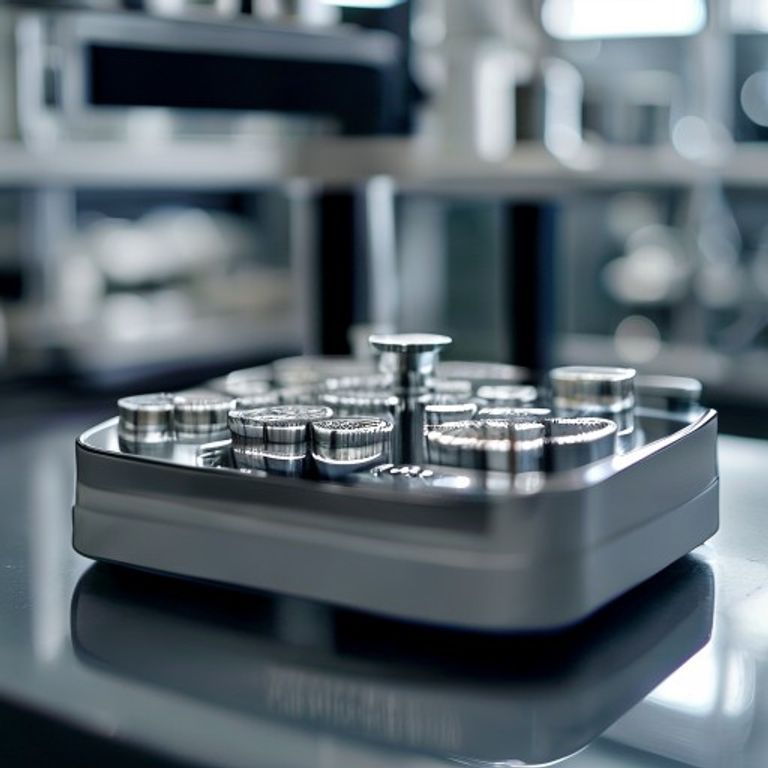
- Gather Your Tools: You’ll need a set of certified calibration weights. These weights are extremely important as they are the standard against which we measure our balance’s accuracy. Ensure they are clean, handled with tweezers or gloves (never bare hands), and stored properly.
2. Performing Internal Calibration (if applicable)
Many modern analytical balances have a built-in “internal calibration” function. This is super convenient! We usually just press a button, and the balance uses its own internal weights to adjust itself. This is a great daily check for internal calibration of analytical balance and helps maintain consistency.
3. External Calibration with Certified Weights
Even with internal calibration, periodic external calibration using certified external weights is essential. This is often performed by a trained technician, but here’s how it generally works:
- Access Calibration Mode: Follow your balance’s instructions to enter its calibration mode.
- Zero the Balance: The balance will likely prompt you to zero it (tare) with an empty pan.
- Place Calibration Weights: The balance will then guide you to place specific certified weights on the pan. Typically, you’ll start with a zero point, then a mid-range weight, and finally a maximum capacity weight.
- Record Readings: The balance will read the weight and, if necessary, prompt you through adjustments. We carefully record the actual weight applied and the balance’s reading.
- Verification: After the calibration is complete, we usually place a different set of certified weights (not used for the calibration itself) on the balance to verify its accuracy across various points.
- Documentation: Always document the date, time, technician, weights used, and the “before” and “after” readings. This is vital for audit trails and laboratory scales maintenance records.
Beyond Calibration: Simple Maintenance for Long-Term Accuracy
Calibration is key, but it’s part of a larger picture of proper laboratory scales maintenance. Always:
- Keep the balance clean.
- Avoid overloading the balance.
- Operate it on a stable, level surface.
- Control the environment (temperature, humidity, drafts).
- Handle it with care – it’s a delicate instrument!
Understanding Analytical Balance Calibration Service Cost
When it comes to analytical balance calibration service cost, it can vary quite a bit. Factors influencing the price include:
- Type of Service: Basic calibration vs. accredited calibration (e.g., ISO 17025 certified) which often includes more rigorous testing and detailed documentation.
- Balance Complexity: Higher capacity or more precise balances might cost more to calibrate.
- Location: On-site calibration can be more expensive than sending the balance to a service center.
- Service Provider: Different calibration companies have different pricing structures.
- Frequency: Regular service contracts might offer better rates.
It’s always a good idea to get quotes from a few reputable, accredited service providers to understand the costs involved for your specific needs.
Conclusion: The Foundation of Reliable Results
Ultimately, regular and proper analytical balance calibration isn’t just a regulatory checkbox; it’s the foundation upon which all our precise experimental results are built. By understanding how to calibrate an analytical balance, when to do it, and the simple maintenance steps, we ensure that our measurements are always accurate, reliable, and trustworthy. This commitment to precision saves time, resources, and ultimately, helps us achieve better scientific outcomes. Keep your balance tuned, and your research will sing!
FAQ: Your Analytical Balance Calibration Questions Answered
Q1: How often should I calibrate my analytical balance?
A: It depends on usage, regulatory requirements, and manufacturer recommendations. For high-precision work, daily checks are common, with more thorough external calibration typically done quarterly, semi-annually, or annually by a certified technician.
Q2: Can I calibrate my analytical balance myself?
A: You can perform internal calibration (if your balance has it) and daily verification checks using certified weights. However, for a full, accredited external calibration, it’s usually best to use a trained and certified service provider to ensure compliance and traceability.
Q3: What are calibration weights?
A: Calibration weights are highly precise, certified masses used to test and adjust the accuracy of a balance. They come in various classes (e.g., OIML Class E1, E2, F1) indicating their tolerance and suitability for different precision levels.
Q4: What if my balance fails calibration?
A: If your balance fails calibration, it means it’s not weighing accurately. It should be adjusted (either internally or by a technician) and then re-calibrated. If it cannot be adjusted to meet specifications, it may require repair or replacement.
Q5: Is there a difference between “calibration” and “adjustment”?
A: Yes! Calibration is the process of comparing the balance’s readings against a known standard and documenting the deviation. Adjustment is the act of changing the balance’s settings to bring its readings within acceptable tolerances. Calibration reveals the error; adjustment corrects it.







