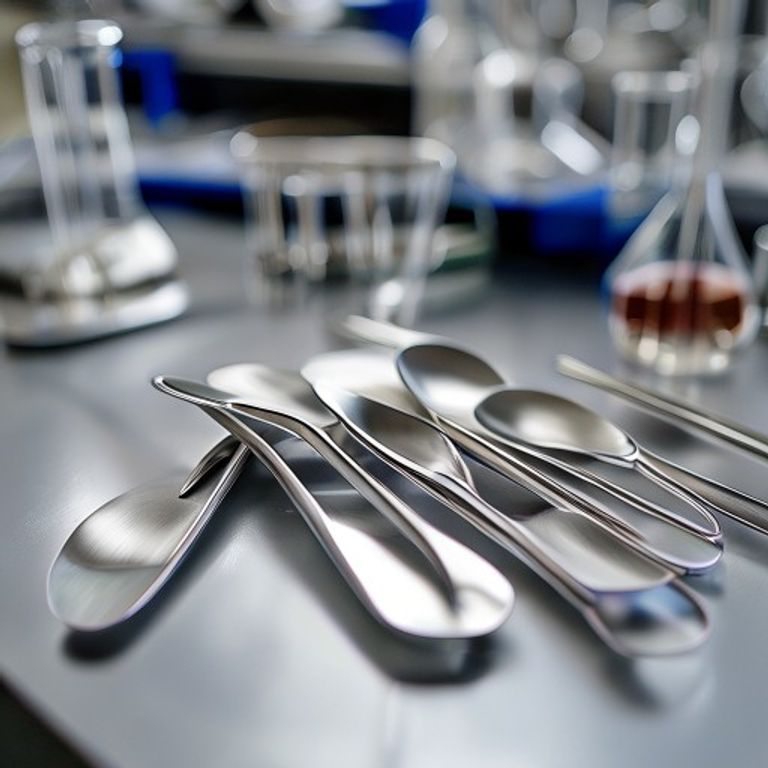
The Unsung Hero: Your Comprehensive Guide to Lab Spatulas – Types, Uses, and Why They Matter

When we think of essential laboratory equipment, our minds often jump to complex machines or delicate glassware like graduated cylinders. But there’s a humble tool that quietly facilitates countless experiments, a true workhorse in every lab: the lab spatula. I remember starting out, often underestimating this simple-looking instrument, only to quickly realize its irreplaceable value. It’s not just a mini-shovel; it’s a precision instrument that ensures accuracy and safety in handling various substances. Today, let’s dive deep into the world of this tiny giant.
What is a Lab Spatula? More Than Just a Mini Shovel
At its core, a lab spatula is a small hand tool designed for handling solids and viscous materials in a laboratory setting. Imagine trying to precisely measure a few milligrams of a fine powder with your fingers – impossible, right? That’s where our trusty lab spatula comes in. It allows us to scoop, transfer, and mix chemicals, reagents, and samples with accuracy and minimal contamination. Think of it like a chef’s mini-utensil, but for scientific ingredients.
Types of Spatulas Used in Laboratories: A World of Shapes and Sizes
You might think a spatula is just a spatula, but if you delve deeper, you’ll find a fascinating variety, each designed for specific tasks. Understanding these types of spatulas used in laboratories is key to efficient work.
- Flat-Blade Spatulas: These are the most common, resembling a small flat shovel or paddle. Perfect for general scooping and spreading.
- Spoon Spatulas: One end is a small spoon, great for scooping larger quantities of powders or granules, while the other end is often a flat blade for scraping.
- Micro Spatulas: When precision is paramount, especially with tiny amounts of substances, a micro spatula for laboratory use is your best friend. Their incredibly small blades or spoon tips are ideal for handling milligrams.
- Double-Ended Spatulas: Many spatulas come with different tools on each end, maximizing versatility. You might find a spoon on one side and a flat blade on the other, or a pointed end for breaking up aggregates.
Materials also vary. The most popular choice, due to its durability and chemical resistance, is the stainless steel lab spatula. However, you can also find spatulas made from plastics (like polypropylene) for specific applications, especially when dealing with corrosive acids where metal might react, or for single-use situations. Speaking of which, sometimes even the simplest tools have a fascinating story, like uncovering the world of laboratory spatulas reveals.
Stainless Steel Lab Spatula Functions and Beyond: Your All-Purpose Lab Hand
A well-chosen spatula is an extension of your hand in the lab. Its primary function is, of course, powder transfer. Whether you’re moving a reagent from a stock bottle to a weighing boat or adding a catalyst to a reaction vessel, a spatula ensures a clean, controlled transfer. It’s also an excellent sampling tool, allowing us to take small, representative portions from larger bulk materials without introducing contamination.
Beyond just scooping, spatulas are indispensable for:
- Mixing and Stirring: Especially useful for small-scale reactions or preparing slurries.
- Scraping: Cleaning out the last bits of powder from a beaker or breaking up caked solids.
- Applying: Spreading pastes or gels onto a surface for analysis.
Essentially, any task involving physical manipulation of solid or semi-solid substances often calls for a reliable spatula.
Choosing the Right Spatula: Safety and Precision First
Selecting the correct spatula isn’t just about personal preference; it’s about ensuring safety and accuracy. When working with aggressive chemicals, you’ll need a chemical resistant spatula for lab use. While stainless steel is generally resistant to many chemicals, certain acids or strong bases can corrode it over time. In such cases, spatulas made from specialized plastics like PTFE (Teflon) or even ceramic options might be more suitable. Always check material compatibility with the chemicals you’re handling.
Consider the size of your sample and container. A large spatula won’t fit into a small vial, and a micro spatula will be inefficient for transferring large quantities. Having a diverse set of lab spatulas in your lab supplies inventory is always a smart move.
Care and Maintenance: Extending the Life of Your Lab Spatula
Like any good laboratory equipment, your spatulas need proper care. Always clean them immediately after use to prevent residue buildup and cross-contamination. Most stainless steel spatulas can be washed with detergent and water, then thoroughly rinsed and dried. For specialized chemicals, specific cleaning protocols might be necessary. Proper storage, perhaps in a designated drawer or rack, will keep them free from damage and ready for their next task.
Conclusion
The lab spatula might not be the flashiest tool in the laboratory, but its importance is undeniable. From precise chemical scoop duties to intricate powder transfer, it’s a cornerstone of good laboratory practice. Investing in a variety of high-quality spatulas ensures not only efficiency but also the integrity of your experimental results. So next time you reach for that small, unassuming tool, remember the mighty role it plays in scientific discovery!
Frequently Asked Questions About Lab Spatulas
- Q: What is the main difference between a micro spatula and a regular lab spatula?
A: A micro spatula has a much smaller blade or spoon, designed for handling extremely small quantities (milligrams or less) of substances with high precision, often in micro-scale experiments. - Q: How do I know if a spatula is chemical resistant enough for my use?
A: Always refer to the manufacturer’s specifications for the spatula’s material and consult chemical compatibility charts for the specific chemicals you are handling. Stainless steel is good for many general uses, but PTFE or ceramic are better for highly corrosive substances. - Q: Can I sterilize my lab spatulas?
A: Yes, most stainless steel spatulas can be sterilized by autoclaving or dry heat. Plastic spatulas might require chemical sterilization or might be single-use disposable items, depending on their material. - Q: Where can I buy lab spatulas online?
A: Many reputable scientific supply companies and online retailers specialize in lab supplies and where to buy lab spatulas online is easy. Look for suppliers like Fisher Scientific, VWR, Sigma-Aldrich, or even specialized lab equipment retailers on Amazon or eBay for various types and materials.