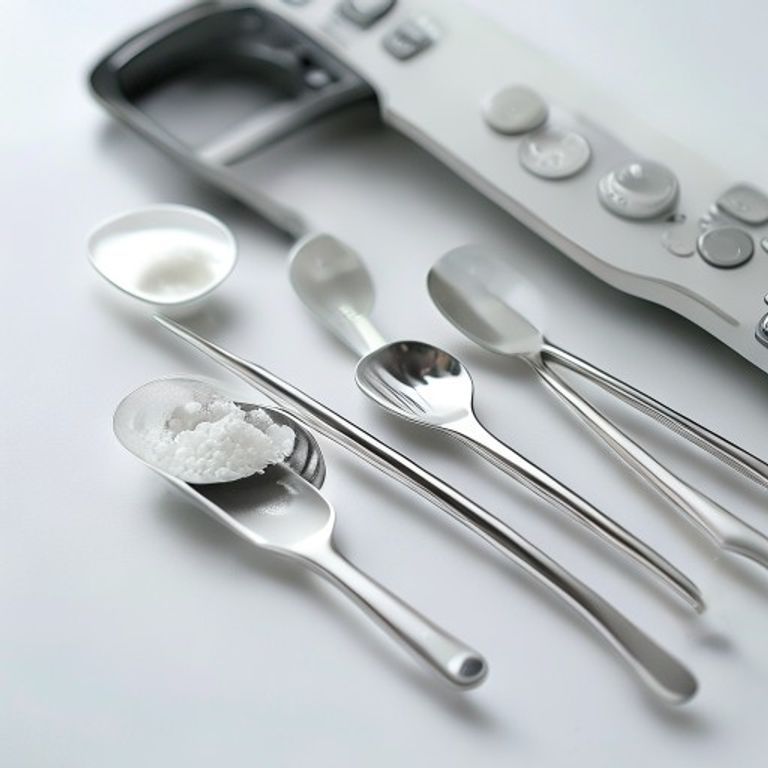
The Unsung Hero: Understanding the Essential Lab Spatula Function

The Unsung Hero: Understanding the Essential Lab Spatula Function
Hey there, fellow science enthusiast! Have you ever walked into a chemistry lab and noticed an array of tools, some flashy and complex, others seemingly simple? Among these, there’s often one humble tool that gets overlooked but is absolutely indispensable: the lab spatula. You might think, “It’s just a spatula, right?” But trust me, understanding the full range of its functions is key to precision and safety in the lab. Today, we’re going to dive deep into unlocking the full potential of your spatula laboratory and explore why this little instrument is truly an unsung hero.
What is a Lab Spatula Used For? More Than Just Scooping!
At its core, a lab spatula is a small, flat, and flexible tool designed for handling solids. But saying it’s just for “handling” is like saying a car is just for “moving.” There’s so much more to it! Its primary role revolves around the precise transfer, manipulation, and processing of chemical substances and biological materials in a laboratory setting. Think of it as your extra hand, but much more precise and often chemically resistant.
From a simple transfer to intricate sample preparation, the lab spatula takes on many roles:
- Chemical Transfer: This is probably the most common function. We use spatulas to transfer small amounts of solid chemicals from stock bottles to weighing boats, beakers, or reaction vessels. It ensures we don’t contaminate the bulk material and allows for accurate measurement.
- Material Handling: Beyond just transfer, spatulas are great for mixing, stirring, and breaking up clumps of powdered reagents. Imagine trying to mix a small amount of powder in a test tube with your finger – not ideal, right?
- Scraping Samples: Ever had a stubborn residue clinging to the side of a flask or beaker? A spatula, especially one with a flexible blade, is perfect for scraping every last bit of sample without damaging the glassware.
- Weighing Solids: When we need to measure out a precise amount of a chemical, a spatula is our best friend. Its controlled scoop allows us to add or remove tiny increments of material onto a balance until we hit our target weight.
- Applying Pastes or Spreading Media: In biology labs, spatulas might be used to spread bacterial cultures evenly across an agar plate or to apply a paste-like substance onto a surface.
Different Types of Lab Spatulas and Their Uses
Just like you wouldn’t use a butter knife for surgery, you wouldn’t use every spatula for every task. There’s a variety out there, each designed for specific purposes. Let’s look at some common ones:
1. Stainless Steel Lab Spatula: The Workhorse
This is probably what comes to mind when you hear “lab spatula.” Made from stainless steel, these are durable, corrosion-resistant, and easy to clean. They come in various shapes and sizes:
- Flat Blade Spatulas: Ideal for general scooping and transferring powders.
- Spoon Spatulas: One end is a spoon, the other a flat blade. Super versatile for scooping and stirring.
- Micro Spatulas: These are tiny, with very narrow blades or scoops, specifically designed for handling minuscule amounts of chemicals or working in confined spaces, like a small test tube or a microcentrifuge tube. Their purpose of micro spatula in chemistry is all about precision when every milligram counts.
2. Plastic Spatulas: For Sensitive Substances
While less common for heavy-duty work, plastic spatulas are invaluable when working with certain chemicals that might react with metal, or when you need to avoid scratching delicate surfaces. They’re also great for single-use applications to prevent cross-contamination.
3. Rubber or Silicone Spatulas: Gentle Agitation
These are less common but exist for specific tasks, such as gentle mixing of delicate biological samples or when scraping viscous materials where a metal spatula might be too rigid or abrasive.
How to Properly Use a Lab Spatula: Tips for Precision and Safety
Even though it looks simple, there’s an art to using a lab spatula effectively and safely. Here are some tips I’ve picked up over the years:
- Choose the Right Spatula: Match the size and type of spatula to the amount of material and the vessel you’re working with. A micro spatula for micro-quantities, a larger one for bulk.
- Cleanliness is Key: Always ensure your spatula is clean and dry before use to prevent contamination. Clean it thoroughly between different chemicals.
- Scoop with Care: When scooping, aim for controlled movements. For powders, gently scoop from the top of the pile, rather than digging in, to minimize dust creation.
- Weighing Precision: When weighing, add material slowly and incrementally to the weighing boat. Use the flat edge to carefully tap off excess if you overshoot.
- Avoid Cross-Contamination: Never use the same spatula for different chemicals without thorough cleaning. If possible, have dedicated spatulas for certain reagents.
- Store Properly: Keep your spatulas clean and stored in a designated spot to prevent damage or contamination.
Conclusion: Appreciating the Humble Spatula
So, there you have it! The lab spatula, often just a quiet presence in our laboratory tools arsenal, is actually a multi-functional powerhouse. Its role in precise chemical transfer, material handling, and sample preparation is foundational to accurate and safe experimentation. The next time you pick one up, I hope you’ll see it not just as a piece of metal, but as a critical instrument that helps us unlock the mysteries of science, one careful scoop at a time. It truly is one of the most essential laboratory tools we have!
FAQ (Frequently Asked Questions)
Q: Can I use a regular kitchen spatula in the lab?
A: Absolutely not! Kitchen spatulas are typically not made from laboratory-grade materials, meaning they might not be chemically resistant and could introduce contaminants. Always use proper lab equipment.
Q: How do I clean a lab spatula?
A: For most applications, a thorough rinse with distilled water, followed by an alcohol wipe and air drying, is sufficient. For stubborn residues, specialized lab cleaning solutions might be needed. Always refer to lab protocols.
Q: Why are some spatulas so small (micro spatulas)?
A: Micro spatulas are designed for extreme precision when working with very small amounts of expensive, potent, or sensitive chemicals. They help minimize waste and ensure highly accurate measurements in micro-scale experiments.
Q: Are there disposable lab spatulas?
A: Yes, plastic spatulas are often disposable, especially when working with highly toxic or biologically hazardous materials to prevent cross-contamination and simplify cleanup.