

The Unsung Grid: Why Laboratory Gauze is Crucial for Safe and Effective Lab Work

Introduction: The Small Detail Making a Big Difference
When we step into a chemistry lab, our eyes are often drawn to the impressive glassware, bubbling reactions, or complex machinery. But sometimes, it’s the simplest tools that are the most vital. One such unsung hero is the laboratory gauze. It might look like just a humble piece of wire mesh, but trust me, its role in ensuring our experiments run smoothly and safely is absolutely paramount. Without it, many common lab procedures, especially those involving heat, would be far more challenging, and frankly, quite dangerous.
Think of laboratory gauze as the unsung bodyguard for your precious beakers and flasks when things get hot. It’s not just a fancy placemat; it’s a carefully designed piece of equipment that we rely on daily for heat distribution, stability, and protection. Let’s dive deeper into why this simple grid is an indispensable part of our scientific toolkit.
What Exactly is Laboratory Gauze?
At its core, laboratory gauze is typically a square piece of thin wire mesh, often made from iron or stainless steel, with a distinctive ceramic fiber center. Back in the day, this center used to be asbestos, but thankfully, modern versions are made from safer, asbestos-free ceramic material. The wire mesh creates a flat, even surface, and the ceramic center is crucial for its primary function, which we’ll explore in a moment. We usually place it directly on top of a tripod stand, ready to hold our glassware securely.
The Heart of Lab Heating: Why Gauze Matters So Much
Most of the time, when we talk about laboratory gauze, we’re thinking about heating. And for good reason! This is where its main purpose shines. Let’s break down its key functions:
1. Even Heat Distribution
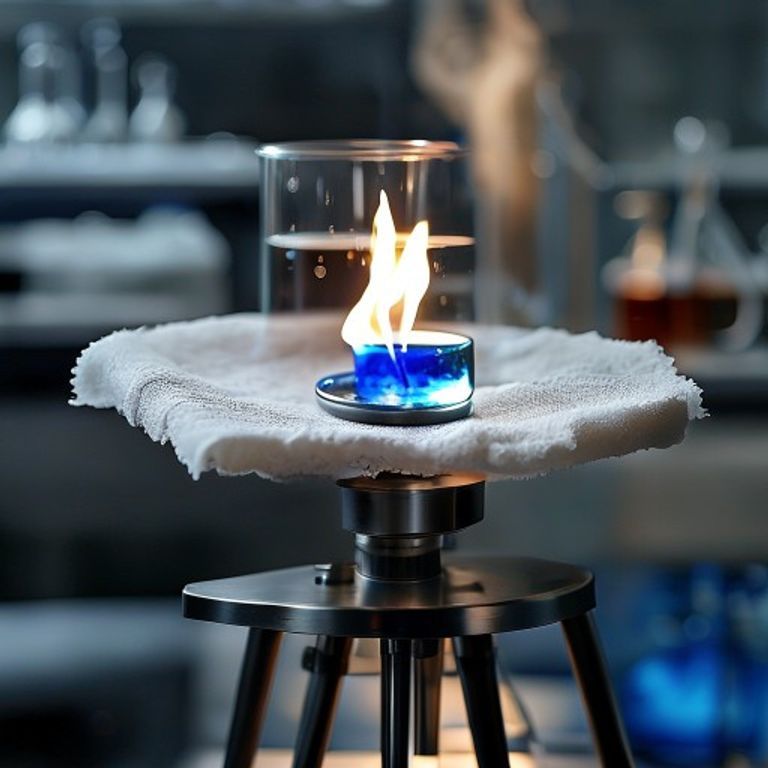
Imagine trying to heat a glass beaker directly with the concentrated flame of a Bunsen burner. The intense, localized heat would cause thermal shock, potentially cracking or shattering the glass. That’s a mess we definitely want to avoid, and it’s also a safety hazard. This is where the gauze comes in. When we place the beaker on the gauze, which in turn sits on a lab tripod stand, the heat from the burner doesn’t hit the glassware directly. Instead, the gauze (especially its ceramic center) absorbs and disperses the heat across a wider area of the beaker’s bottom. This creates a much more uniform heating process, preventing hotspots and extending the lifespan of our expensive glassware.
Think of it like cooking on a stove. You wouldn’t put a delicate glass dish directly over a powerful burner without some form of diffuser, right? The gauze acts as that diffuser, ensuring the heat is gently and evenly transferred to our sample. This uniform heat is critical for accurate experimental results, as inconsistent heating can lead to uneven reactions or premature evaporation.
2. Providing a Stable Platform
Beyond heat distribution, the wire gauze offers a stable, flat surface for supporting various pieces of glassware, such as beakers, flasks, and evaporating dishes, especially when they are being heated. Without it, these round-bottomed or otherwise unstable containers would be difficult to balance on the narrow top ring of a tripod stand. The mesh structure provides enough friction and support to keep our equipment secure, minimizing the risk of spills or accidents during an experiment.
3. Protecting Glassware from Direct Flame
As we mentioned, direct exposure to a Bunsen burner’s flame can be detrimental to glassware. The gauze acts as a protective barrier, shielding the glass from the hottest part of the flame. This not only prevents damage but also ensures that the substances inside are heated more gently and controllably, crucial for precise experimental work. It’s an integral part of safe and effective burner operation in any laboratory setting.
Mastering the Mesh: Practical Tips for Using Laboratory Gauze
Using laboratory gauze might seem straightforward, but a few practical tips can enhance safety and effectiveness:
- Proper Placement: Always place the gauze squarely on top of the tripod stand. Ensure it’s centered and stable before placing any glassware on it.
- Check for Wear: Over time, the wire mesh can become bent, warped, or corroded. The ceramic center might also show signs of cracking or degradation. A damaged gauze won’t distribute heat effectively and could even lead to instability. Replace worn-out gauze immediately.
- Handle with Care: Remember that after heating, the gauze itself will be extremely hot. Always use appropriate heat-resistant gloves or crucible tongs to handle it. Never touch it with bare hands.
- Keep it Clean: While not as critical as cleaning glassware, keeping your gauze free from excessive residue can help maintain its heat distribution properties.
Beyond Heating: Other Potential Uses
While primarily known for its role in heating, laboratory gauze can occasionally serve other purposes:
- Temporary Hot Plate: It can serve as a temporary surface to place hot beakers or flasks that have just come off a heating source, allowing them to cool down safely without directly touching the lab bench.
- Filtration Support: In some less common setups, a piece of gauze might be used as a coarse support for a filter funnel or other filtration apparatus, though specific filtration equipment is usually preferred.
Conclusion: Appreciating the Essential
So, the next time you’re in the lab and preparing to heat a solution, take a moment to appreciate that simple square of wire mesh with its ceramic heart. Laboratory gauze is a testament to how crucial seemingly small, simple pieces of equipment are to the accuracy, safety, and efficiency of our scientific endeavors. It ensures even heating, provides a stable base, and protects our valuable glassware, making our work both safer and more reliable. Truly, an unsung hero!
FAQs About Laboratory Gauze
Q: Can I use laboratory gauze without the ceramic center?
A: While technically you could use plain wire mesh, the ceramic center is vital for effective and even heat distribution. Without it, the heat from the Bunsen burner would be much more concentrated, increasing the risk of thermal shock to your glassware and leading to uneven heating.
Q: How do I clean laboratory gauze?
A: For most light residues, a simple brush and soapy water followed by rinsing and air-drying is sufficient. For stubborn deposits, a gentle scrub with a mild abrasive pad might be needed. Ensure it’s completely dry before storing to prevent rust.
Q: How often should laboratory gauze be replaced?
A: There’s no fixed schedule. Replace your gauze when you notice significant wear and tear, such as bent wires, warping, rust, or a cracked/damaged ceramic center. If it no longer provides a stable, flat surface or effectively distributes heat, it’s time for a new one.
Q: Is all laboratory gauze asbestos-free?
A: Modern laboratory gauze is almost universally asbestos-free, using ceramic fiber instead. However, if you are working with very old equipment (e.g., in an older lab or inherited collection), it’s always wise to confirm, or treat it with caution, especially if the center appears fibrous and old.