

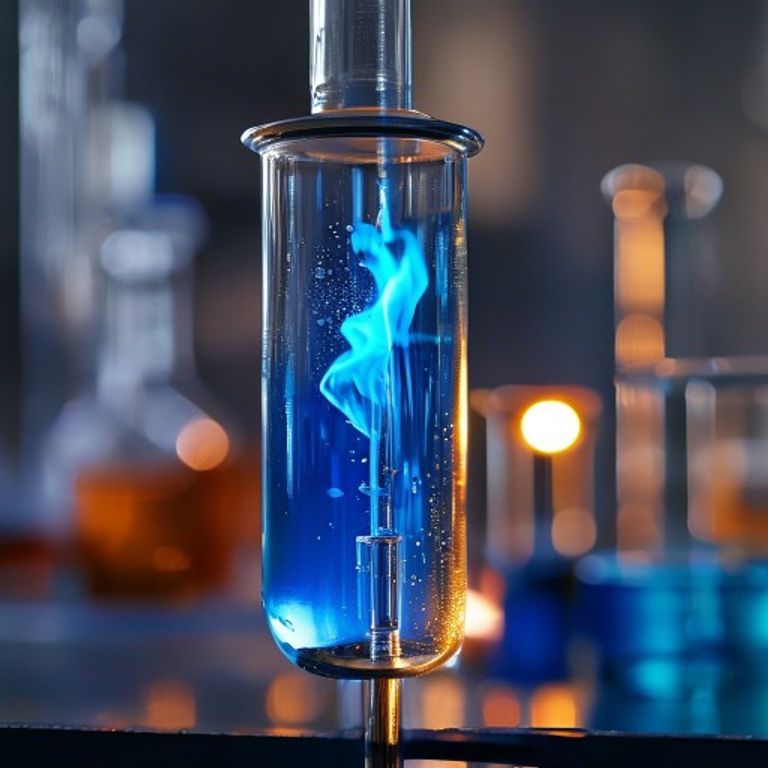
The Mighty Mini: Exploring the Diverse Test Tube Uses in Science and Beyond

When we picture a science lab, what’s one of the first pieces of laboratory glassware that comes to mind? For many of us, it’s the humble test tube. This simple, cylindrical glass vessel might seem unassuming, but don’t let its modest appearance fool you. It’s a true workhorse in virtually every scientific discipline, from chemistry to biology, and even in medical diagnostics. Today, let’s dive deep into the fascinating world of test tubes and explore the myriad of ways scientists and students put them to use.
I remember my first time in a chemistry lab, feeling a mix of excitement and apprehension. Amidst the complex instruments, the test tube stood out as something approachable, a tool I could immediately understand. It’s like the Swiss Army knife of the lab – versatile, essential, and surprisingly powerful for its size. We’ll cover everything from what are test tubes used for in chemistry to their critical role in medical settings, and even some common experiments performed with test tubes.
What Exactly Is a Test Tube and Why Do Scientists Use Them?
Before we explore its applications, let’s quickly define our star. A test tube is typically a finger-length, cylindrical tube of glass or plastic, open at one end and closed with a rounded U-shaped bottom at the other. Most are made from borosilicate glass, which makes them highly resistant to thermal shock and chemical corrosion – perfect for harsh lab environments. The reason why do scientists use test tubes boils down to several key advantages:
- Small Scale Reactions: Their size is perfect for handling small volumes of liquids, making them ideal for micro-scale chemical reactions without wasting precious reagents.
- Heating Capabilities: The narrow shape and robust glass allow for direct heating over a Bunsen burner, making it easy to facilitate reactions that require elevated temperatures.
- Easy Observation: Their transparent walls provide an unobstructed view of reactions, precipitates, and color changes.
- Mixing and Storage: They’re excellent for mixing solutions and temporarily storing samples.
Test Tube Uses in Chemistry: The Foundation of Discovery
In chemistry, test tubes are indispensable. They are the go-to vessel for countless procedures. Let’s look at some primary purpose of a test tube in a laboratory setting when it comes to chemical exploration:
1. Holding and Mixing Small Samples
Think of them as mini beakers, but for smaller quantities. When you only need to work with a few milliliters of a substance, a test tube is the perfect container. Its narrow opening minimizes evaporation and allows for easy mixing by gently swirling or flicking the tube.
2. Heating Chemicals and Solutions
Need to warm up a solution to speed up a reaction? A test tube is your best friend. We can safely hold it with a test tube clamp and heat it directly over a flame. This allows for quick and efficient heating, which is crucial for many synthesis and decomposition reactions.
3. Observing Reactions
Many chemical reactions involve visual cues like color changes, gas evolution, or the formation of a precipitate. The clear glass of a test tube provides an excellent window to observe these phenomena up close, helping us understand the chemistry unfolding before our eyes.
4. Qualitative Analysis
When performing tests to identify unknown substances (qualitative analysis), test tubes are essential. We might add a specific reagent to a suspected sample in a test tube and look for a characteristic color change or precipitate to confirm the presence of a particular ion or compound.
Beyond the Beaker: Test Tube Applications in Medical Labs
While often associated with chemistry, test tubes play an equally vital role in medical and biological laboratories. Here are some key test tube applications in medical labs:
1. Blood Sample Collection and Processing
This is perhaps one of the most common medical uses. When you get blood drawn, it’s collected into specialized test tubes (often called vacutainers) that contain various additives or anticoagulants depending on the type of test needed. These tubes are then used for centrifugation to separate plasma or serum, and for direct analysis.
2. Urine Analysis
Similar to blood, urine samples are collected in test tubes for various diagnostic tests, including urinalysis (checking for abnormal components) and microbiology cultures to detect infections.
3. Microbiological Cultures
Test tubes provide a sterile environment for growing bacterial or fungal cultures. Liquid growth media (broths) are often placed in test tubes, inoculated with a sample, and incubated. This allows microbiologists to identify pathogens responsible for infections.
4. Diagnostic Tests
Many diagnostic tests, from immunology assays to DNA amplification (like PCR), involve setting up reactions or preparing samples in test tubes before further analysis on automated instruments.
Common Experiments Performed with Test Tubes
So, what kind of scientific experiments can we actually do with these versatile tubes? A lot! Here are just a few:
- Precipitation Reactions: Mixing two clear solutions to observe the formation of a solid precipitate.
- Acid-Base Reactions: Adding an indicator to an acid or base and then titrating it with the opposite to observe color changes.
- Gas Evolution: Reacting chemicals to produce a gas, which can be seen as bubbles forming.
- Heating and Decomposition: Gently heating solids to observe their decomposition or liquids to observe boiling points.
- Solubility Tests: Adding a small amount of a solid to different solvents in separate test tubes to see which one dissolves it.
Tips for Handling Test Tubes Safely
Since we often work with chemicals and heat, safety is paramount. Always remember to:
- Wear safety goggles.
- Use a test tube holder when heating.
- Point the opening of a heated test tube away from yourself and others.
- Never fill a test tube more than one-third full when heating liquids to prevent boiling over.
- Place hot test tubes in a test tube rack to cool, never directly on a cold benchtop as it could shatter. Speaking of racks, they’re not just for storage; they play a vital test tube rack function in maintaining organization and safety during experiments.
FAQ about Test Tube Uses
Q: Can I use plastic test tubes instead of glass?
A: Yes, but it depends on the application. Plastic test tubes are great for non-corrosive chemicals, sample storage, and when breakage is a concern. However, they generally cannot withstand high temperatures or strong solvents like glass ones can.
Q: How do I clean a test tube properly?
A: For most lab uses, rinse immediately after use with tap water, then wash with detergent and a test tube brush. Rinse thoroughly with distilled water and allow to air dry upside down in a rack. For stubborn residues, soaking in a suitable solvent or acid might be necessary (with proper safety precautions).
Q: What’s the difference between a test tube and a culture tube?
A: Functionally, they are very similar. “Culture tube” usually implies a sterile test tube, often with a screw cap, specifically used for growing microorganisms. “Test tube” is a broader term for general lab use.
Conclusion
From the precise mixing of reagents in a chemistry lab to the critical analysis of patient samples in a medical facility, the test tube remains an indispensable tool. It embodies simplicity, efficiency, and versatility, proving that even the most basic lab equipment can be foundational to scientific progress. So, the next time you see a test tube, remember it’s not just a piece of glass; it’s a window into countless discoveries and a testament to the ingenuity of scientific exploration.
Its humble design truly makes it the mighty mini of the laboratory, enabling a vast range of scientific experiments and practical applications across various fields.