


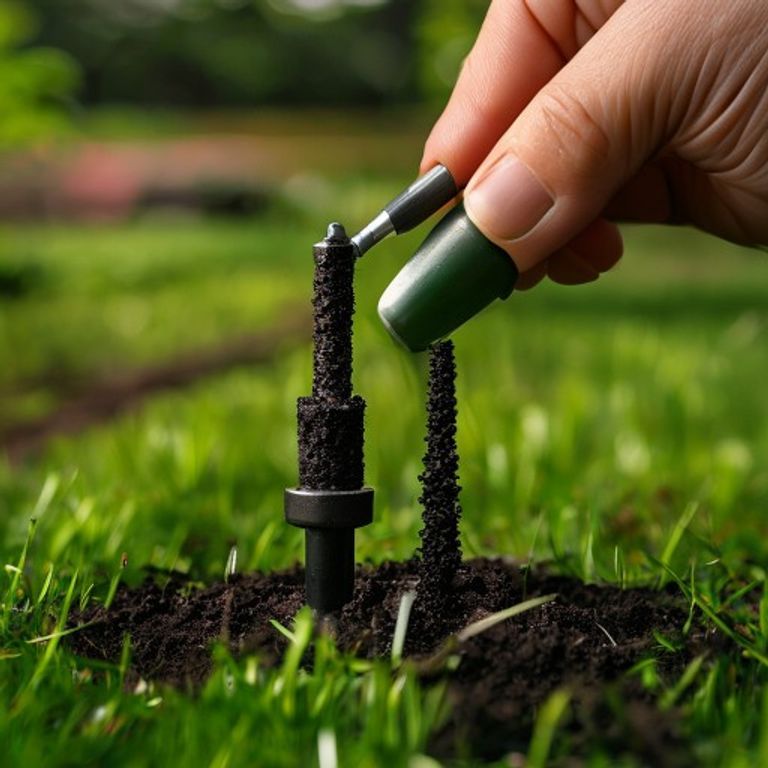
The Ultimate Guide to Soil Samplers: Unlocking Your Garden’s Full Potential

Have you ever wondered why some plants thrive effortlessly while others struggle in the same garden? Or why your lawn isn’t as lush as your neighbor’s? Often, the secret lies hidden beneath your feet: in the soil. As gardeners, farmers, or even just homeowners, we sometimes overlook the fundamental health of our soil, assuming it’s just… dirt. But trust me, it’s so much more! Understanding your soil’s composition, its pH balance, and its nutrient levels is the first critical step towards a truly thriving green space. And to truly understand it, we need a special tool: the soil sampler.
Think of a soil sampler as your soil’s personal diagnostic tool. Just like a doctor takes a blood sample to check your health, we take a soil sample to check the health of our earth. It’s not just about guessing anymore; it’s about informed decisions. In this comprehensive guide, I’ll walk you through everything you need to know about soil testing and the indispensable role of a soil sampler.
Why is Soil Sampling So Important?
Before we dive into the tools, let’s briefly discuss why sampling is non-negotiable for serious plant enthusiasts. Soil isn’t uniform; its characteristics can vary wildly even within a small area. Without proper soil analysis, you might be guessing about what your plants truly need. Are they lacking nitrogen? Is the soil too acidic or too alkaline (pH balance)? Are there enough trace minerals?
- Optimizing Nutrient Levels: Sampling helps us pinpoint nutrient deficiencies or excesses, allowing us to apply the right fertilizers at the right time. This saves money and prevents environmental runoff.
- Adjusting pH Balance: Soil pH affects nutrient availability. A soil sample reveals your pH, guiding you on whether to add lime (to raise pH) or sulfur (to lower pH).
- Diagnosing Problems: Poor growth, yellowing leaves, or stunted plants can often be traced back to soil issues. A comprehensive soil analysis, facilitated by a good soil probe, helps us diagnose these problems accurately.
- Environmental Stewardship: By applying only what’s needed, we minimize waste and reduce our ecological footprint.
So, clearly, regular soil testing is crucial, and the first step to accurate testing is obtaining a representative sample. That’s where our star tool, the soil sampler, comes into play!
What Exactly is a Soil Sampler?
At its core, a soil sampler is a device designed to extract a consistent core or section of soil from the ground. Imagine trying to get a perfect slice of cake from the middle without disturbing the rest; that’s essentially what a good soil sampler does for your soil. It allows us to collect an undisturbed, uniform sample from a specific depth, which is vital for accurate laboratory analysis.
These tools come in various forms, from simple hand-held devices to more sophisticated, mechanized versions. But regardless of their complexity, their goal remains the same: to provide us with a clean, representative sample that we can then send off for detailed analysis.
Different Types of Soil Samplers for Every Need
Just like there are different types of gardeners and land managers, there are various soil samplers tailored to specific applications. Let me introduce you to some common types:
Manual Soil Samplers for Garden Use
For the home gardener or small-scale hobbyist, a manual soil sampler for garden use is usually sufficient and budget-friendly. These often look like a sturdy tube or an auger with a handle. They are simple to operate: just push, twist, or step on them to extract a core. They are perfect for taking a few samples around your flower beds, vegetable patches, or small lawn areas. They are typically lightweight and easy to clean.
Professional Soil Augers for Agriculture
When you’re dealing with larger areas, like fields or extensive farms, a professional soil auger for agriculture becomes indispensable. These are often more robust, made from heavier-gauge steel, and designed for repeated, extensive use. Some can even be attached to drills or small tractors for easier operation, allowing for quicker and deeper sampling across vast expanses of land. Their design ensures consistent core samples, even in compacted soils.
Best Soil Core Sampler for Lawn Care
If your primary concern is maintaining a pristine lawn, you might want to look for the best soil core sampler for lawn. These are often designed to take shallower, wider samples, ideal for understanding the topsoil where turf roots reside. Some models are specifically engineered to minimize turf disturbance, leaving your lawn looking neat even after sampling. They’re excellent for diagnosing issues like thatch buildup or nutrient deficiencies specific to turfgrass.
Affordable Soil Augers for Home Use
For those just starting out or on a tight budget, an affordable soil auger for home use is a great entry point. You don’t need to break the bank to get a good enough sample for basic testing. Many simple augers or tube samplers are available at reasonable prices and will perform admirably for routine garden or lawn checks. The key is to ensure it’s durable enough for your soil type and provides a consistent sample.
How to Take a Proper Soil Sample for Testing
Getting a sample isn’t just about sticking a tool in the ground. Here’s a simple guide on how to take a soil sample for testing effectively:
- Map Your Area: Divide your garden or field into distinct zones based on plant types, past treatments, or visual differences. You’ll want separate samples for each zone.
- Clean Your Tools: Before you start, make sure your soil sampler is clean. Any residue from previous samples or contaminants can skew your results.
- Collect Multiple Sub-Samples: For each zone, take 10-15 sub-samples in a random zigzag pattern. This ensures your final sample is truly representative. Avoid unusual spots like compost piles, paths, or under roof eaves.
- Proper Depth: For gardens and lawns, generally aim for a 6-8 inch depth. For deeper roots or agricultural purposes, you might go deeper. Your testing lab will often provide guidelines.
- Mix Thoroughly: Combine all the sub-samples from one zone into a clean bucket. Mix them well to create a single composite sample for that zone.
- Prepare for Lab: Place about 1-2 cups of your mixed soil into a clean, labeled bag. Most labs prefer air-dried samples, so you might need to spread it out to dry for a day before bagging.
- Send it Off: Follow your chosen soil testing lab’s instructions for submission.
This process, especially with the right soil probe, ensures that the results you get back are truly reflective of your soil’s condition, giving you actionable insights.
Choosing the Right Soil Sampler for You
With so many options, how do you pick the perfect one? Here are a few things to consider:
- Your Purpose: Are you a home gardener, a professional farmer, or a lawn care enthusiast? This will guide your choice between a manual soil sampler for garden use or a professional soil auger for agriculture.
- Soil Type: Some samplers work better in sandy soil, while others are designed for heavy clay or rocky conditions. Look for models with sturdy construction if you have tough soil.
- Depth Requirement: How deep do you need to sample? Ensure the sampler can reach that depth comfortably.
- Budget: As we discussed, there are affordable soil augers for home use, but also more expensive, professional-grade tools.
- Ease of Use and Durability: A comfortable handle, easy soil extraction, and robust materials will make your sampling experience much more pleasant and your tool last longer.
Conclusion
Investing in a good soil sampler is truly an investment in the health and vitality of your plants. It moves you from guesswork to informed decision-making, helping you nurture your garden, lawn, or farm with precision and confidence. So, if you’re serious about achieving optimal growth and lush greenery, it’s time to get acquainted with this essential tool and embark on your journey to understand the amazing world beneath your feet. Happy sampling!
FAQ About Soil Samplers & Soil Testing
Q: How often should I take a soil sample?
A: For gardens and lawns, typically every 2-3 years is sufficient. For perennial beds or areas with persistent problems, annual testing might be beneficial. Agricultural fields might require more frequent testing depending on crop rotation and intensity.
Q: Can I use any shovel or trowel to take a soil sample?
A: While you can, it’s not ideal. A shovel or trowel often doesn’t give you a consistent depth or an undisturbed core sample, which can lead to less accurate results. A dedicated soil sampler provides a uniform sample, making the lab analysis more reliable.
Q: What’s the difference between a soil auger and a soil core sampler?
A: A soil auger typically drills down and brings up loose soil, often used for deeper samples or in compacted soils. A soil core sampler (or probe) extracts a cylinder of undisturbed soil, preserving the soil structure. Both are effective, but core samplers are often preferred for standard nutrient and pH testing as they provide a cleaner, more consistent sample profile.
Q: Do I need to clean my soil sampler after each use?
A: Yes, absolutely! Cleaning your soil sampler, especially between different sampling zones, prevents cross-contamination and ensures the accuracy of your next sample. A quick rinse with water and drying will suffice.
Q: Is it okay to take samples when the soil is wet?
A: It’s generally best to sample when the soil is moist but not soaking wet. Very wet soil can be difficult to work with and can sometimes compact in the sampler, making extraction tricky. Avoid sampling immediately after heavy rain or when the ground is frozen.