


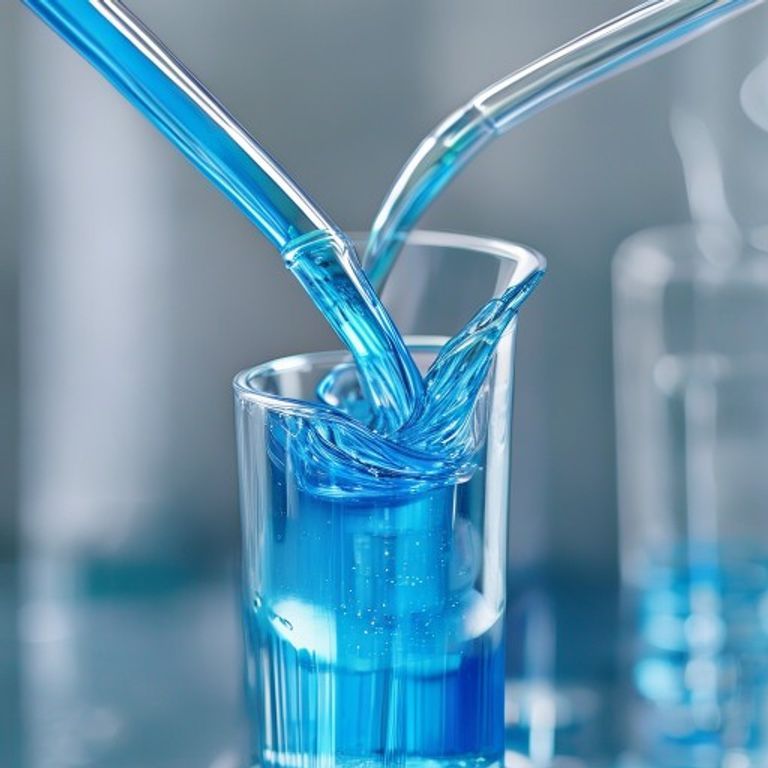
Mastering the Mix: Essential Glass Stirring Rod Uses in Your Lab and Beyond

In the vast world of scientific exploration and even our daily lives, mixing is a fundamental process. From stirring sugar into coffee to preparing complex chemical solutions, achieving a perfect blend is often key. While fancy stirrers and magnetic plates exist, there’s one humble, often-overlooked hero that remains indispensable in any laboratory or kitchen: the glass stirring rod. Today, we’re going to dive deep into the many and varied glass stirring rod uses, exploring why this simple piece of laboratory glassware is so crucial.
You might think, “It’s just a stick, right?” Well, it’s so much more than that! As a content writer who loves demystifying scientific tools, I want to show you just how versatile and vital this little wand can be. We’ll explore everything from its core purpose in creating homogeneous mixtures to some clever tricks it can perform. So, let’s grab our metaphorical lab coats and get stirring!
What Exactly is a Glass Stirring Rod?
Before we jump into its uses, let’s briefly define our star. A glass stirring rod is typically a solid, cylindrical piece of glass, often made from borosilicate stirring rod material. Why borosilicate? Because it’s robust, resistant to thermal shock, and chemically inert, making it perfect for various chemical stirring applications. It’s essentially a manual scientific stirring tool designed for stirring, mixing, and aiding in the transfer of liquids in a controlled manner.
The Core Purpose: Why We Need Them for Mixing
At its heart, the primary purpose of glass stirring rods in chemistry labs is, you guessed it, mixing. But it’s not just about swirling liquids around; it’s about achieving precision and safety.
Achieving Homogeneous Mixtures
Imagine you’re baking and need to mix flour and sugar evenly. If they’re not perfectly blended, your cake won’t turn out right. The same principle applies in the lab, but with much higher stakes! When we combine different substances, especially in solution, we often need them to be uniformly distributed throughout the mixture. This is what we call a homogeneous mixture. A glass stirring rod allows us to manually agitate the solution, ensuring every component is evenly dispersed, leading to accurate experimental results.
Dissolving Solids Effectively
Have you ever tried to dissolve a stubborn sugar cube in cold water without stirring? It takes ages! The same goes for dissolving solid reagents in a solvent. A stirring rod significantly speeds up the dissolution process by continuously bringing fresh solvent into contact with the solid particles. This is one of the most common glass stirring rod uses we encounter.
Mixing Reagents Safely
Sometimes, we need to combine chemicals carefully, perhaps to avoid a violent reaction or excessive splashing. A stirring rod provides a controlled way to introduce one reagent into another while gently mixing, minimizing hazards. It gives us a tactile feel for the viscosity and reactivity of the solution, something automated stirrers can’t quite replicate.
Beyond Simple Stirring: Clever Glass Stirring Rod Uses
While mixing is its main gig, the glass stirring rod is a surprisingly versatile tool with a few other tricks up its sleeve.
Aiding in Pouring and Decantation
Ever tried to pour liquid from a beaker with a wide mouth into a narrow-necked flask and ended up spilling half of it? A stirring rod comes to the rescue! You can hold the rod against the lip of the pouring vessel and let the liquid run down the rod. This guides the stream, preventing spills and making precise transfers much easier. It’s a simple trick, but incredibly effective, especially when dealing with expensive or hazardous chemicals.
Breaking Up Agglomerates
Sometimes, solid powders can clump together, forming stubborn agglomerates that resist dissolution. We can use the end of a stirring rod to gently crush these clumps against the bottom or side of a beaker, facilitating quicker and more complete dissolution. It’s like having a tiny, precise pestle at your fingertips, which is a bit different from mastering mortar and pestle chemistry for precision lab work but still achieves a similar goal of breaking down solids.
Facilitating Heat Transfer
When heating a solution, especially with a Bunsen burner for heating, stirring helps distribute the heat evenly throughout the liquid. This prevents localized overheating (which can cause bumping or degradation) and speeds up the process of reaching the desired temperature. It’s a crucial aspect of many experiments that require precise temperature control.
Scratching Flasks for Crystallization
In organic chemistry, sometimes you need a little help to initiate crystallization. A common trick is to use the end of a clean glass stirring rod to scratch the inner surface of the glassware. These tiny scratches provide nucleation sites where crystals can begin to form, giving your crystallization process a much-needed kickstart.
Benefits of Choosing Glass for Stirring Rods
Why glass, specifically? The benefits of glass stirring rods for mixing solutions are numerous:
- Inertness and Chemical Resistance: Borosilicate glass is highly resistant to most chemicals, acids, and bases. This means it won’t react with your solutions or contaminate them, ensuring the integrity of your experiment.
- Easy to Clean: Its smooth, non-porous surface makes it incredibly easy to clean and sterilize, preventing cross-contamination between experiments.
- Visibility: Being transparent, we can easily observe the mixing process, seeing how well solids are dissolving or how different phases are interacting.
- Thermal Stability: As mentioned, borosilicate glass can withstand significant temperature changes without cracking, allowing for use in heated solutions.
How to Properly Use a Glass Stirring Rod
While seemingly straightforward, there’s a knack to how to properly use a glass stirring rod for maximum effectiveness and safety.
- Gentle Agitation: Avoid vigorous stirring that might cause splashing or air bubbles, which can sometimes interfere with reactions.
- Circular Motion: Typically, a gentle circular or figure-eight motion is effective for homogeneous mixing.
- Avoid Contact with Walls: Try not to scrape the bottom or sides of the beaker aggressively, as this can potentially scratch the glassware, weakening it over time.
- Keep it Clean: Always use a clean stirring rod for each different solution to prevent contamination.
Safe Handling of Glass Stirring Rods
Because they are made of glass, safety is paramount. Always handle them carefully to avoid breakage. If a rod breaks, dispose of the glass fragments properly in a designated broken glass container. Never use a chipped or cracked stirring rod, as it could shatter unexpectedly.
Conclusion
So there you have it! The humble glass stirring rod, often overlooked, is a powerhouse in its simplicity and versatility. From ensuring the perfect homogeneous mixtures to aiding in precise transfers and even initiating crystallization, its numerous glass stirring rod uses make it an indispensable tool. Its inert nature, ease of cleaning, and durability (especially when made from borosilicate) ensure it remains a go-to scientific stirring tool in any lab. Next time you pick one up, I hope you’ll have a newfound appreciation for this small but mighty piece of laboratory glassware!
FAQ
What are glass stirring rods used for?
Glass stirring rods are primarily used for mixing liquids, dissolving solids, and aiding in the transfer of solutions to create homogeneous mixtures in laboratories and other settings.
Can I use anything else instead of a glass stirring rod?
While other materials like plastic or metal rods can sometimes be used, glass (especially borosilicate) is preferred in scientific settings due to its chemical inertness, heat resistance, and ease of cleaning, which prevents contamination.
How do I clean a glass stirring rod?
For most lab applications, rinse immediately with distilled water and then wash with a laboratory detergent and brush. For critical applications, further cleaning and sterilization protocols may be required, similar to other laboratory glassware.
Why are they usually made of glass?
Glass stirring rods are typically made from borosilicate glass because it is highly resistant to most chemicals, extreme temperatures, and thermal shock. This makes it ideal for use with various reagents without reacting or contaminating the solution.
Are there different types of stirring rods?
While the basic form is a solid rod, variations exist, such as those with flattened ends for scraping or rubber “policemen” attachments for more thorough cleaning of glassware. Material can also vary, though borosilicate glass is most common in chemistry.







