


Mastering the Marketing Funnel: Your Blueprint for Driving Sales and Sustained Growth

Introduction: Why Every Business Needs a Marketing Funnel
Ever wonder why some businesses seem to effortlessly attract customers while others struggle? Often, the secret lies in a well-structured marketing funnel. Think of it like a sophisticated sifting process for your potential customers. Instead of just hoping people buy from you, we guide them on a journey, from simply being aware of your brand to becoming loyal advocates. It’s a strategic roadmap that transforms strangers into loyal customers, making your sales process more predictable and effective. In this article, we’re going to demystify the marketing funnel, explore its incredible benefits, and show you how to build one that truly drives growth for your business.
What Exactly is a Marketing Funnel?
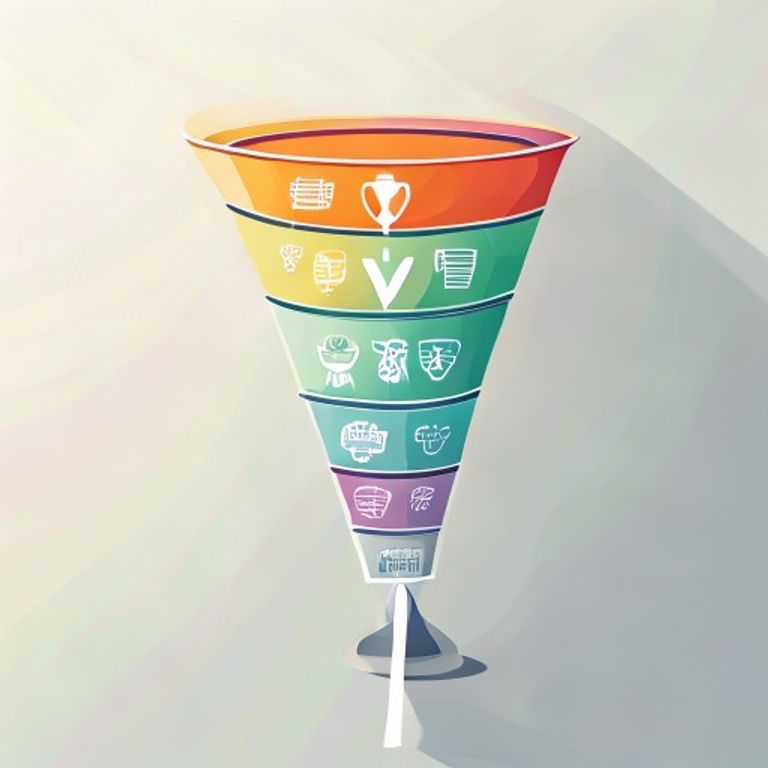
At its core, a marketing funnel is a visual representation of the path a potential customer takes from their first interaction with your brand until they make a purchase, and ideally, beyond. Imagine a kitchen funnel: wide at the top, narrowing down to a spout. In the same way, a marketing funnel starts with a large pool of prospects at the top (people who might be interested), and as they move down, the pool gets smaller, comprising individuals who are more and more engaged and closer to making a buying decision.
This concept helps us understand the step-by-step guide to mastering the marketing funnel and the different stages of the customer journey. It’s not just about getting people to buy; it’s about building relationships and trust at each stage.
The Stages of a Typical Marketing Funnel
While models can vary, a classic marketing funnel often follows four key stages, sometimes referred to as AIDA (Awareness, Interest, Desire, Action), with an optional fifth stage for post-purchase engagement:
1. Awareness (Top of the Funnel – TOFU)
- Goal: Attract a wide audience and generate leads. This is where potential customers first become aware of your brand, product, or service. They might not even know they have a problem you can solve yet.
- Activities: Content marketing (blog posts, social media, videos), SEO, paid ads (Google Ads, social media ads), public relations, influencer marketing. Here, our focus is on broad reach and initial lead generation.
- Analogy: Someone sees your billboard on the highway or hears a catchy jingle on the radio. They know you exist, but that’s about it.
2. Interest (Middle of the Funnel – MOFU)
- Goal: Engage prospects, educate them about their problem, and position your offering as a potential solution. They are now actively seeking information.
- Activities: Detailed blog posts, guides, webinars, email newsletters, interactive tools, free resources (eBooks, templates). We’re nurturing their interest and building authority.
- Analogy: That person from the highway billboard now visits your website to read an article related to their pain point, or signs up for your newsletter.
3. Desire (Middle/Bottom of the Funnel – MOFU/BOFU)
- Goal: Convince prospects that your solution is the best fit for their needs. This is where they start to develop a preference for your brand.
- Activities: Case studies, testimonials, product demos, free trials, comparison guides, detailed product pages, personalized email sequences. We’re building conviction and addressing objections.
- Analogy: They’ve done their research, they like what they see, and now they’re actively comparing your solution to others, thinking “This might actually work for me!”
4. Action (Bottom of the Funnel – BOFU)
- Goal: Get prospects to make a purchase or take the desired conversion action (e.g., sign up for a service, request a quote). This is the culmination of the sales process.
- Activities: Special offers, clear calls to action (CTAs), sales consultations, easy checkout processes, live chat support. Our aim is to remove all barriers to conversion.
- Analogy: They click “Add to Cart,” complete the purchase, or sign up for your premium service. Mission accomplished!
5. Retention & Advocacy (Post-Purchase)
- Goal: Turn customers into repeat buyers and brand advocates. The funnel doesn’t end with a sale!
- Activities: Excellent customer service, loyalty programs, exclusive content, asking for reviews and referrals, engaging on social media. This helps with long-term customer acquisition and reduces churn.
- Analogy: They love your product so much they tell all their friends and keep coming back for more.
Benefits of Using a Marketing Funnel: Why It’s a Must-Have
Implementing a marketing funnel isn’t just a fancy marketing term; it’s a strategic necessity that offers tangible benefits:
- Clearer Customer Journey: We gain a deeper understanding of our customers’ needs and behaviors at each stage, allowing us to tailor our messages perfectly.
- Improved Conversion Rates: By nurturing leads systematically, we increase the likelihood of them converting into paying customers, boosting our conversion rate optimization efforts.
- Optimized Marketing Spend: We can allocate our resources more effectively, investing in channels and content that are most impactful for each funnel stage, preventing wasted ad spend.
- Predictable Sales Growth: With a structured funnel, we can better forecast sales and understand what actions we need to take to hit our revenue targets.
- Enhanced Customer Loyalty: By providing value beyond the sale, we foster stronger relationships that lead to repeat business and enthusiastic referrals.
Best Practices for Sales Funnel Use: Driving Conversions
Building a funnel is one thing; making it effective is another. Here are some best practices we’ve learned for making your marketing funnel a sales powerhouse:
- Know Your Audience Inside Out: Understand their pain points, desires, and behaviors. Personalization is key at every stage.
- Create Compelling Content for Each Stage: Don’t use the same content for someone just learning about you as you would for someone ready to buy. Tailor your messages.
- Clear Calls to Action (CTAs): Guide your prospects precisely on what to do next. “Learn More,” “Download Now,” “Buy Now” – make it unmistakable.
- Measure, Analyze, and Optimize: The marketing funnel isn’t static. We constantly track metrics like conversion rate optimization, drop-off points, and engagement to identify bottlenecks and improve performance. A/B testing is your friend!
- Align Marketing and Sales: Ensure both teams are working together, understand the funnel, and hand off leads seamlessly.
- Automate Where Possible: Use email marketing automation, CRM systems, and marketing automation platforms to streamline the nurturing process.
Marketing Funnel in Digital Advertising: Real-World Applications
Digital advertising is where the marketing funnel truly shines. We can target audiences very specifically based on their funnel stage:
- Awareness (TOFU): Run broad reach campaigns on social media (Facebook, Instagram) or display networks (Google Display Network) targeting demographics and interests. Our goal here is maximum visibility and brand recognition.
- Interest (MOFU): Use search ads (Google Search Ads) for people actively searching for solutions, or retargeting ads for those who visited our website but didn’t convert. We provide valuable content like guides or webinars.
- Desire/Action (BOFU): Employ highly targeted retargeting ads with specific offers for those who interacted with our product pages or added items to their cart. We might use Google Shopping ads or direct response Facebook ads here.
- Retention: Create custom audiences for existing customers for loyalty programs, new product announcements, or to solicit reviews.
By understanding where our audience is in their funnel, we can craft ad campaigns that resonate and efficiently move them towards conversion, making our lead generation efforts far more impactful.
Conclusion: Your Funnel, Your Growth Engine
The marketing funnel is more than just a theoretical concept; it’s a practical, powerful tool that every business can leverage for predictable growth. By systematically guiding potential customers through awareness, interest, desire, and action, we not only improve our conversion rate optimization but also build lasting customer relationships. It requires planning, effort, and continuous optimization, but the rewards—in the form of increased sales, reduced marketing waste, and loyal customers—are truly immense. So, what are we waiting for? Let’s start building and optimizing our funnels today!
Frequently Asked Questions (FAQ)
Q: What’s the main difference between a marketing funnel and a sales funnel?
A: While often used interchangeably, a marketing funnel focuses on attracting and nurturing leads up to the point of being “sales-ready.” A sales funnel typically picks up where the marketing funnel leaves off, focusing on the actual sales process of closing the deal, often involving direct interaction between a sales representative and the prospect.
Q: How long does it take to build an effective marketing funnel?
A: It varies greatly depending on the complexity of your business and resources. You can set up a basic funnel in a few weeks, but an “effective” funnel requires continuous testing, optimization, and refinement, which is an ongoing process.
Q: What are some common tools for marketing funnel management?
A: Many tools can help! CRM systems (HubSpot, Salesforce), email marketing platforms (Mailchimp, ActiveCampaign), landing page builders (Leadpages, Unbounce), and advertising platforms (Google Ads, Facebook Ads Manager) are all crucial components.
Q: Can a small business effectively use a marketing funnel?
A: Absolutely! In fact, small businesses can benefit immensely from a well-structured funnel, as it helps them maximize limited resources and ensure every marketing effort is purposeful. You can start simple and scale up as your business grows.