

Mastering the Chemistry Spatula: Your Essential Guide to Lab Precision and Safety

When we step into a chemistry lab, our minds often jump to complex reactions, bubbling beakers, and maybe even dramatic color changes. But amidst all the exciting science, there’s a humble hero that often gets overlooked: the chemistry spatula. Yes, that small, unassuming tool is actually indispensable for countless experiments. Think of it like a chef’s favorite spoon – precise, versatile, and absolutely critical for getting ingredients just right. Without it, measuring solids, transferring delicate powders, or even scraping down a flask would be a messy, inaccurate, and potentially dangerous endeavor.
I remember my first time trying to transfer a tiny amount of powdered reagent without a proper spatula. It was a disaster! Powder went everywhere, my measurement was off, and I learned quickly that this simple tool is a game-changer. So, let’s dive deep into the world of the chemistry spatula and explore how this seemingly basic instrument becomes our reliable partner in the pursuit of scientific accuracy and safety.
What Exactly is a Chemistry Spatula? More Than Just a Spoon!
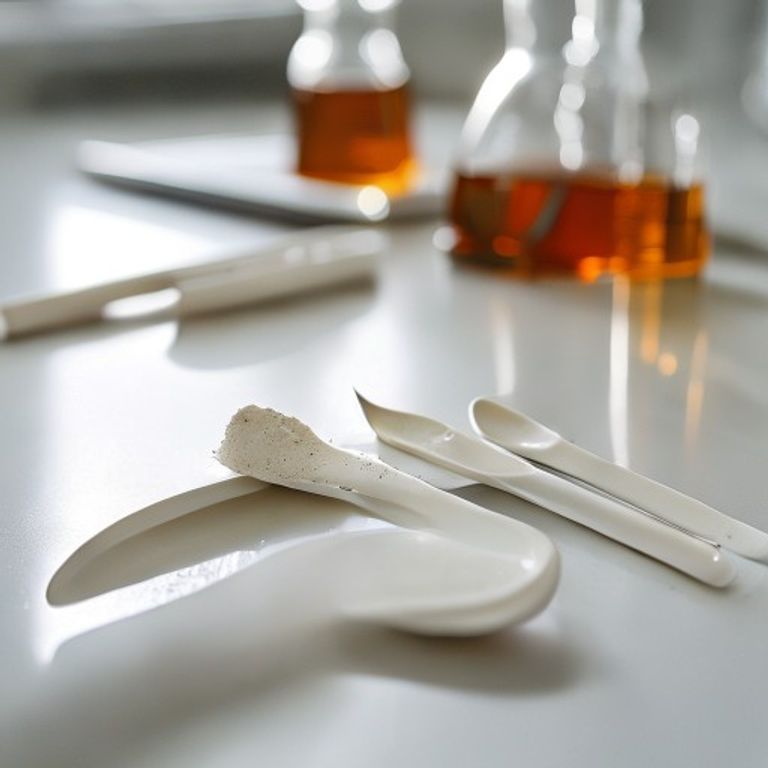
At its core, a chemistry spatula is a small, flat, or spoon-like tool designed for scraping, transferring, or applying solid or viscous materials. Unlike your kitchen spatula, lab spatulas are crafted with precision in mind, often featuring narrow blades, pointed tips, or tiny spoon ends. They are specifically engineered to handle delicate chemical reagents, ensuring we can measure and move them with minimal loss and maximum control. Sometimes, you’ll even hear the term “scoopula” – it’s a type of spatula with a curved, scoop-like end, perfect for scooping powders from wide-mouthed containers or weighing boats.
Different Types of Spatulas for Chemical Experiments
Just like you wouldn’t use a soup spoon for every culinary task, there’s a specific spatula for almost every lab need. Knowing the different types helps us choose the right tool for the job:
- Flat Blade Spatulas: These are the most common, featuring a flat blade on one or both ends. They are great for scraping solids from surfaces or mixing.
- Spoon Spatulas (Scoopulas): As I mentioned, these have a small spoon or scoop on one end, ideal for transferring granular or powdered chemicals. They are incredibly useful when working with an analytical balance for precise measurements.
- Micro Spatulas: When you need to handle extremely small quantities, micro spatulas come to the rescue. Their tiny blades or scoops are perfect for milligram-scale transfers.
- Flexible Spatulas: Made from flexible materials like stainless steel, these can adapt to the contours of glassware, making it easier to retrieve every last bit of a sample.
- Rubber or Plastic Spatulas: While less common for direct chemical contact (unless specified as chemically resistant), these are sometimes used for mixing or scraping more sensitive materials that might react with metal, or simply for general lab cleanup.
How to Use a Spatula in a Chemistry Lab Like a Pro
Using a spatula might seem intuitive, but there’s an art to doing it correctly and safely. Here’s what I’ve learned over the years:
- For Measuring: When weighing solids, we typically use a spatula to carefully transfer the chemical onto a weighing boat or directly into a beaker on an analytical balance. Start with less than you need, then slowly add small amounts, tapping the spatula gently to achieve the exact mass. This minimizes spills and ensures accuracy.
- For Transferring: Hold the container of the chemical and the receiving vessel close together. Use the spatula to scoop or scrape the desired amount, then gently tap the spatula to release the chemical into the new container.
- For Mixing/Scraping: A flat-bladed spatula is excellent for gently mixing powders in a beaker or scraping residue from the sides of glassware. Always be gentle to avoid scratching delicate glass or plastic.
Proper Handling of Chemicals with a Spatula: Safety First!
This is where the “chemistry” in “chemistry spatula” really comes into play. Safety is paramount! We handle chemical reagents all the time, and a spatula is our primary contact tool. So, remember these:
- Avoid Cross-Contamination: Never use the same spatula for different chemicals without thorough cleaning. This is probably the golden rule! Even tiny residues can ruin an experiment or create dangerous reactions.
- Handle Corrosive Chemicals Carefully: When dealing with strong acids or bases, ensure your spatula material is resistant (often stainless steel or specific plastics). Always work under a fume hood.
- Never Touch Chemicals Directly: The spatula acts as an extension of our hand, keeping us safe from direct contact with potentially hazardous substances.
- Don’t Return Excess Chemicals: Once you’ve removed a chemical from its original container, do not put any excess back in. This prevents contamination of the stock reagent.
Cleaning and Sterilizing Lab Spatulas: Ensuring Accuracy and Safety
Just like a good chef cleans their tools, we must meticulously clean our lab spatulas. Proper cleaning is essential for preventing cross-contamination and maintaining the integrity of our experiments. For most general-purpose spatulas used with non-hazardous chemicals, a good rinse with distilled water, followed by an ethanol or acetone wipe, and then air-drying, usually suffices. For more stringent experiments, especially in biological or analytical chemistry, sterilization (e.g., autoclaving for heat-resistant materials or specific chemical sterilization) might be required. Always refer to your lab’s specific protocols for cleaning and sterilization.
Choosing the Best Spatula Material for Corrosive Chemicals
The material of your spatula matters, especially when working with challenging chemical reagents. Here are common choices:
- Stainless Steel: This is the workhorse of the lab spatula world. It’s durable, resistant to many chemicals, and easy to clean. However, strong acids (like concentrated HCl or H2SO4) or bases can still corrode it over time.
- Nickel Spatulas: Often used for handling strong bases where stainless steel might corrode.
- PTFE (Teflon) Spatulas: Excellent for extremely corrosive chemicals, sticky materials, or when metal contamination must be avoided. PTFE is almost universally inert to most chemicals, but it’s softer and less durable than metal.
- Porcelain Spatulas: Very resistant to high temperatures and most chemicals, but brittle.
Always check the chemical compatibility of your spatula material with the specific chemical you’re working with. A quick online search or a look at a chemical compatibility chart can save you a lot of trouble.
Conclusion
From micro-scale experiments to transferring bulk powders, the chemistry spatula is an unsung hero in our laboratories. It’s not just a tool; it’s an extension of our precision, a guardian of our safety, and a silent enabler of accurate results. By understanding its various types, proper usage, and crucial cleaning methods, we can elevate our lab skills and ensure that every measurement, every transfer, and every experiment is carried out with the professionalism and care it deserves. So next time you pick up a spatula, give a nod to this humble yet mighty instrument – it’s truly essential!
FAQ
Q1: Can I use my kitchen spatula in a chemistry lab?
Absolutely not! Kitchen spatulas are not designed for the precision required in a lab, nor are they typically made from chemically resistant materials. Using them can lead to contamination, inaccurate results, and potential safety hazards.
Q2: How do I choose the right size of spatula?
Choose a spatula size that is appropriate for the amount of chemical you are handling and the opening of the container. For tiny amounts or small test tubes, a micro spatula is best. For larger quantities or wider containers, a scoopula or standard flat-blade spatula works well.
Q3: What’s the biggest mistake people make when using a chemistry spatula?
The biggest mistake is usually cross-contamination – using the same spatula for different chemicals without proper cleaning. This can ruin experiments and create dangerous reactions. Always clean thoroughly or use a fresh spatula for each substance.
Q4: Are all stainless steel spatulas the same?
No, not all stainless steel is identical. Lab spatulas are typically made from specific grades of stainless steel (like 304 or 316) that offer better corrosion resistance than common kitchenware grades. Always ensure your lab equipment meets appropriate standards.