Chemistry Basics: An Easy Guide to Understanding Atoms, Molecules, and Everyday Reactions

Introduction
When we hear the word “chemistry,” many of us picture complex equations or bubbling beakers in a lab. In reality, chemistry is simply the study of what everything around us is made of and how those pieces interact. In this article, I’ll walk you through the fundamental concepts of chemistry in a friendly, step‑by‑step way—perfect for beginners who want a clear, practical start.
What Is Chemistry?
Think of chemistry as the recipe book of the universe. Just like a chef needs to know ingredients and how they combine, we need to understand the basic “ingredients” of matter and the rules that govern their combinations. This foundation helps us explain everything from why water boils to how our bodies generate energy.
Atoms and Molecules: The Building Blocks
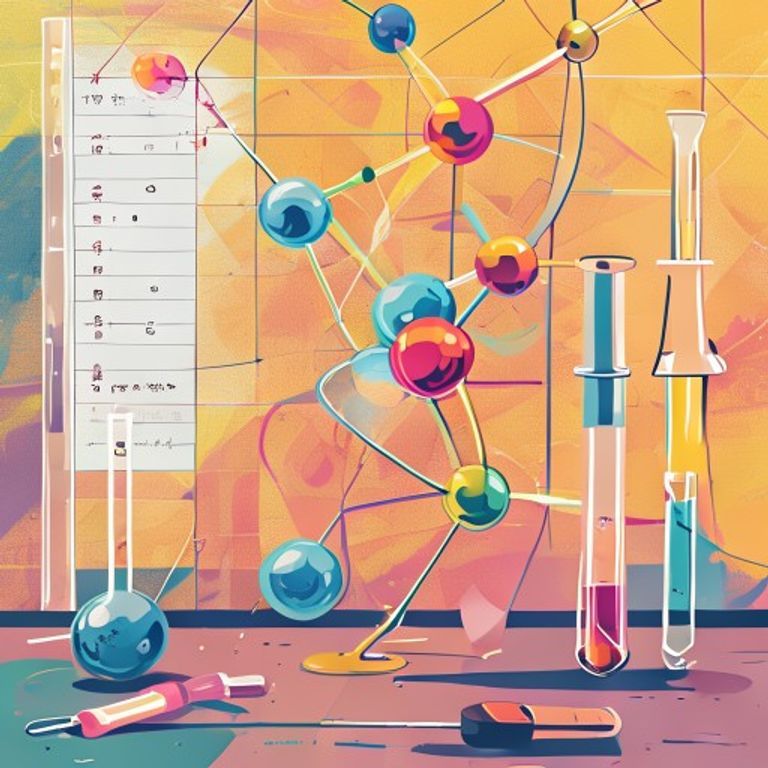
At the heart of chemistry are atoms—tiny particles that make up all matter. You can picture an atom as a solar system: a dense nucleus (the sun) surrounded by electrons (the planets) whizzing around. When two or more atoms join together, they form a molecule. For example, two hydrogen atoms and one oxygen atom lock together to create a water molecule (H2O).
- Protons give the atom its positive charge.
- Neutrons add mass but no charge.
- Electrons carry a negative charge and determine how atoms bond.
Elements, Compounds, and the Periodic Table
Every pure substance that cannot be broken down into simpler substances is called an element. The graduated cylinder uses in a lab help us measure the exact amount of each element we need for an experiment. All known elements are organized in the periodic table, which groups them by similar properties—think of it as a giant map that tells us where each “ingredient” belongs.
Chemical Reactions Simplified
A chemical reaction is simply a rearrangement of atoms. Imagine LEGO bricks: you can take apart a structure and rebuild it into something new without creating or destroying any bricks. In chemistry, the same atoms are conserved, but they form new bonds, releasing or absorbing energy.
- Reactants → the starting materials.
- Products → the new substances formed.
- Energy change → exothermic (releases heat) or endothermic (absorbs heat).
States of Matter: Solid, Liquid, Gas, and Beyond
Matter exists in four common states:
- Solid: particles are tightly packed and vibrate in place.
- Liquid: particles slide past each other, giving flow.
- Gas: particles move freely, spreading out to fill any container.
- Plasma: high‑energy gas where electrons break free from atoms.
Understanding these states helps us predict how a substance will behave under different temperatures and pressures—crucial for everyday tasks like cooking or even driving a car.
Practical Tips for Beginners
Getting comfortable with chemistry doesn’t require a PhD. Here are some hands‑on ways to start:
- Use a test tube clamp function to safely handle glassware while you practice measuring liquids.
- Keep a simple notebook to record observations—color change, temperature shift, smell.
- Start with everyday experiments: dissolve sugar in water, observe rust formation, or make a homemade indicator with red cabbage.
- Learn the symbols of the periodic table; flashcards work great.
- Watch tutorial videos that show step‑by‑step procedures; visual learning reinforces concepts.
Conclusion
Chemistry is all around us, and mastering its basics opens the door to countless practical applications—from cooking the perfect pasta to understanding how medicines work. By grasping atoms, molecules, elements, reactions, and states of matter, you’ve built a solid foundation. Keep experimenting, stay curious, and remember that every great chemist started with these simple concepts.
FAQ
Q: Do I need expensive equipment to start learning chemistry?
A: Not at all. Basic items like a measuring cup, a small beaker, and safety glasses are enough for beginner experiments.
Q: How can I remember the periodic table groups?
A: Think of the table as a family tree—elements in the same column share “family traits” such as similar reactivity.
Q: What’s the best way to practice balancing chemical equations?
A: Start with simple reactions (e.g., hydrogen + oxygen → water) and use the “count‑and‑adjust” method—count atoms on each side and adjust coefficients until they match.
Q: Are chemical reactions always visible?
A: No. Some reactions happen without color change or gas release; they may only involve temperature change or a shift in pH.
Q: How do I stay safe while doing home experiments?
A: Always wear protective gear, work in a well‑ventilated area, and never mix unknown chemicals. When in doubt, look up reliable sources or ask a teacher.