

Master Your Measurements: The Ultimate Guide to the Graduated Cylinder

Ever found yourself in a lab, staring at different pieces of glassware, wondering which one to grab for that crucial liquid measurement? Chances are, one of the most reliable and common tools you’ll reach for is the humble but mighty graduated cylinder. It might seem like a simple piece of laboratory equipment, but understanding its purpose and how to use it correctly is fundamental for any successful experiment, especially when dealing with liquid volume.
Here, we’ll dive deep into everything you need to know about the graduated cylinder, from its basic function to advanced tips for reading its volume accurately. Think of this as your personal guide to becoming a measurement maestro!
What Exactly is a Graduated Cylinder?
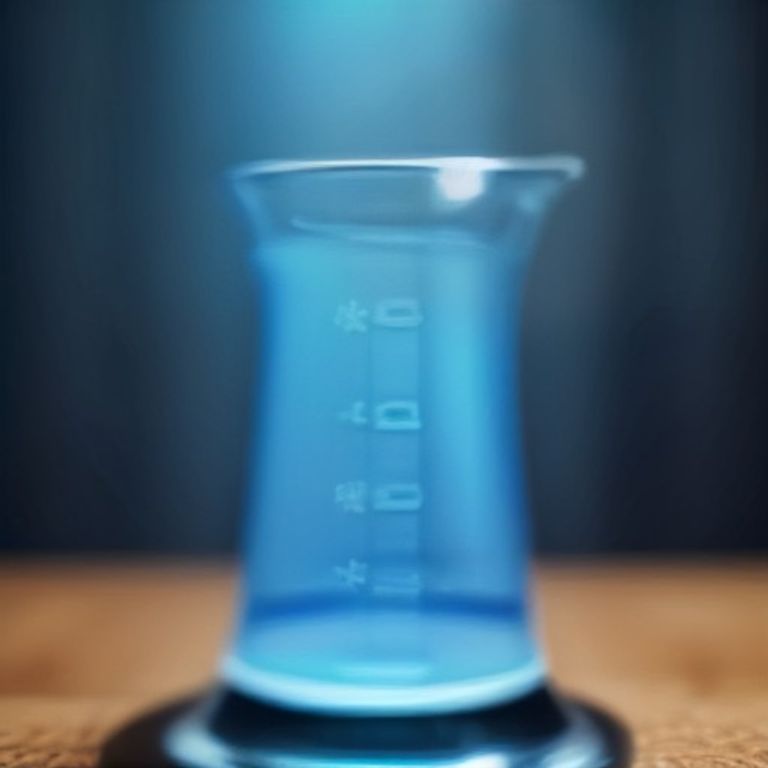
Imagine a tall, slender glass or plastic tube with a stable base, marked with a series of lines and numbers along its side. That, my friend, is a graduated cylinder. Unlike a beaker, which looks more like a sturdy drinking glass, a graduated cylinder is designed specifically for measuring. Its narrow shape allows for more precise readings of liquid volume compared to wider containers like beakers or Erlenmeyer flasks. It’s essentially the measuring cup of the chemistry world, but with much finer markings!
Why Use a Graduated Cylinder in a Lab?
So, what is the purpose of a graduated cylinder? In short, its primary job is to measure specific volumes of liquids. While beakers are great for holding and mixing, they’re not built for accurate measurements. A graduated cylinder, on the other hand, offers a much higher degree of accuracy, making it indispensable for tasks like:
- Preparing solutions with specific concentrations.
- Measuring reagents before adding them to a reaction.
- Diluting substances to a desired volume.
- Collecting precise amounts of liquid from an experiment.
When you need to measure a liquid volume with reasonable accuracy, a graduated cylinder is often your go-to tool. However, it’s important to remember that while it’s more accurate than a beaker, it’s not the most precise tool available. For extremely precise measurements, like those required for analytical chemistry, you might opt for a volumetric flask or a pipette. To truly understand when to use each, it’s helpful to consider the difference in accuracy matters: deciphering volumetric flask vs. graduated cylinder in your lab.
How to Read a Graduated Cylinder Volume Like a Pro
This is where many beginners can stumble, but don’t worry, it’s easy once you get the hang of it! Learning how to read a graduated cylinder volume correctly is crucial for obtaining reliable data. Here’s a step-by-step guide:
- Place on a Flat Surface: Always set your graduated cylinder on a level surface. Holding it in your hand can lead to tilted readings.
- Eye Level is Key: Bring your eyes down to the same level as the liquid’s surface. Looking down or up at the liquid will create a parallax error, giving you an inaccurate reading.
- Identify the Meniscus: For most liquids (especially water-based solutions), you’ll notice the liquid surface isn’t perfectly flat. Instead, it curves, forming a U-shape. This curve is called the meniscus reading. For most liquids, it will be concave (curving downwards).
- Read the Bottom of the Meniscus: The correct measurement is always taken at the lowest point of the concave meniscus. If the liquid forms a convex meniscus (curving upwards, like mercury), you would read the top of the curve.
- Estimate the Final Digit: Graduated cylinders have major and minor markings. You read the smallest marked increment and then estimate one digit beyond that. For example, if the smallest increment is 1 mL, you should estimate to the nearest 0.1 mL.
Remember, practice makes perfect! The more you read the meniscus, the more confident you’ll become in your measurements.
What are the Different Types of Graduated Cylinders?
While the basic function remains the same, what are the different types of graduated cylinders you might encounter? They mostly differ in material and accuracy class:
- Materials:
- Glass (Borosilicate): The most common type. It’s chemical-resistant and can withstand minor temperature changes. However, it’s fragile.
- Plastic (Polypropylene or Polymethylpentene): More durable and less prone to breaking than glass, making them safer for educational settings or rougher environments. They are also lighter, but can be less resistant to certain chemicals and can sometimes be less accurate due to static electricity or material expansion/contraction.
- Accuracy Classes:
- Class A: These are more precise, typically used for analytical work where higher precision measurement is required. They have tighter tolerance limits.
- Class B: Less precise than Class A, but still good for general laboratory use where exact liquid volume measurements are not critically essential. They are usually more affordable.
- Sizes: You’ll find graduated cylinders in a wide range of volumes, from small 5 mL or 10 mL ones for micro-experiments to large 1000 mL (1 L) or even 2000 mL cylinders for bulk measurements.
How Accurate is a Graduated Cylinder?
How accurate is a graduated cylinder, really? This is a question often asked, especially when comparing it to other chemistry lab tools. A graduated cylinder offers a good balance between accuracy and ease of use. Typically, a 100 mL Class A graduated cylinder has a tolerance of ±0.5 mL, meaning a reading of 100 mL could actually be anywhere between 99.5 mL and 100.5 mL.
This level of accuracy is perfectly fine for many general chemistry experiments, preparing stock solutions, or measuring reagents where a slight deviation won’t significantly impact the results. However, if your experiment demands extreme precision measurement (e.g., preparing a standard solution for titration or gravimetric analysis), you’d be better off using a volumetric flask, pipette, or burette, which are designed for even higher accuracy.
Tips for Using Your Graduated Cylinder Safely and Effectively
- Cleanliness is Next to Godliness: Always ensure your graduated cylinder is clean and dry before use. Residue from previous experiments can contaminate your new solutions and affect accuracy.
- Avoid Extreme Temperatures: While glass graduated cylinders are somewhat heat-resistant, they are not designed for heating. Never put them directly on a hot plate or over a Bunsen burner, as they can crack or break. For that, you’d use something like a beaker or an Erlenmeyer flask.
- Handle with Care: Glassware is fragile! Always handle graduated cylinders with care to prevent breakage, especially when cleaning or moving them.
- Pour Carefully: Use a funnel if necessary to pour liquids into the cylinder to avoid spills and ensure all the liquid enters the vessel.
Conclusion
The graduated cylinder is truly an unsung hero in the lab. Its ability to measure liquid volume with reasonable precision measurement makes it a staple in virtually every chemistry lab tools collection. By understanding what is the purpose of a graduated cylinder, how to read a graduated cylinder volume correctly, and its limitations, you’re well on your way to conducting more accurate and successful experiments. So next time you’re in the lab, you’ll know exactly how to confidently grab and use this essential piece of laboratory equipment!
Frequently Asked Questions (FAQ)
What’s the primary difference between a graduated cylinder and a beaker?
A beaker is mainly used for holding, mixing, and heating liquids, offering only approximate volume measurements. A graduated cylinder, on the other hand, is specifically designed for more accurate liquid volume measurement due to its narrow, calibrated body.
Can I heat liquids directly in a graduated cylinder?
No, graduated cylinders are not designed for heating. The rapid temperature change can cause the glass to crack or break. For heating liquids, you should use beakers or Erlenmeyer flasks made from borosilicate glass.
What is the most accurate way to measure liquid volume in a lab?
While a graduated cylinder offers good accuracy for general purposes, for the highest precision measurement, you would typically use a volumetric flask (for a single, exact volume), a pipette (for transferring small, precise volumes), or a burette (for titrations, measuring variable, precise volumes).
How do I properly clean a graduated cylinder?
First, rinse it with distilled water. If there’s residue, use a brush with mild detergent and warm water. Make sure the brush is sized appropriately to avoid scratching the inside. Rinse thoroughly with distilled water again to remove all soap residue, then allow it to air dry upside down or use a lab drying rack.