


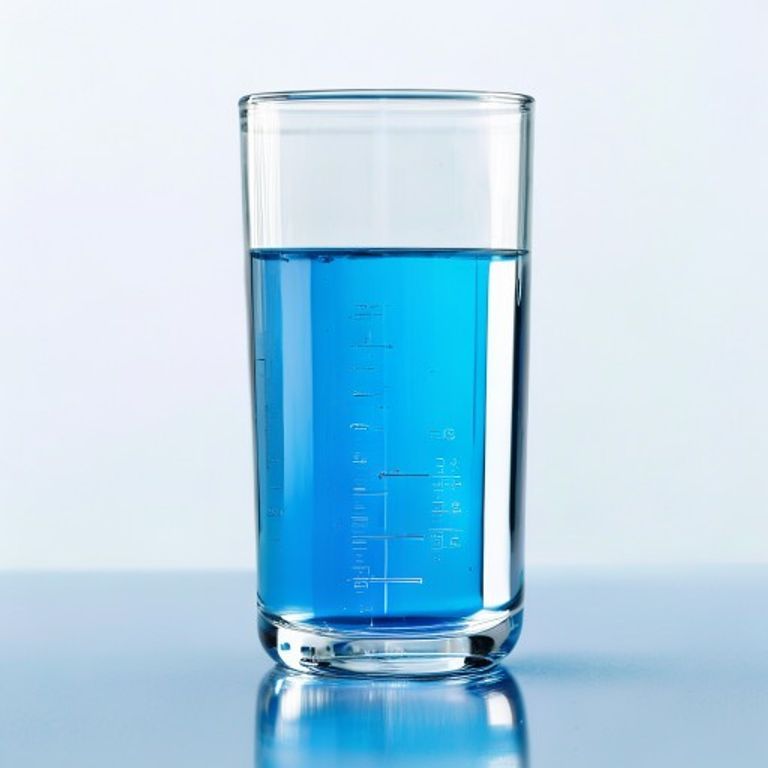
Unlocking Lab Secrets: Essential Graduated Cylinder Uses You Need to Know

Hello, future scientists and curious minds! Have you ever wondered how scientists in a lab measure liquids with such incredible precision? It’s not just guesswork or pouring from any old container. There’s a specific, indispensable piece of equipment for that, and today we’re going to dive deep into the fascinating world of the graduated cylinder. Trust me, once you understand its purpose, you’ll see why it’s a true workhorse in any laboratory.
From school science projects to cutting-edge research, the graduated cylinder plays a vital role. We’ll explore what is a graduated cylinder used for in chemistry, why it beats other glassware for accuracy, and how to use it like a pro. So, let’s get started and uncover the practical magic of this simple yet powerful lab tool!
What Exactly is a Graduated Cylinder?
Imagine a tall, narrow glass or plastic container with a flat base and a spout for pouring. Now, imagine it marked with precise lines, indicating different volumes – that’s essentially a graduated cylinder! The “graduations” are those etched lines, each representing a specific measurement (like milliliters), allowing us to measure liquids accurately.
Unlike a simple beaker or a flask, which have wider mouths and are primarily for holding or mixing, the graduated cylinder is designed specifically for volume measurement. Think of it like comparing a measuring cup for baking to a serving bowl. Both hold liquid, but one is built for precision, the other for capacity and presentation.
Primary Uses of a Graduated Cylinder
So, the essential function of a measuring cylinder in scientific experiments boils down to one main thing: accurately measuring the volume of liquids. But let’s break down where this accuracy truly shines:
1. Precise Liquid Volume Measurement
This is its bread and butter. When an experiment calls for, say, exactly 25 mL of a solution, you reach for a graduated cylinder. Its narrow diameter and finely spaced markings make it far more accurate than a beaker or an Erlenmeyer flask, which usually have much broader, less precise markings, mostly for approximate volumes.
- Preparing solutions: If you’re mixing a chemical solution that requires specific concentrations, measuring the solvent (often water) with a graduated cylinder ensures you start with the right base volume.
- Titration setup: While burettes offer even higher precision for titrations, graduated cylinders are often used to measure out initial volumes of reagents before the titration process begins.
- Density experiments: To calculate the density of a liquid, you need both its mass and its volume. A graduated cylinder is perfect for obtaining that accurate volume.
2. Measuring Liquid Displacement
Beyond just pouring liquids into it, a graduated cylinder is fantastic for measuring the volume of irregular solids. How, you ask? Through a method called water displacement. We fill the cylinder with a known volume of water, carefully submerge the object, and observe how much the water level rises. The difference in volume is the volume of the object itself. It’s a clever trick, like how you might measure your own volume by stepping into a bathtub and seeing the water rise!
3. Collecting Measured Volumes in Experiments
Sometimes, an experiment produces a liquid as a result, and we need to collect a specific amount. A graduated cylinder is ideal for this. For example, in experiments involving gas production where the gas is collected over water, the displaced water volume in an inverted graduated cylinder can tell us the volume of the gas produced.
Graduated Cylinder vs. Other Glassware: Why Accuracy Matters
You might be wondering, “Why use a graduated cylinder instead of a beaker or a flask?” It’s all about the level of precision required. Think of it this way:
- Beakers and Flasks: Great for mixing, heating, and holding liquids. Their wide mouths make stirring easy, but their volume markings are approximate, like the “cup” lines on a mixing bowl. They are designed for rough estimates, not exact measurements.
- Test Tubes: Primarily for holding small samples or conducting small-scale reactions. They have no volume markings at all.
- Graduated Cylinders: Specifically designed for accurate volume measurement. The narrower the cylinder, the more precise the reading can be, because a small change in volume results in a larger change in liquid height.
- Burettes and Pipettes: These offer even higher levels of precision than graduated cylinders, often used when extremely exact volumes (e.g., 0.1 mL or less) are needed, like in analytical chemistry titrations or transferring very small, specific quantities. If you want to know how to master the uses of a measuring cylinder for accurate liquid measurements, you’ll quickly learn it’s about technique and precision.
How to Accurately Read a Graduated Cylinder
Getting an accurate reading isn’t just about looking at the lines. Liquids in glass containers often form a curved surface called a meniscus. For most aqueous solutions, this curve dips downwards. To read accurately:
- Place the graduated cylinder on a flat, level surface.
- Bring your eye level with the bottom of the meniscus. Don’t look down from above or up from below; this causes parallax error.
- Read the mark directly at the lowest point of the meniscus.
- Always note the volume to the nearest marked interval, and then estimate one digit beyond that. For example, if the marks are every 1 mL, you might read 25.5 mL.
Conclusion
The graduated cylinder might seem like a simple piece of laboratory equipment, but its role is undeniably critical. It’s our reliable partner for getting liquid volumes just right, whether we’re concocting a new chemical solution, determining an object’s density, or performing a complex experiment. Understanding its proper use and appreciating its precision is a fundamental skill for anyone stepping into the world of science. So, next time you see one, remember it’s not just a glass tube; it’s a precision instrument helping us unlock the secrets of the universe, one accurate milliliter at a time!
FAQ
Q: What is the primary function of a graduated cylinder?
A: The primary function is to accurately measure the volume of liquids.
Q: Can I heat liquids in a graduated cylinder?
A: Generally, no. Graduated cylinders are not designed for heating. The glass or plastic can crack, melt, or deform under high temperatures, which would also ruin their calibration. Use beakers or flasks for heating.
Q: How do I choose the right size graduated cylinder?
A: Always choose the smallest graduated cylinder that can hold the volume you need to measure. A 10 mL volume measured in a 25 mL cylinder will be much more accurate than the same volume measured in a 100 mL cylinder because the graduations are closer together.
Q: What is a meniscus and how do I read it?
A: A meniscus is the curved surface of a liquid in a container. For most liquids in glass, it’s a concave (downward) curve. To read it accurately, place the cylinder on a flat surface and read the lowest point of the curve at eye level.
Q: Are plastic graduated cylinders as accurate as glass ones?
A: Glass graduated cylinders are generally more accurate for precise measurements due to their consistent material properties and fine etchings. Plastic ones are durable and safer in educational settings but may be slightly less precise and can degrade over time with certain chemicals.







